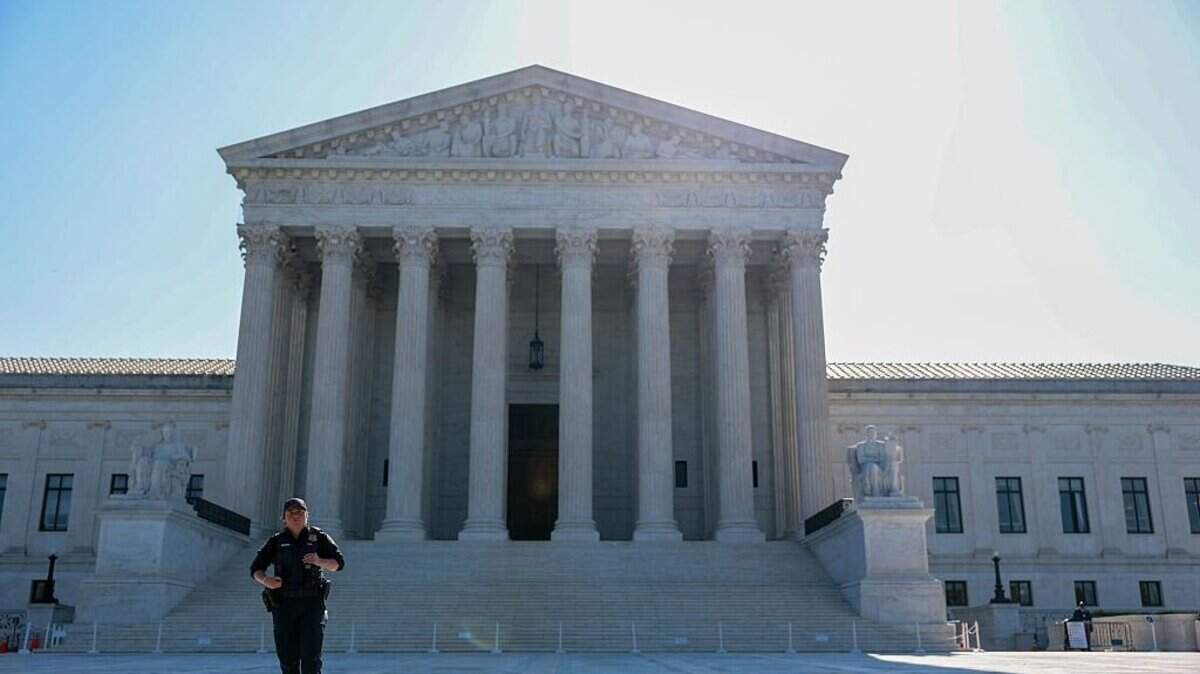
Supreme Court upholds birthright citizenship in blow to Trump immigration agenda
The U.S. Supreme Court on Tuesday upheld the longstanding, constitutionally guaranteed right of nearly all babies born on American soil to automatically be citizens regardless of where their parents are from or what their immigration status is.
Read more Child found dead in car parked at a Broward education center, police say
In a 6-3 decision, the justices said President Donald Trump’s executive order to restrict birthright citizenship to the children of American citizens and green-card holders is unlawful. The court also upheld that the 14th Amendment guarantees citizenship for all except in the narrowest of cases, like the children of diplomats and invading soldiers.
“Citizenship, then and now, was the right to have rights— to freely participate in our political community. The Framers of the Fourteenth Amendment extended that promise to ‘every free-born person in this land.’ We keep that promise today,” Chief Justice John Roberts wrote.
The ruling is one of the most significant blows to Trump since returning to office. The president has focused his agenda on drastically reducing legal and illegal immigration. Nearly 1 in 10 babies born in 2023 were born to undocumented parents or parents in the U.S. on temporary visas, according to the Pew Research Center.
Doing away with birthright citizenship was a cornerstone of Trump’s immigration policies. Had the justices ruled in Trump’s favor, it would have left babies born to undocumented immigrants, professionals and students on temporary visas vulnerable to deportation in South Florida and nationwide. Over half of Miami-Dade County’s population is foreign-born and many of its native-born Americans are the children of immigrants.
In the decision, Roberts intertwined U.S. history with the reasoning of the court, starting with English common law during colonial times. He alluded to the infamous Dred Scott decision — in which the Supreme Court ruled in 1857 that Black, enslaved Americans were not U.S. citizens — and the Civil War.
“The Court had overruled the common law, but the people—eventually—would overrule the Court,” wrote Roberts. “It took more than a decade—and the addition of names such as Antietam, Gettysburg, and Chancellorsville to our national canon.”
In the ruling, Roberts said that there is “scant evidence” for the government’s “drastically revisionist view” of the 14th Amendment and who it applies to.
“If Congress intended to limit American citizenship to the children of those domiciled in the United States, nothing in the succinct language of the Citizenship Clause conveyed that design. Words appearing frequently in the Executive Order— ‘mother,’ ‘father,’ ‘lawful,’ ‘temporary’— are absent from the Clause. For a simple reason: they did not matter,” he wrote.
Read more Miami state attorney ‘regrets’ fiancé parking his Porsche in fire lane at lunch
Roberts also alluded to the previous Supreme Court case that upheld birthright citizenship, in the 1898 case of Wong Kim Ark, a San Francisco-born laborer with Chinese parents who sued the government when he wasn’t allowed in back into the country after authorities said he was not an American. Roberts said that for the justices who dissented from the majority ruling Tuesday, the 1898 ruling was “essentially irrelevant.”
Justices Elena Kagan, Sonia Sotomayor, Ketanji Brown Jackson and Amy Coney Barrett joined Roberts in ruling that the 14th Amendment guarantees birthright citizenship. Justice Brett Kavanaugh concurred in the judgment against the administration, but dissented in part, saying in his own opinion that the Trump order does not violate the Constitution but does violate federal law. “Congress could otherwise enact new legislation establishing exceptions to birthright citizenship for children born to foreign citizens unlawfully or temporarily in the country,” Kavanaugh wrote.
READ MORE: Trump wants to limit birthright citizenship through executive action. Can he do that?
On his first day in office, Trump directed government agencies to stop issuing documents that prove citizenship, like passport and birth certificates, to the babies of temporary visa holders and undocumented immigrants. The president asserted that the 14th Amendment did not apply to these children because it was created only to protect the right to citizenship of formerly enslaved Americans and their descendants.
READ MORE: Supreme Court allows Trump to end birthright citizenship in some parts of the country
A tsunami of lawsuits ensued, filed by 22 states, as well as organizations and individuals, who argued the order violated the Constitution. Three federal judges in Maryland, Massachusets, and Washington struck down the Trump order nationwide in preliminary orders. The Trump administration then went to the high court and asked in an emergency request to limit federal judges’ power to issue orders that apply to the whole country, saying they exceeded judicial authority. The court last summer, shaping federal litigations on immigration policy and beyond. But it wasn’t until Tuesday that they ruled on birthright citizenship.
READ MORE: Supreme Court ruling on birthright citizenship may affect Florida babies in July
Read more Supreme Court upholds birthright citizenship in blow to Trump immigration agenda
This is a developing story. Check back for updates.
This story was originally published June 30, 2026 at 10:41 AM.









Post Comment