‘Failure by every measure’: Advocates demand accountability for Alligator Alcatraz
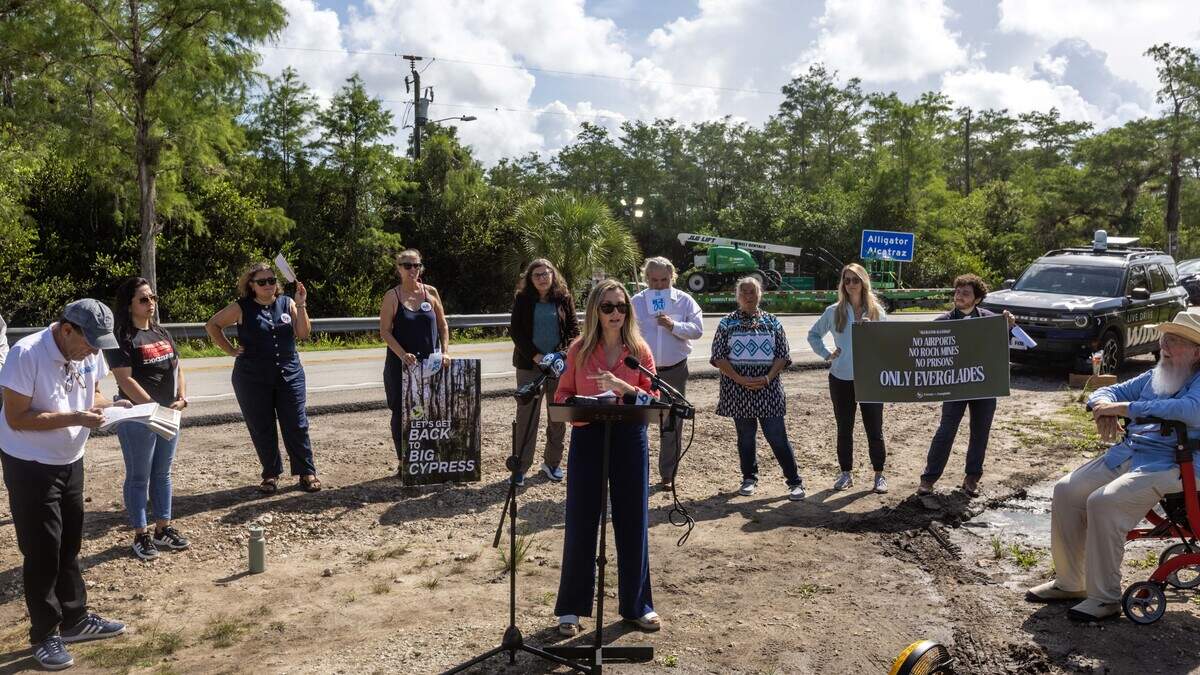
Last summer, environmental groups and advocates protested as construction trucks brought in generators, chain-link fences and fuel tanks for the construction of Alligator Alcatraz. On Friday, they gathered again outside the gates of the now-closed, controversial Everglades detention center. This time, the trucks left with white trailers, indicating that deconstruction had begun the day after Florida Gov. Ron DeSantis announced that the cages had been emptied and the facility had served its purpose.
Read more Drake facing backlash over new song. His apology tour is hitting Miami
However, the conservationist groups and immigration advocates say there still needs to be accountability for the harm they believe the site caused to the Everglades and to the immigrants who were held there and their families.
Eve Samples, executive director of Friends of the Everglades, said Alligator Alcatraz was a “failure by every measure,” an “abuse” of the Everglades and “an obscene waste of taxpayer dollars.” She called on the DeSantis administration to conduct an independent study to assess any environmental harm the detention facility caused to the surrounding wetland ecosystem.
Friends of the Everglades and other environmental groups filed a lawsuit against the state and federal governments last summer, arguing that, in their rush to erect a detention facility, they failed to conduct an environmental assessment required by the National Environmental Policy Act.
The case is set to return to federal court, after an appeals court overturned a decision by the lower court to shut down the facility.
DeSantis on Thursday said the state had spent billions on Everglades restoration and that, when the site was proposed, it was designed to be contained and not affect the surrounding environment.
Elise Bennett, an attorney at the Center for Biological Diversity, pointed to the lights at the facility’s gates still being on as the sun shone brightly Friday morning as an example of “the pure stupidity of this site.” She said people no longer being “detained in the middle of the Everglades is a huge milestone, but there’s still a ton of work to be done.”
Betty Osceola, a member of the Miccosukee tribe and an environmental activist, said when she heard that the governor had announced the closure of Alligator Alcatraz, she took it with a “grain of salt.” She said the facility, which she has been advocating to close down since last summer, has been a “blight on the Everglades.”
Osceola said she wants to walk down roads that were open to public use before the detention center took over. She is, however, concerned that the land may already have been destroyed during construction. She said she would like to see the land given to the Miccosukee tribe.
“It’s not over for me until all that infrastructure comes out. All those tents come down. All that fill that they put in and our stockpiling is removed,” she said. “It’s not over until this site is actually permanently protected.”
Read more Can you still get tickets to Colombia vs. Portugal World Cup match in Miami?
‘A small win for immigration policy’
Immigration lawyers and advocates welcomed the news that the tent camp was closed but said there is still much work to be done to protect the rights of the immigrants who had been held there.
Ana Maria Hernandez, the field director for the Florida Immigration Coalition, said her cousin, an immigrant from Cuba who had been living in the country for decades, was detained during his routine immigration check-in, bounced across the country to different detention centers for five months, and was in and out of Alligator Alcatraz twice.
“He was kept in chains, denied basic hygiene, given cold food, deprived of medical care, deprived of access to an attorney,” she said.
Since the facility opened, detainees and their families have complained of mistreatment and torture. The state and federal governments have denied the accusations, calling them a “hoax.”
Hernandez said the site’s closure was “a small win for immigration policy” but that there is still work to be done.
Paul Chavez, the director of the Litigation Program at the American Immigration Council, a nonprofit immigration legal and advocacy group, said Friday that the organization will continue to monitor and ensure that the immigrants who were caged at the facility receive their constitutional protections.
“The people that were held here deserve accountability, and they deserve justice,” Chavez said. “The facility may be closing down, they may be packing the tents up and moving on, but the constitutional protections that apply to the individuals that were held here continue to apply.”
Hernandez said in the five months her cousin was detained, she watched as he became “deflated” and a “shadow of himself.”
“Let the closure of this facility be a moment when we all can collectively get together and say in one voice, never again,” she said.
Read more What’s next for South Floridian Haitians with TPS after Supreme Court ruling?










Post Comment