US, Japan $550 billion deal leaves AI chip stocks guessing
Anyone who has renovated a house knows the trick contractors use on estimates. The plumbing and electrical get itemized down to the fitting, because those costs are already locked in.
Read more US energy chief says Navy to defend Hormuz until Iran backs down
The kitchen gets a vague range, because nobody has decided what it will cost yet, and a vague range usually means the biggest bill is still coming.
Japan’s $550 billion investment pact with the US is following the same logic, just with far more zeros attached.
The energy side of the deal arrived with company names, dollar figures, and construction sites already breaking ground, according to a White House fact sheet.
The chip and AI side has arrived with an adjective. For investors trying to get ahead of the next round, that gap between hard numbers and vague language is exactly what matters.
The energy money got names. The chip money got a mood.
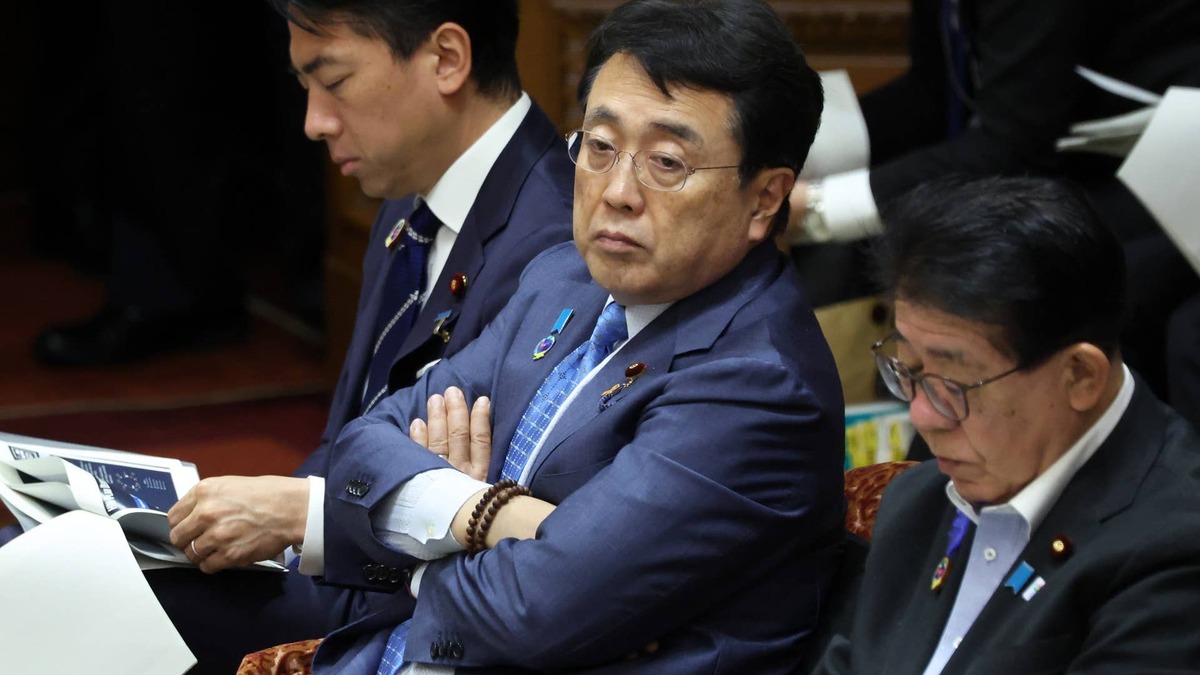
Japan’s Trade Minister Ryosei Akazawa told reporters in Washington on Friday, September 4 that talks on artificial intelligence and semiconductors will carry “very significant weight” in the pact’s next funding round, according to Bloomberg.
He declined to name which projects or companies were under discussion.
Related: Japan’s chip subsidies may swing $6.4 billion Sony bet
That vagueness is conspicuous, because the pact’s earlier tranches were specific almost to a fault. The original framework earmarked up to $332 billion for nuclear and power projects tied to Westinghouse, GE Vernova, and Hitachi, according to Anadolu Agency.
It also set aside $25 billion for gas turbine equipment and another $25 billion for electrical substations built with Toshiba.
Chips got no comparable line item then. They still don’t have one now.
One thing did get resolved this week: both governments confirmed no additional tariffs would be added on top of last year’s 15% rate, according to Bloomberg. That removes a source of uncertainty for Japanese exporters, even as the far larger question of where chip money goes stays open.
Wong Yu Liang / Getty Images
GE Vernova already cashed the check the pact wrote
GE Vernova and Hitachi are building small modular reactors in Tennessee and Alabama under the pact’s second tranche, a project the White House valued at up to $40 billion, according to Bloomberg. That location is not incidental.
Data centers near Huntsville have already strained the regional grid, exactly the kind of demand small reactors are designed to serve without drawing on residential capacity, according to NEI Magazine.
CNBC’s Jim Cramer has made a similar case, arguing GE Vernova profits from both sides of the AI power problem: gas turbines for demand that needs power now, and nuclear for demand still years away, according to CNBC.
The market has already noticed. GE Vernova shares gained 167% over the past 52 weeks, according to Barchart.
That run pushed the stock’s forward price-to-earnings ratio to more than three times the industry average.
A multiple that high means investors are already paying for years of growth that has not happened yet, which is exactly why the easy trade here is arguably behind us.
Read more Florida man declared mentally unable to stand trial after stabbing
The chip money is waiting on a name
The ambiguity around Tranche 3 looks less like indecision and more like a placeholder.
Akazawa has previously told public broadcaster NHK that funding is not restricted to Japanese or American firms, and that a Taiwanese chipmaker building a US plant with Japanese components would qualify, according to Reuters. He stopped short of naming Taiwan Semiconductor Manufacturing Co. (TSM) directly.
The headline $550 billion figure is softer than it sounds, too. Equity investment covers only 1% to 2% of the total, with the rest structured as loans and guarantees through Japan’s state-backed lenders, according to Reuters.
That structure gives Tokyo room to delay naming a specific chip winner without technically breaking the agreement.
That delay serves as a strategic buffer, allowing Tokyo to navigate shifting U.S. political cycles, ensure fab construction timelines are locked, and avoid committing capital to a single foundry winner too early.
Tokyo Electron sits in a more interesting position because it does not need that name revealed to benefit. The company builds the etching, coating, and deposition tools used inside chip fabs regardless of whose logo ends up on the building, and it has kept developing equipment for several future manufacturing generations at once.
Tokyo Electron trades in the US as TOELY and TOELF, giving American investors direct exposure to Japan’s equipment supply chain without picking a single chipmaker’s outcome.
More Tech:
- Anthropic-powered AI model sends shocking message to employee
- Rocket Lab clears 1st hurdle in its biggest satellite deal
- Apple’s $54 billion iPhone machine may be about to break its biggest ritual
What the sequencing itself is telling investors
The pattern across every tranche so far is identical: vague language first, specific dollar figures only once the politics are settled. Energy moved through that cycle in months.
Chips have been stuck in the adjective phase since at least February, when people familiar with the matter told Bloomberg that a SoftBank-led data center project was already a finalist for early funding.
Together, GE Vernova and Tokyo Electron sketch out a power-to-processing chain running through this pact.
One supplies the electricity that AI infrastructure needs, and the other supplies the tools used to build the chips that electricity will run.
For investors, the immediate catalyst isn’t the final ribbon-cutting headline. It is watching upcoming quarterly equipment order backlogs and bilateral trade summit updates to identify which infrastructure and tool suppliers are quietly booking revenue while Tranche 3 works its way out of bureaucratic hold.
Related: Billionaire Stanley Druckenmiller gets sharp response from Scott Bessent
The Arena Media Brands, LLC THESTREET is a registered trademark of TheStreet, Inc.
Read more Trust, but verify, your charitable giving | Ed Kellerman
This story was originally published September 6, 2026 at 1:07 PM.










Post Comment