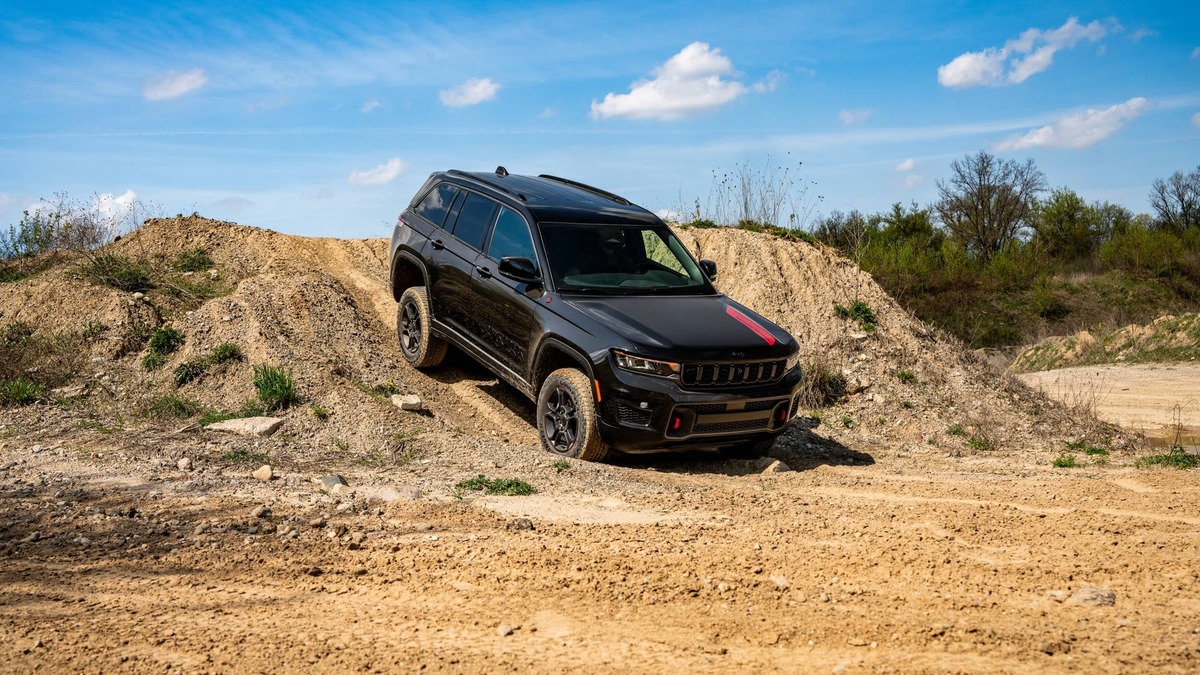
Jeep’s Third Grand Cherokee Spring Recall Is Four Times Bigger Than the Last
A recall that repeats is worth more attention than a recall that is large. This one is both. Stellantis filed campaign 26V562 covering 328,381 Grand Cherokees whose rear coil springs can come off the vehicle while it is being driven, and it is the third attempt at the same defect in three years. What makes it interesting is not the repetition itself but the shape of the escalation: the affected population has quadrupled, the estimated defect rate has fallen, and the fix is no longer the fix it was. Read together, those three changes suggest Stellantis has finally worked out what is actually wrong.
Read more Hurricane Lowell nears Hawaii. Latest forecast, storm impacts
What is failing
According to the , the rear coil springs may have been installed improperly, either during original manufacturing or during a previous repair. An incorrectly seated spring can work its way out of position and detach from the vehicle in service.
The hazard Stellantis lists is the one you would expect. A coil spring departing a moving vehicle becomes a road hazard for everyone behind it, with no warning beforehand. That is the same category of defect as the Bilstein reservoir failures that hit Ford and Toyota this year, where the recalled vehicle stays controllable and the danger transfers to other traffic.
There is a second consequence the filing does not spell out. A vehicle running without a rear spring loses support at that corner, which makes handling and braking behave in ways the driver will not expect. Stellantis reports no accidents or injuries connected to the defect.
Which vehicles
The population splits three ways: 97,477 Grand Cherokees from the 2022 and 2023 model years, 215,433 Grand Cherokee L models from 2021 through 2023, and 15,471 Grand Cherokee 4xe plug-in hybrids from 2022 and 2023.
Vehicles fitted with air suspension are excluded, since they do not use the coil spring arrangement in question. Stellantis estimates 0.1% of the recalled population actually carries the defect, which works out to a few hundred vehicles.
Why the second recall existed
Here is the part that reframes everything, and it comes out of the earlier federal filings rather than the announcement. The first campaign, , was filed on June 1, 2023 under Stellantis reference 64A. It covered the Grand Cherokee and Grand Cherokee L, and the instruction to dealers was to inspect the rear coil spring assembly and repair it where necessary. The paperwork estimated 20 minutes for an inspection and up to four hours if a repair was needed.
The second campaign, , arrived in late January 2026 under reference 20D and covered 80,620 vehicles. Its defect description is the important document in this whole story. Stellantis stated that the affected vehicles were ones where the rear coil spring may not have been correctly installed during the repair performed under recall 23V413, or where that recall was never completed at all.
In other words, the second recall was not a new defect. It was a recall of the first recall’s repair work. The suspect production period was defined not by build dates alone but by which cars had received a 64A repair or still carried an incomplete recall status, and vehicles that were inspected without needing a repair were excluded. Stellantis put the estimated defect rate at 0.5%, and that campaign formally replaced 23V413, meaning any Grand Cherokee already fixed under the first recall needed fixing again.
What changed this time
Compare the second and third campaigns and three shifts stand out. The population grew from 80,620 to 328,381, a fourfold increase, and now includes the 4xe plug-in hybrid, which was absent from the January filing. That suggests Stellantis has stopped trying to identify which specific cars received a bad repair and is instead covering the full build range.
The estimated defect rate moved the other way, from 0.5% down to 0.1%. A lower rate across a much larger population is what you would expect if the company widened the net for safety reasons rather than because it found more broken vehicles.
Read more 49ers place DT Sam Okuayinonu (foot) on IR
Most tellingly, the remedy is different. The first two campaigns had dealers inspect and repair the spring assembly, which is a workmanship fix. This time dealers will replace both rear coil spring lower isolators on every affected vehicle, no inspection-and-decide involved. Replacing a specific component on all cars rather than correcting installation on some is what a manufacturer does when it has identified a part as the root cause instead of the technique.
That is the most encouraging thing in this filing. Two rounds of asking technicians to install the spring properly did not solve it. The third round changes the hardware.
One number worth noting
As of August 6, 2026, Stellantis had logged 29 customer assistance records and 406 warranty claims potentially related to the rear coil spring assembly across all markets. Set that against the estimated defect rate. At 0.1% of 328,381 vehicles, the expected number of defective cars is close to 330, which is fewer than the warranty claims already recorded.
The two figures are not directly comparable, since warranty claims span all markets and may include vehicles outside this recall population, and a single vehicle can generate more than one claim. But it is a mismatch worth flagging, and one reason to watch whether this campaign gets expanded again.
What owners should do
There is no Do Not Drive advisory. Enter your vehicle identification number at the federal recall database or through Jeep’s owner portal to confirm whether your vehicle is included, and note that trim level and model year alone will not tell you, since air suspension cars are out and the affected build range is broad.
Interim owner notification letters are scheduled to be mailed between September 29 and October 7, 2026. Stellantis references its standing reimbursement plan on file with regulators, so owners who already paid for related work out of pocket should keep receipts. The Stellantis recall assistance line is 1-800-853-1403.
Anyone who had a rear spring repaired under either of the earlier campaigns should assume they need this one too. That is precisely what happened between the first recall and the second.
The other Grand Cherokee recall this week
This is not the only campaign Grand Cherokee owners are dealing with. The model is also named in a separate and far larger recall covering more than 840,000 vehicles across Stellantis brands, including the Chrysler Pacifica, Dodge Charger and Ram 1500, over radio software that can prevent the rearview camera image from displaying.
A vehicle appearing in two active recalls in the same week, one of them for the third time, is the kind of thing that erodes owner patience faster than any single defect does. Each repeat visit costs a customer a day and costs Stellantis goodwill it is not currently in a strong position to spend. Check your vehicle identification number at NHTSA or through Jeep.
Read more Audi Offers EV Lessees Up to $10,000 to Keep Their Cars
Copyright 2026 The Arena Group, Inc. All Rights Reserved
This story was originally published September 6, 2026 at 12:30 PM.









Post Comment