Could ‘upzoning on steroids’ be coming to Little Havana?
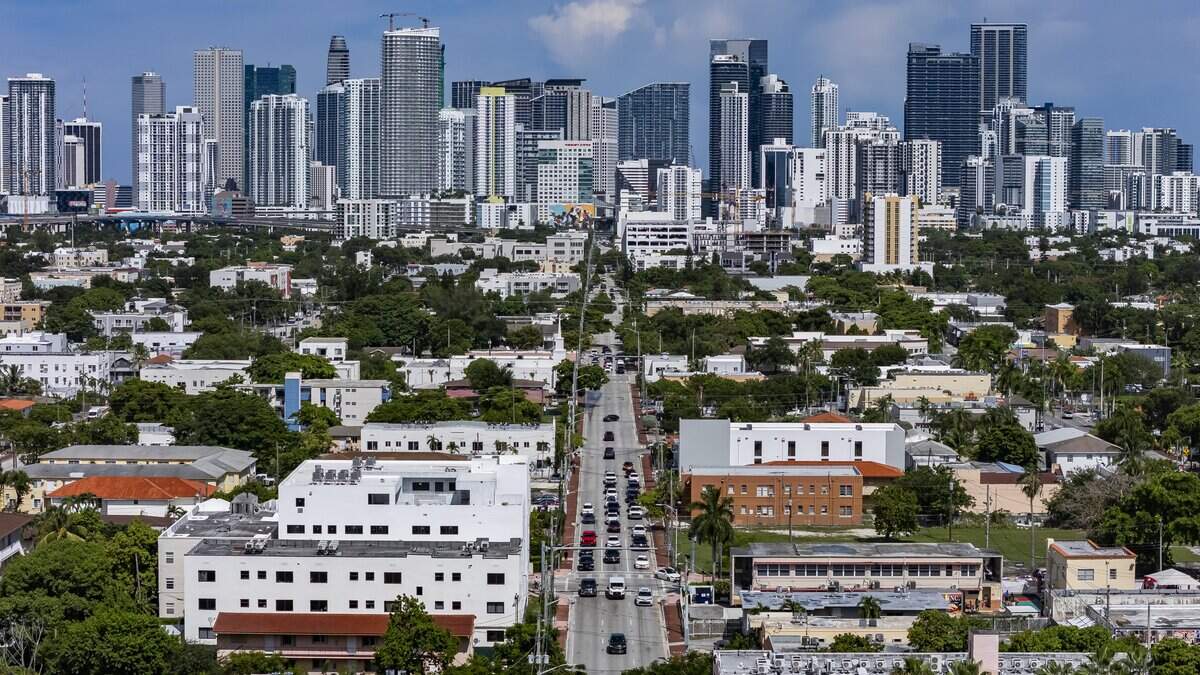
Miami city officials are pushing a zoning change in Little Havana that would rezone about 460 properties that make up 100 acres in a move they say will benefit everyday Miamians by increasing the housing supply to bring down costs.
Read more As college graduates fret over finding jobs, a record shortage of workers is projected
But some residents say the plan — which doesn’t guarantee any affordable housing — is being rammed through without proper vetting and worry that it would cause more harm than good by bringing traffic and congestion to the area and threatening the charm and character that defines Little Havana.
Despite those hang-ups, the proposal is moving forward. On Wednesday night, the city’s Planning, Zoning and Appeals Board voted 7-3 to green-light the change. It’s slated to go to the City Commission for a preliminary vote next month, and — pending a state review — back to the commission again in December for final approval.
The change could make room for more than 16,000 new residents in the area in the years to come, according to the city. A state review is required to confirm the city can maintain its level of service given the increased density, which could bring the total maximum population in the area up to about 27,600.
The proposed rezoning would allow taller and denser development along several major corridors, including Southwest Seventh Street and Southwest Ninth Street, the streets that surround Calle Ocho, Little Havana’s main artery. The plan would not change Calle Ocho’s zoning.
The land being considered for rezoning is designated T4 and T5 under the current code. Areas zoned T4 generally have lower-density residential buildings, like small apartment complexes, which can be up to three stories tall. Those areas are allowed up to 36 residential units per acre.
T5 zoning is denser, allowing up to 65 units per acre and up to five stories. Those areas typically have offices and retail in addition to residential development.
Under the proposed changes, the areas zoned T4 would become T5, and areas zoned T5 would become T6. T6 zoning allows even denser developments, with 150 units per acre. That zoning designation also comes with potential bonuses for developers. In the parts of Little Havana that would be rezoned T6, buildings could be up to eight stories tall or, with additional bonuses, up to 12 stories. Calle Ocho is already zoned for that type of development.
Proponents have said the changes would bring uniformity to the zoning code — in line with what’s allowed on adjacent Calle Ocho — to allow for new development and more housing in Little Havana. They say increasing the housing supply is much-needed in order to bring costs down.
Sevanne Steiner, assistant director of the city’s Planning Department, said at an Aug. 25 community meeting at José Martí Gym that there’s increased pressure for development in the city because “the people are here, and they’re coming.”
“There’s two choices: Either rent and housing continue to climb and climb and climb, or we create some type of alternative,” Steiner said.
But that’s not necessarily the case in Miami, said Ned Murray, associate director of Florida International University’s Metropolitan Center and an expert on South Florida’s housing market.
That’s because Miami’s real estate market is a tale of two demands: On one hand are the local residents, who rent or buy the homes they actually live in. On the other are external investors, said Murray — people who don’t necessarily live full time in Miami and who buy properties as investments, pushing up local prices.
“It’s investors who’ve been driving the Miami market for over 20 years now, probably longer,” Murray said.
He noted that even as development has increased the local housing supply, Miami still has “such a huge gap between what is the market rent and what is affordable for local residents.”
State vs. local rules
Residents expressed significant pushback to the city’s plan at the Aug. 25 meeting, with one person calling it “absolutely scandalous” and saying it sacrifices residents’ comfort for the benefit of out-of-state “carpetbaggers.”
As a result of feedback from that meeting, which took place at the request of District 3 Commissioner Rolando Escalona, the city removed properties abutting parts of Shenandoah and The Roads from the upzoning proposal.
Escalona, whose district includes Little Havana, described the proposal as a “proactive” response to Florida’s Live Local Act, a law passed in 2023 to stimulate workforce housing development.
The Live Local Act gives tax incentives to developers who designate 40% of the units in a project as workforce or affordable housing for 30 years. It also lets developers bypass certain zoning restrictions, allowing them to build taller and denser than is normally permitted in an area. Local governments generally can’t block projects that meet the Live Local Act’s criteria, which has made the act controversial with some city commissions.
Rent in workforce housing units generally costs one-third of the monthly income of someone making 120% of . For a single person in Miami-Dade County, that’s a little over $100,000.
Read more Shooter who killed man at Homestead market is arrested, sheriff’s office says
A map shown at Wednesday’s meeting showed 16 existing applications for Live Local projects in Little Havana.
The city’s presentation at the planning and zoning meeting on Wednesday said its goal is to “provide sensitive alternatives” to the Live Local Act. While the proposed upzoning would increase the density allowed along certain corridors in Little Havana, it would not be as dense as what the Live Local Act allows.
Although upzoning those areas may encourage developers to build within the city code, rather than using Live Local, they would still be able to follow the Live Local guidelines if they choose. Live Local generally allows developers to build to the height of the tallest building within a one-mile radius. One proposed Live Local project at 531 SW Seventh St. in Little Havana would be 23 stories tall.
“This is not about giving developers a blank check to build bigger,” Escalona said in a statement. “It is about protecting our ability to shape the future of Little Havana instead of having that future dictated to us project by project.”
Escalona said it’s important to review the plan “parcel by parcel” and incorporate feedback from residents and property owners.
“My commitment is clear: protect our residential neighborhoods, preserve the historic character of Little Havana, and ensure that growth occurs in the right places and in a responsible way.”
‘Upzoning on steroids’
To some, the proposed change represents a new era in Little Havana following former Commissioner Joe Carollo’s eight-year run as the District 3 commissioner, and his younger brother Frank Carollo’s two terms in the same seat for eight years before that. Escalona was elected District 3 commissioner in December after Joe Carollo termed out.
“For the last 15 years, Little Havana has stagnated under the Carollo corruption,” Carlos Fausto Miranda, whose real estate brokerage is based in Little Havana, said at Wednesday’s meeting. “And I come here today with an incredible amount of enthusiasm for the future, because finally, finally, finally, finally, we have someone bold enough in the city, in the administration, to stand up for this neighborhood that we so truly, deeply care for.”
Not everyone agreed. Suzy Batlle, who owns an ice cream shop on Southwest Eighth Street, said the plan feels rushed and asked that the planning board vote be deferred.
“What’s wrong with Little Havana now? What’s wrong with our area? Who wants big buildings there?” Batlle said. “The whole point is that it’s quaint. The whole point is that it’s charming. The whole point is that people want to go backwards, and that’s the nostalgic part of our neighborhood.”
Board member Paul Mann expressed strong skepticism toward the plan, dubbing the proposal “upzoning on steroids.” He was one of three dissenting votes Wednesday night.
“Where is this coming from, and who’s pushing it?” Mann said. “And why is it being pushed down our throats so quickly? It’s a little odd. It’s a massive project.”
Adam Gersten, chair of the board, joined Mann in voting no, although he said he would be supportive of something akin to a pilot program and that he understood the need to make zoning more efficient.
“If you unlock all of this height and density quickly, people will take advantage,” Gersten said. “They will demolish as soon as they can to at least make sure nothing changes. And then they can say, ‘Well, now we have nothing, and we can now build … whatever we want to build.’”
In the city of Miami, the area median income is $76,300 for one person or $109,000 for a family of four.
But Little Havana is, on average, far poorer than that. A Miami Herald analysis of U.S. Census Bureau data shows that the median household income for Little Havana is roughly $47,000, with some tracts showing annual median incomes as low as $23,000.
“[Little Havana] is one of the most distressed communities in all of the city of Miami, in terms of income and poverty,” said Murray, the South Florida housing market expert from FIU.
“If you’re not going to build affordable housing there, where will you build it?” Murray said.
Read more St. Kitts Prime Minister Terrance Drew is in Miami amid medical scare









Post Comment