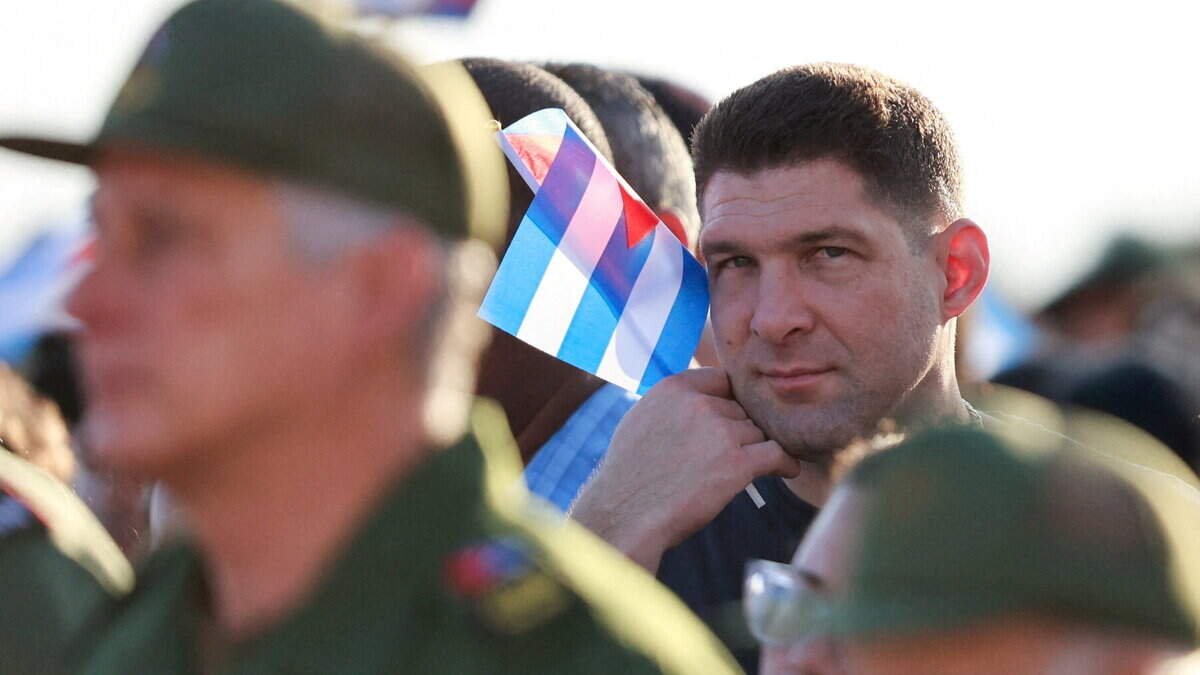
Exclusive: How politics in Miami and Cuba killed secret negotiations, U.S. energy deal
During back-channel negotiations earlier this year, the Trump administration proposed an energy deal to Cuba that would have secured American investment in the country’s deteriorated energy infrastructure and a steady supply of U.S. oil to an island plagued with blackouts.
Read more Did Coral Gables Commissioner Melissa Castro violate state ethics law? What we know
But Cuba’s hesitation and Miami politics stood in the way of closing the deal, a source with knowledge of the discussions told the Miami Herald. The person asked not to be identified to speak about the sensitive matter.
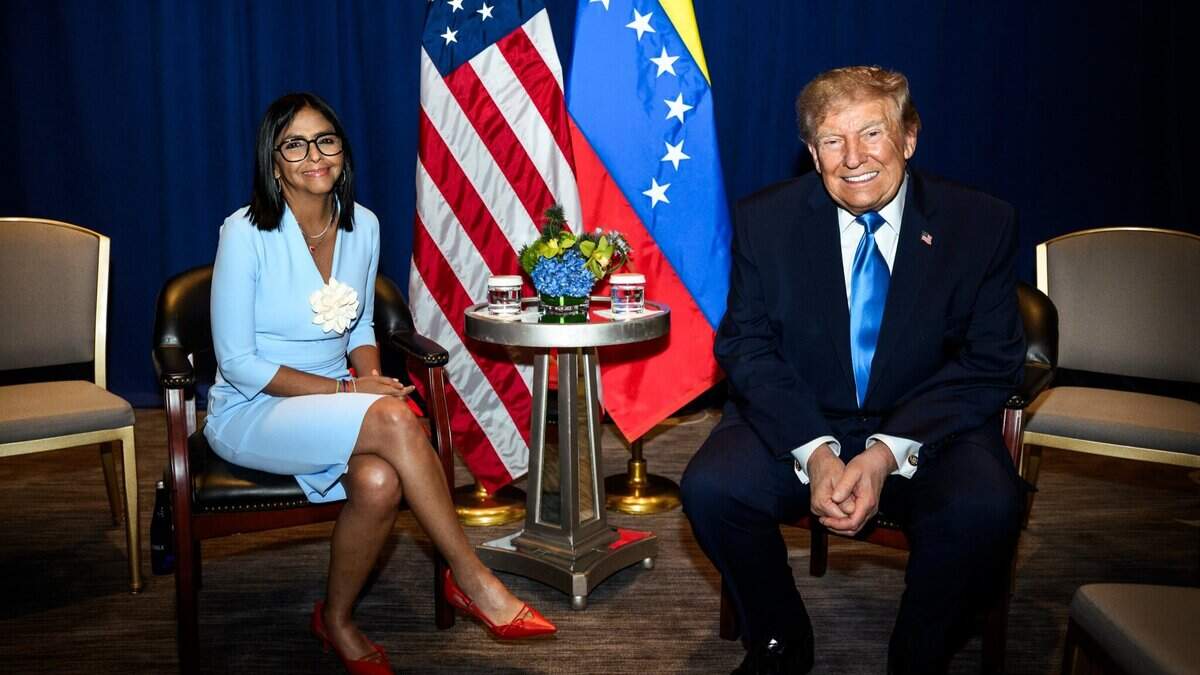
The Trump administration recently locked in a deal with Venezuela’s government, headed by interim President Delcy Rodriguez, securing access to massive oil reserves. The agreement, according to Secretary of State Marco Rubio, would steer Venezuela away from U.S. adversaries like Russia and China, whose companies held those oil fields and kept them unproductive.
The deal with Cuba, while much smaller in its scale, the source said, would have sent “shockwaves” throughout the Cuban government establishment, as it was also tied to a demand that the country’s handpicked president, Miguel Díaz-Canel, seen as an incompetent figurehead by Trump administration officials, leave power.
It would have given the United States significant sway over the country as Cuba’s main oil provider, aligning with President Donald Trump’s “Donroe” Doctrine of U.S. influence in the Western Hemisphere, the source added.
In discussions with Raúl Castro’s grandson, Col. Raúl Guillermo Rodríguez Castro, U.S. emissaries told him Cuba could secure the oil it needed from the United States if the government would agree to privatize CUPET, the country’s state-owned energy company.
CUPET has refineries, storage facilities and gas stations. The service stations are managed by CIMEX, the largest umbrella company in the military conglomerate GAESA. Whoever buys CUPET would be buying its business: importing and distributing gasoline in Cuba.
The timing of the offer was key.
On January 3, U.S. forces had captured Venezuela’s strongman Nicolás Maduro, shocking the world and Cuban leaders, who had sent people to protect him. Thirty-two Cuban military officers died that day.
With Maduro gone, so was the oil he was sending to Havana for free. Then, a few weeks later, in late January, Trump signed an executive order declaring a national emergency related to Cuba and threatening tariffs on the island’s oil suppliers. Mexico stopped sending oil too. Experts believed the island’s oil reserve would run out in a matter of weeks.
That’s where the Trump administration stepped in with its proposal: Cuba wouldn’t need to worry about oil because the United States would provide it. As a sign of the administration’s interest in Cuba’s energy sector, it authorized the sale of U.S. oil to Cuba’s private entities in February.
Ideally, the Trump administration wanted U.S. investors to fully control CUPET. But the Cubans had doubts about a deal that would make Cuba wholly dependent on a U.S. company for its oil. The Trump administration’s emissaries also discussed other possibilities, such as acquiring CUPET through a joint venture with the Cuban government and bringing in investors from other countries.
Any of those options would also have required settling property claims against CUPET by ExxonMobil; the U.S. Supreme Court allowed ExxonMobil’s lawsuit over Cuban property seized by Fidel Castro’s government to proceed against CUPET and CIMEX in June.
For Cuba, the energy deal would have solved a major problem and spared the population months of relentless blackouts that now last days at a time.
Cuba’s communist government had always depended on a foreign patron, first the Soviet Union and later the socialist regime in Venezuela, for its energy needs. The country can produce only 40% of its consumption needs, so blackouts have been common in recent years. Its dilapidated electrical grid has been collapsing regularly since 2024. Soviet-era power stations and old refineries, whose technology predates the Cuban revolution itself, frequently break down because the government has not invested in modernizing them.
While Cuban leaders were mulling over the proposal, Axios learned of secret negotiations led by Raúl Castro’s oldest grandson on the Cuban side. The Herald reported on a February meeting between Rubio’s advisors and Castro’s grandson in St. Kitts and Nevis. The Herald also reported that the administration wanted Díaz-Canel out. A USA Today story claimed the administration was only interested in economic deals with Cuba.
Miami Cubans pushed back
The reaction in Miami was swift.
Incredulous Cuban exiles and local Cuban American Republican politicians questioned how Rubio could be negotiating with a member of the Castro family.
U.S. Rep. Carlos Gimenez told Telemundo 51 in March that reports of negotiations were “false” and that Rubio was not talking to Castro’s grandson.
Also in March, U.S. Rep. Mario Díaz-Balart told the Miami Herald that the Trump administration was not actually negotiating with members of the Castro family but was having “the kind of conversations they had with Maduro,” he said, referring to talks with Maduro about his possible exit before he was captured. He told Telemundo there was no “immunity agreement” with the Castros.
It was a line that U.S. Rep. Maria Elvira Salazar also repeated in an April congressional hearing.
Read more Less than 100 days from Haiti’s first election in a decade, doubts grow it will happen
“The Cuban people deserve freedom, not another deal to keep the same regime in power,” she said. “I made it clear: no negotiations with the Castro family to preserve a dictatorship. The future of Cuba must be decided by its people, not a dynasty.”
They also expressed fear that the administration wanted to replicate what had happened in Venezuela, where Trump’s deal with Maduro’s former vice president Rodriguez has left most of the old chavista regime structure in place, at least for now.
In Havana, the government reluctantly agreed to liberalize its economy somewhat, but its reform package was received with skepticism by experts and the Trump administration alike. There was another major roadblock in the negotiations: Rodriguez Castro’ — known colloquially as El Cangrejo, the Crab —had said privately that he, with his grandfathers’ blessing, was open to all sorts of economic reforms and deals with the United States, but the U.S. government could not dictate how Cubans were governed, a person who met him said. The person asked not to be identified to speak about the sensitive matter.
In a few words: the Castro family was not leaving power, nor, apparently, Díaz-Canel.
Still, Castro’s grandson, described by the source with knowledge of the CUPET deal as “a loose cannon,” also came out damaged from the whole affair. Because he holds no public office, his role in the negotiations, which prompted a flurry of profiles exposing his luxurious lifestyle, also sparked unusual open criticism on the island.
Meanwhile, Díaz-Canel had comfortably adopted a discourse of “resistance” against U.S. pressure, likely to please hardliners in Havana too.
At the end, “the Cubans were not there yet,” the source with knowledge of the negotiations said, speaking of the CUPET deal.
The administration also seemingly abandoned its initial approach, doubling down on a sanctions’ strategy that pleases hardliners in Miami.
On May 7, Rubio imposed sanctions on GAESA, the military conglomerate whose company CIMEX runs the service stations. On May 20, the U.S. Justice Department indicted Raúl Castro for the killing of four men in the 1996 shootdown of a plane belonging to the Cuban exile organization Brothers to the Rescue. Then in June, Rubio finally sanctioned CUPET, accusing the island’s communist leaders of “having weaponized energy” to control the population and for their own “kleptocratic” benefit.
Last Tuesday, the Trump administration also imposed sanctions on two CUPET-related entities.
‘No progress’
Without oil since January, except for a Russian oil tanker delivery in March, the Cuban government now blames the U.S. for the island’s blackouts. Speaking to reporters in Spanish during a trip to Colombia on Tuesday, Rubio blamed the Cuban government instead.
“The reason Cuba is facing an oil shortage is that Venezuela no longer provides them with free oil,” Rubio said. “They used about 30% for their own needs and then resold the rest for cash—and that has come to an end.”
“The second reason,” he added, “is that they were already experiencing power outages before that. Even with Venezuelan oil, Cuba has suffered multiple blackouts over the last three or four years because it didn’t invest a single cent in its own energy infrastructure.”
On Monday, Cuba’s foreign minister said there were open communication channels with the U.S. State Department, but the conversations “show no progress.”
“There have been no negotiations—nor are there any at this moment—and there are no agendas or roadmaps,” he added.
Despite the stalemate, U.S. investors seem poised to take over assets left by foreign companies that have left the island fearing U.S. sanctions. Two rival groups backed by U.S. investors are bidding to take over Canada’s Sherritt International’s stake in a mining joint venture with the Cuban government. Cuban officials have signed off on the takeover, a person with knowledge of the discussions who asked not to be identified because they were not authorized to speak of the matter told the Herald.
U.S. oil is also flowing to Cuba, just not in the amount that’s needed.
According to figures compiled by the U.S.-Cuba Trade and Economic Council, U.S. companies have exported $157 million in fuel to Cuban private entities through July this year.
Read more Did Coral Gables Commissioner Melissa Castro violate state ethics law? What we know






Post Comment