Less than 100 days from Haiti’s first election in a decade, doubts grow it will happen
Haiti’s first general elections in a decade are less than 100 days away, and already questions about preparations are fueling doubts about whether the country will be ready to vote as scheduled on Dec. 13.
Read more Did Coral Gables Commissioner Melissa Castro violate state ethics law? What we know
Among the biggest warning signs is a sluggish voter-registration process. With just 34 days left before registration closes and barely a half million Haitians registered to cast ballots, there are growing doubts that election officials will meet a goal of registering 3 million to 4 million voters.
A revised electoral calendar and a decision Tuesday to replace the president of the nine-member Provisional Electoral Council — the third leadership change in two years — are adding to the uncertainty.
“Getting a million registered voters is luck. There is no way they will get to one million,” said Carlos Hercule, a former justice minister and vice-president of the Provisional Electoral Council that conducted Haiti’s last presidential elections in 2016.
Hercule is part of the Bureau of Legislative Consultation and Research, which is monitoring the implementation of the electoral calendar. So far nether the government nor the electoral council is willing to publicly say elections aren’t happening as planned.
While also stopping short of saying a Dec. 13 vote for president, parliament and local offices is impossible, Hercule’s group said in an analysis that the slow registration process, persistent gang-fueled violence, the limited time remaining and uncertainty surrounding a planned constitutional vote all raise questions about whether the timetable can still be carried out coherently.
As of Wednesday, only 540,407 Haitians had registered to vote out of a potential electorate of 6.6 million, according to statistics on the electorial council’s website. At the current pace of about 10,700 registrations a day, roughly 904,000 people —or 14% of the potential electorate—would be registered by the deadline, leaving some 5.7 million otherwise eligible Haitians unable to cast a ballot.
For comparison, turnout among registered voters in recent elections in the Caribbean was around 40% in Jamaica, 54% in the Dominican Republic, 58% in Guyana and 65% in The Bahamas, according to voter turnout database from the International Institute for Democracy and Electoral Assistance, an intergovernmental organization that works on elections, democracy, and political participation around the world.
Haiti’s challenges are beginning well before turnout: At the current pace, more than 86% of its potential electorate would not even be registered to vote, further raising concerns about the credibility of a vote.
Ahead of the July 20 voter registration launch, several international groups with elections expertise raised questions about the exercise — not just because such a registration requirement had not been used in previous balloting or because the voting centers are too far away from perspective voters, but also because the environment in which it is being undertaken.
Questions were posed by the former prime ministers of The Bahamas, Jamaica and St. Lucia who make up the Caribbean Community’s “Eminent Persons Group,” who left on Wednesday after a week in Port-au-Prince meeting with politicians about the ongoing security and humanitarian crisis and elections preparations.
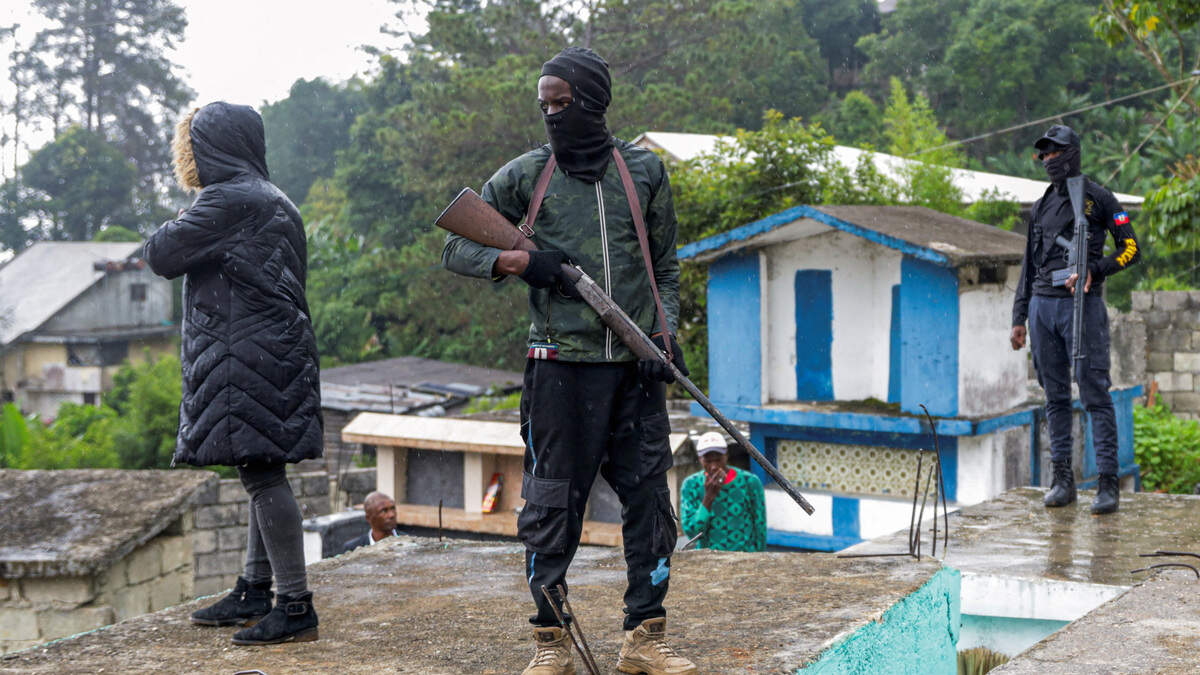
The West and Artibonite regions, home to the country’s largest concentration voters in the last vote, remain affected by armed gangs, leaving electoral officials without access to nearly two dozen administrative districts and voting centers. Violence, meanwhile, has driven nearly 1.5 million Haitians from their homes, including residents in the regions of the West, Lower Artibonite and Central Plateau, who would all need to register and possibly change addresses in order to cast ballots under the electoral law that was adopted.
Adding to the concerns about disenfranchisement are reports that armed groups are confiscating National Identification Cards, which Haitians need to register.
READ MORE: Haiti is also supposed to pursue minor constitutional changes in order to favor better governance
Those who favor a registration drive have argued that the voter list needs to be purged because a lot of people have died since the country last went to the polls, and many have also relocated out of Haiti.
Hercule, who acknowledge officials should have been regularly updating the voter list, said the drive isn’t necessary, and it’s become more of an “obstacle” to holding an inclusive election.
“There isn’t enough time for this,” he said, noting that the time frame between when the process was launched and when it’s scheduled to close on Oct 13, is just 86 days. “We cannot do this exercise of cleaning the list in 86 days. There is no way to do this.”
No security with process
He also noted that despite the efforts that went into new national identification cards — a highly controversial multimillion dollar modernization project introduced by late President Jovenel Moïse to introduce biometrics — the technology is not being used by elections officials.
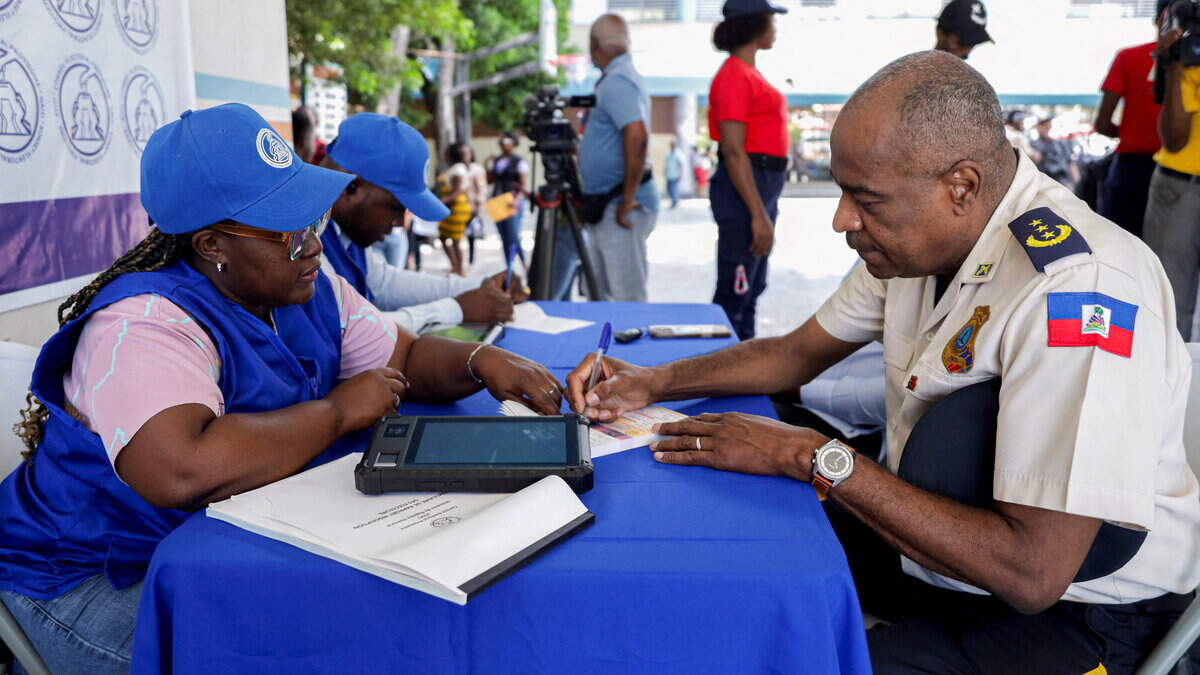
Under the current process, individuals go to the registration center where they will later vote, present their identification card with a unique number and are registered after a worker checks their name on a tablet and visually confirms their identity. The worker than hands them a paper receipt as proof of their registration.
Read more Here is the high school football scoreboard for South Florida – Week 4
“There is nothing that prevents a candidate from doing what they are used to, showing up with 200 cards and saying ‘Register these for me,’ because there are no fingerprints or biometrics taken,” Hercule said. “Today it’s the registering agent who is confirming your identity by looking at you; it’s not their tablet.”
Hercule said the electoral council on which he served had laid the groundwork for greater use of technology in Haiti’s next election, and he doesn’t know what happened to those plans.
While stopping short of accusing authorities of deliberating trying to limit voter participation, Hercule said the process could invite such suspicion.
“If someone were to make that interpretation, you couldn’t judge them,” he said, noting that the problems are also symptomatic of the fact that after 39 years, Haiti still doesn’t have a permanent elections entity.
The concerns being raised by Hercule and his observation group are not isolated.
At the conclusion of a visit to Port-au-Prince last month, the head of the Organization of American States raised concerns about the “painfully slow” voter registration drive, and stressed that the electoral timetable required “urgent acceleration.” Secretary General Albert Ramdin reiterated those concerns last week while informing the OAS’s Permanent Council about the high-level delegation he led.
The voter registration campaign, Ramdin said, needs to be expanded. Haitian authorities also need to accelerate the production and issuance of national identification cards and to intensify public information outreach and voter mobilization campaigns, he stressed.
“Citizens require a valid national ID card to be able to register to vote and there is an outstanding gap of around 1 million cards, which are still being produced and distributed,” said Ramdin, who was joined on the trip by members of the OAS electoral mission, which in addition to preparing to observe the elections is now helping the council implement parts of the process.
Political groups have also begun raising concerns about the vote organization. A number of leaders are calling for revisions to the electoral law and changes to some requirements. Haitians seeking office, for example, are required to submit 26 documents to qualify.
Of 105 political parties and groups that have been authorized to compete, less than 30 had been able to complete the registration of their so-called 30,000 members as of Wednesday.
Another issue is the official opening of the campaign. Right now, according to the calendar, it happens on Oct. 5, nine days before the electoral council is supposed to publish the final list, Oct. 14, of who has been qualified to run. That discrepancy, Hercule said, has been pointed out and remains unchanged.
Constitutional reform, diaspora voting
Voter registration and candidates requirements are not the only issues prompting concerns.
Under a governance pact signed between several political parties and Prime Minister Alix Didier Fils-Aimé earlier this year, Haiti is also supposed to pursue minor constitutional changes in order to favor better governance. Yet with a deadline approaching to announce the proposed changes and launch a public campaign, there is still no clarity on what the changes would entail.
There is also a more fundamental question of how could voters cast ballots in the first round under one Constitution and potentially return for a runoff on Feb. 27, 2027, under a different set of rules.
“It’s truly incomprehensible when you look at an exercise like that to see how it can be done,” Hercule said.
Then there is the planned pilot program to allow some Haitians living abroad to vote for president. The government has raised the possibility of limiting the casting of ballots to only certain cities and countries, prompting questions about its legality and the role the diaspora ballots could play in a closely contested presidential race.
Haiti’s electoral law
For Hercule, these and other questions, including those surrounding the effect of bilateral sanctions by the U.S., Canada, the Dominican Republic and the European Union — they aren’t recognized in Haiti’s constitution and are the subject of competing election-related texts —point to a deeper problem with the electoral decree itself.
“People who study logistics always argue that when you write a text it should bring about solutions, not be an instrument of problems,” he said. “This decree, right now, that’s what it’s doing.”
Past electoral decrees produced crises during implementation, said Hercule.
“This text is a generator of crisis, a generator of conflict, and it can be a generator of violence,” he added, “when it should be an element of a solution.”
Read more Marlins nearly complete historic comeback (twice) vs. Mets








Post Comment