‘We rescued people with our bare hands’: Miami woman led aid in Venezuela quakes
Miami businesswoman Gisela Rojas was on vacation in Venezuela when the first tremors of two massive earthquakes hit the central and northern parts of the country last week.
Read more ‘Recklessness is defined by the risk you create.’ July 4th boating safety urged
“The building was moving like a deck of cards,” says Rojas, a real estate expert who appears regularly on the Univision and Telemundo TV networks. She was in her apartment in Campo Claro, east of Caracas, when the quakes struck on June 24.
She couldn’t stand, she said, and, as she was rolling from side to side she threw herself to the floor. The quake-resistant structure held, and Rojas and her children went down the stairs to safety. Her cousin, who lived in La Guaira, was not as lucky: When the first quake stopped, her 27-year-old cousin out onto her balcony to see what was happening. Her cousin died when the second quake struck seconds later and the wall collapsed —seven floors in free fall.
Citizens to the rescue in La Guaira
The next day, Rojas, who was born in Caracas, went on the road to check on her relatives and friends in La Guaira, a coastal state 19 miles north of Caracas that was the hardest hit by the earthquakes.
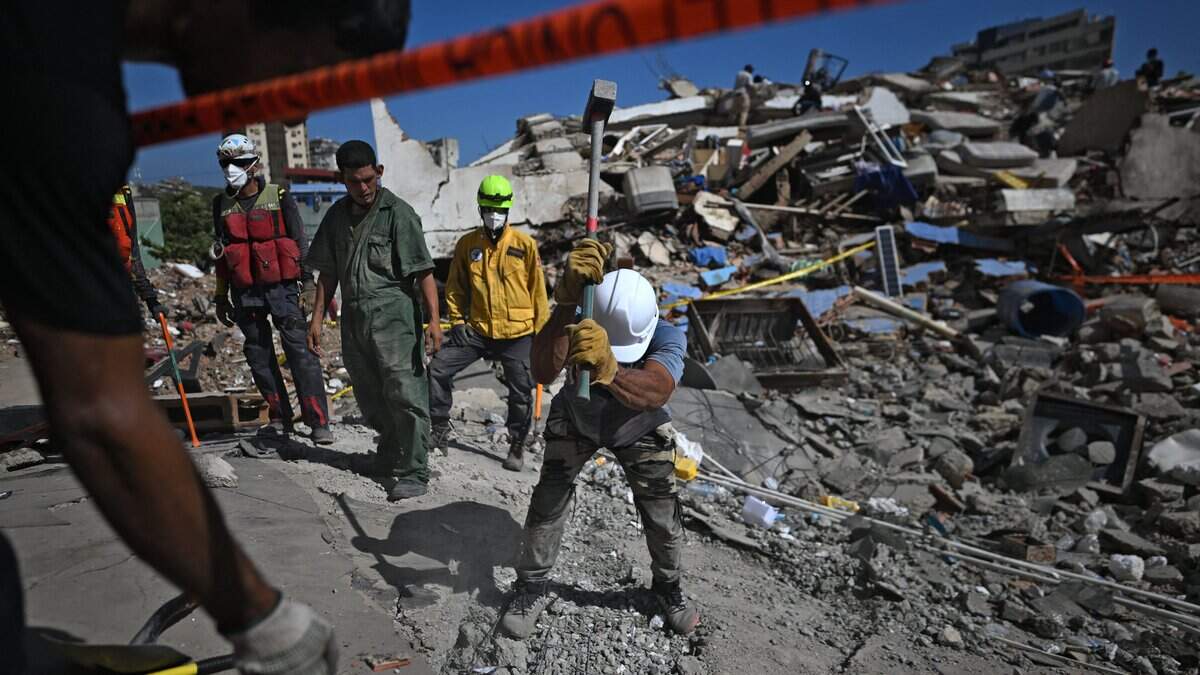
What she found was a hellish scene. Thousands of buildings reduced to rubble and cries for help from people trapped beneath mountains of concrete. Survivors were cut off—no power or internet—sitting on curbs or in plazas, desperate to hear news of their loved ones.
With no tools and no support from government emergency teams, which also lacked heavy machinery to respond to a natural disaster that has so far claimed more than 2,000 lives and left more than 11,000 injured, rescues were led by citizens in the absence of government guidance and presence.
“We rescued people with our bare hands,” said Rojas, who spoke with the Herald by phone from Venezuela.
She joined a volunteer team that pulled 16 people to safety, including two children, three days after the quakes.
The real heroes
What should have been a vacation to reconnect with her country, she said, turned into an incredibly harsh life experience.
“I never thought I’d have the courage to touch a dead body and pull it out with my hands,” Rojas said.
The entrepreneur paid machine owners to remove people, although in other cases they found generous contractors who lent their equipment free of charge.
Motorcyclists are the real heroes, Rojas said, referring to civilians who rode in from nearby areas to help the victims.
At one point the road from Caracas collapsed under the number of people trying to help, and the government closed it. Today Rojas is required to obtain a safe-conduct pass to reach La Guaira.
It’s up to the government authorities, she said, “whether they give it to you.”
Abandoned by the government
Buildings in La Guaira account for half of the 58,870 damaged across the country, according to a NASA map. The building where Rojas had another apartment in the coastal city is one of those that fell like dominoes.
But she hasn’t had time to reflect on the losses or on the miracle of surviving the quakes. She’s been too busy organizing collection points for humanitarian assistance at Iglesia San Bernardino and Chacao, in two Caracas neighborhoods.
Read more ‘Horrific’: Lawmaker denounces conditions at Miramar ICE office as detentions ramp up
She has also joined human chains removing rubble in La Guaira, a task that will not be finished anytime soon.
“I spent 12 hours pulling debris. It was all people—100 men in a human chain—and the police were sitting in a guard booth, clean,” she said.
The first 48 hours were terrible, Rojas noted; she devoted herself to helping with rescues and bringing aid from Caracas because businesses in La Guaira are gone. In Caracas she could buy food and medicine, she said, although everything has to be bought in dollars.
“I bought things for the wounded, and no one from the government showed up,” Rojas said.
The other struggle was protecting children who have been left orphaned.
“We stopped many people who wanted to take children,” said Rojas, who was part of a group of women who took on that task.
Fortunately that situation has eased, she said, referring to fears that criminal gangs might try to traffic children, as the United Nations agency UNICEF has warned.
Venezuelans don’t give up
On the third day after the earthquakes, when rescue teams from El Salvador, Mexico and the United States began to arrive, Rojas sometimes drove them in her car to places where she had heard the voices of trapped survivors. In that case there was also a lack of government support, and the rescuers didn’t know where to go to be most effective.
More than a week after the natural disaster it is increasingly difficult to find survivors, she said, but Venezuelans have not given up.
“I have hope that people will hold on a little longer; many are trapped but with pockets of air,” Rojas added.
On Thursday, Hernán Alberto Flores Gil, a security guard who had spent eight days trapped under the rubble, protected by the guard booth where he worked in a building in La Guaira, was rescued. A Miami fire department team participated in the rescue, working for more than 50 hours.
Rojas said her concern now is what will happen to those left homeless.
“So far the government hasn’t figured out what to do with all those people,” she said.
La Guaira now has temporary field hospitals. Students and health professionals have also arrived from the Universidad Central de Venezuela.
Amid the pain, Rojas said, she has been amazed by human solidarity: “Volunteers arrive with arepas, with soup; people who have restaurants go and give them food.”
For those who want to help, she listed the most needed items: baby diapers, sardines, tuna, fruit purees, feminine sanitary pads, toothbrushes and toothpaste, and pet food.
Read more Justice Dept. ‘weaponized’ South Florida office to target ex-CIA chief: critics
You can contact Gisela Rojas at 407-364-3056 or on Instagram at @Soygiselarojas.





Post Comment