South Florida Venezuelans urge U.S. to stop ‘being complicit’ with Caracas regime
Venezuelan Americans in South Florida urged the Trump administration on Wednesday to intensify efforts to remove the Venezuelan regime from power, arguing that the recent earthquake has made the need for a democratic transition even more urgent.
Read more Texas makes the Bible required reading in public schools. Is Florida next?
The disaster, which struck Venezuela’s central and coastal regions with twin quakes measuring 7.2 and 7.5 magnitude on June 24, has killed over 2,200 people, injured more than 11,000 and left tens of thousands missing or displaced, according to Venezuelan authorities and international estimates.
Entire neighborhoods in areas such as La Guaira and Caracas have been flattened, with more than hundreds of buildings damaged or destroyed in preliminary satellite assessments. United Nations agencies have warned that millions may require humanitarian assistance as search-and-rescue operations continue amid widespread infrastructure collapse.
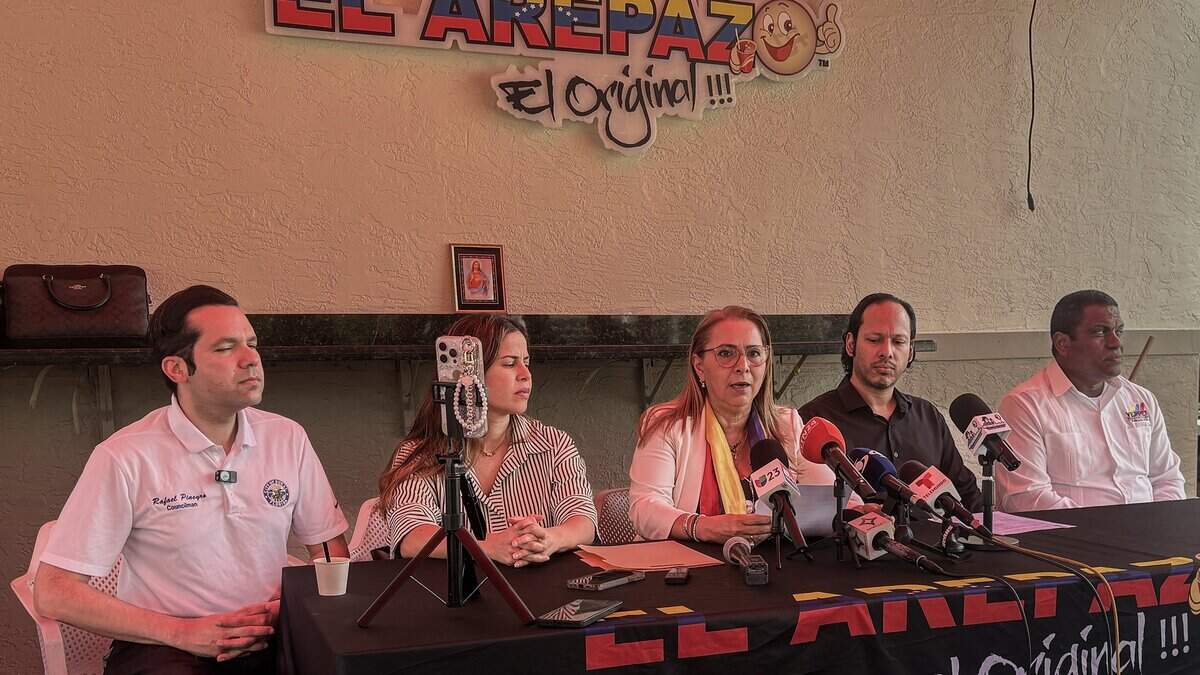
Rafael Pineyro, a Doral council member in the city with one of the largest Venezuelan communities in the United States, said Venezuela cannot recover while interim President Delcy Rodríguez and Interior Minister Diosdado Cabello remain in power.
He said the United States “cannot continue being complicit in a regime that keeps harming the Venezuelan people,” adding that they “cannot applaud a regime that has even been responsible for the deaths from last Wednesday.”
Pineyro argued that a responsible Venezuelan government would have had immediate emergency response systems in place to deal with a disaster of this magnitude, saying that “a proactive, forward-looking society would have had emergency response mechanisms ready for a situation like this.”
The comments contrast with statements from the Trump administration, which has said it is coordinating closely with Venezuela’s interim authorities as part of ongoing earthquake relief and stabilization efforts, including humanitarian assistance, rescue operations, and logistical support.
Pineyro added that the disaster should serve as a catalyst for accelerating a political transition to democracy, and called for increased support from the Trump administration for opposition leader María Corina Machado, saying she has the right to return to Venezuela and stand alongside families affected by the disaster. He argued that Machado represents the will of most Venezuelans and said he believes her presence in the country would hasten political change.
Helene Villalonga, a Venezuelan activist and president of the nonprofit AMAVEX, Multicultural Association of Activists for Voice and Expression, said there have been irregularities in emergency shelters, mismanagement of medical supplies, and poor conditions in hospitals treating earthquake victims. She said healthcare workers are operating under extreme conditions with limited resources and warned that, if confirmed, the allegations would point to a serious humanitarian crisis.
“We are not speaking about a natural disaster that could have been prevented. We are speaking about the response of those who had the responsibility to protect human lives,” she said.
The U.S. State Department has emphasized that relief efforts are focused on expanding access to food, water, and medical supplies, while working with international partners to ensure assistance reaches affected populations amid widespread infrastructure damage.
Read more Venezuela quake death toll tops 2,295 as missing-persons crisis deepens
Many Venezuelans, both in their home country and in the United States, have called for an investigation into how the Venezuelan government is managing humanitarian aid.
Mayra Marchan, founder of All For Venezuela, a nonprofit that has sent medical supplies to her home country for more than a decade, said the organization has already delivered shipments and continues coordinating additional ones after the earthquake, but expressed concern about whether assistance is actually reaching those who need it.
“Our biggest concern is that the aid reaches the right people,” she said. She described severe shortages in hospitals, overcrowding, and exhausted medical staff, and said some donations are being withheld or improperly stored.
Marchan said reports from doctors inside Venezuela, which she received through healthcare contacts, suggest that some donated medical supplies are arriving at hospitals but are being stored rather than distributed to patients. She added that, as a result, many patients continue to suffer from lack of treatment and essential supplies.
She also said hospital administrators may be withholding medical donations, claiming supplies are sometimes stored in hospital basements instead of being distributed to patients. She said similar situations were reported in past crises and warned against repeating what she described as historical failures in disaster response.
She urged the international community, including the U.S. government, to closely monitor humanitarian aid distribution in Venezuela and verify how supplies are being handled.
“Please investigate. Don’t just trust — go see for yourselves,” she said
Ivonne Vela, a child protection advocate and president of the nonprofit Give Pan de Vida, which works to reduce malnutrition in Venezuela, said the earthquake has triggered large-scale family separations and warned that Venezuela’s child protection system is not designed to handle disaster-related reunifications.
She called for an emergency national system using digital records, biometric data, and DNA testing to quickly reconnect children with their families, along with international pressure for immediate implementation.
“Where are our children?” she said. “That is the question we cannot answer today.”
Read more Miami nurse caught swiping drugs at a rehab facility. There were consequences






Post Comment