As gay bars in Miami disappear, here’s how the community keeps the party going
Willy’s, the only LGBTQ+ bar in Wynwood, achieved a daunting feat in South Florida.
Read more Inside Fisher Island’s ‘disharmony’ over the future of the exclusive community
Its owners opened a small business in one of Miami’s hottest neighborhoods, built a crowd of regulars, hosted drag shows, DJ sets and watch parties, and even threw a multi-day festival.
It was fabulous – until a developer bought the block. Willy’s closed last August after just 11 months.
Miami, known as a “gay mecca” for generations, is home to one of the largest LGBTQ+ populations in the South, within the city’s boundary, according to data from the city. Yet, gay-centered venues have continued to close shop and LGBTQ+ members face a dwindling number of spaces run for the community by the community.
And Miami Beach’s iconic LGBTQ+ scene, immortalized in movies like Robin Williams’ “The Birdcage,” is now down to a handful of bars. While long-standing institutions in Miami-Dade like The Palace, Twist and R House are still around, popular spots like Willy’s and Nathan’s Beach Club have closed within the last two years.
“It’s pretty sad for such a large city,” said Willy’s co-owner Jor-El Garcia. “We really need more.”
To adapt to the dwindling LGBTQ-focused spaces, the community has created a patchwork of LGBTQ+ events and parties that pop up at local bars and venues. Willy’s is keeping the brand alive with Big Wig, its annual drag festival, while others have taken to curating their own events to carve a space in a growing community.
Down memory lane
Gay bars have always been more than just a place to drink, said Art Smith, a longtime Florida resident who began a project to document gay bars throughout the years.
“The bars were our churches, our community centers, our safe havens, the places we organized,” Smith said. “The bars are what allowed people to meet each other. They’re the backbone of our community.”
Smith began the Gay Barchives project after reminiscing with a gay bar owner in Atlanta. What started as a simple post has turned into a Facebook group and living archive with over 66,000 members.
The late ‘80s and early ‘90s saw an explosion of gay bars, Smith said. After the AIDS crisis, more bars opened up to offer a space where gay people could gather.
South Beach used to be an affordble “gayborhood,” but as venues began to get priced out, the area lost a lot of its “gay sparkle,” Smith said.
Once home to well-known bars like the Copa, Liquid and the Warsaw Ballroom, South Beach was a hub of venues. It’s difficult to calculate how many have closed since the original peak of gay nightlife in the ‘90s, but Smith estimates there were about 75 gay bars open. Nowadays in Miami, there’s probably eight or ten left, he said.
“You have to know what the street address was [for each gay bar],” Smith said. “In that one space, you can have eight different bars. It’s hard to delineate how many are left because some of them just changed names or owners.”
It’s not the end of gay nightlife by any means, he said, but it does make it hard for gay people to create community.
“You can go with your girlfriend or boyfriend to Applebee’s and have dinner and drinks, but if you want to get to meet people like you, it’s going to be hard to find them,” he said.
Trying to find a ‘forever home’
Willy’s was meant to fill a gap in local LGBTQ+ nightlife. And it did, albeit briefly.
After years of organizing Wynwood Pride events, Garcia and co-owners Jose Atencio and Scott Bernardez opened Willy’s to celebrate all facets of the LGBTQ+ community, both in terms of identity and musical taste.
“We really just wanted to make it a home for everybody. What was really interesting about Willy’s was that it was a lot of girls,” Garcia said. “Sometimes you go to a lot of other gay clubs, and it’s very gay boy heavy. But what was great about Willy’s was that we had men, we had women, straight people and everything in between.”
Last year, the team, along with local drag star FKA Twink, held the first Big Wig Drag Fest at the bar’s Wynwood location. Despite the bar’s popularity, there was little the owners could do about the sale of the building.
“We were doing so good. We had this community. We were getting better and better and better,” Garcia said. “But, then that happens. We can’t really fight that at all.”
But the Willy’s brand is very much alive. The co-owners have kept the bar’s Instagram page active by regularly promoting events, and their monthly Wig! drag show found a new home at Las Rosas in Allapattah.
Even without their own bar space, Willy’s and FKA Twink brought Big Wig Drag Fest back on Friday night, hosting over 50 drag artists and DJs at Casa Nube in Miami.
Read more Ready to party for July 4? Get a rundown of events in Miami-Dade and Broward
The goal is to find a “forever home” to reopen the bar, Garcia said, but that has been challenging. Miami is not an easy or affordable place to reopen a bar, let alone an LGBTQ+ one.
Fewer gay spaces points to broader acceptance?
During the second Trump administration, South Florida LGBTQ nonprofits and institutions have dealt with financial issues as corporate sponsors withdrew their support. Garcia has noticed how allies have abandoned him, and he’s noticed a resurgence of homophobia.
“We have felt an uptick in homophobia, like it’s not cool to be gay anymore. We don’t feel as supported as we once did like when marriage equality passed,” Garcia said.
However, some in the LGBTQ+ community see the drop in gay bars as a positive sign — that people feel more comfortable going to any bar, not just the ones dedicated to them.
Marty Davis, the board chair of the Miami-Dade LGBTQ+ and Allied Chamber of Commerce, works with the chamber to promote gay-owned businesses. He says as more residents are accepting of the LGBTQ+ community, the need for exclusively gay spaces decreases as the community begins integrating with other businesses.
“Generally through the years there has been a decrease, but part of that is that the community is integrating with the larger community,” Davis said.
The biggest threat to spaces for the LGBTQ+ community is Miami’s drive for development, he said.
“Things change when they tear down buildings, rent changes and businesses have to adapt,” he said. “We work to keep the flavor of the neighborhood best we can, but at the same time, development comes in.”
‘It’s complicated’
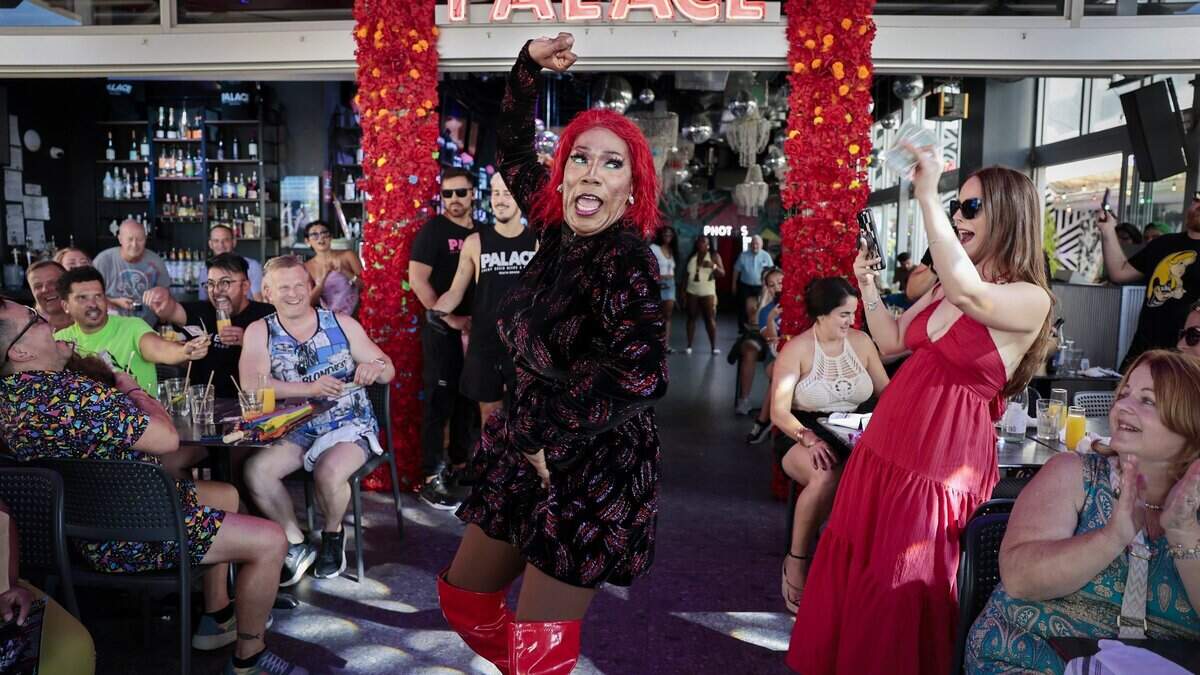
The Palace Bar & Restaurant has been a gay staple in Miami Beach for 38 years. Current Palace owner Thomas Donall swept in and purchased the original property to give it a proper makeover. He managed to keep Palace alive even after it had to switch to a new location in 2018, bringing their committed clientele along with them.
Now, the Palace is as regal as ever. Passersby can peer inside to see guests share mimosas as drag performers turn a restaurant floor into a stage as they split, kick and spin circles around customers.
What was once a bar that catered to gay men soon diversified. The Palace’s brunch is a hotspot for straight women on the weekends. The bar hosts monthly events for LGBTQ+ identifying women, and Fridays are “the queerest night of the week,” Donall said, where everyone in the community shows up to party.
But it’s one of the few LGBTQ-owned institutions in Miami Beach trying to keep the legacy of the gayborhood alive.
“It’s a very Facebook relationship status, as in it’s complicated,” said Palace’s general manager AJ Prasaguet. “I think from a political climate, Florida is the hardest. You’re a little nervous with what you can and can’t do.”
The Palace used to be open to all ages, but after DeSantis’ administration targeted drag shows, now it only welcomes guests 18 and older. It’s still an adjustment, Prasaguet said. They had to review Instagram posts and even made changes to drag performers’ outfits to avoid any trouble.
It’s a hard pill to swallow when spaces like Willy’s close, he added. Between bars closing and those that remain having to tread more lightly, Palace is in a state of constant evolution to keep up.
“It’s about trying to adapt and try to be the leader in what you do as far as a business that’s queer-owned and operated, so we can continue to lead the pack,” Prasaguet said.
‘We aren’t going anywhere’
Creating new home bases for the community, even if they are only weekly pop up events, has helped fill in the gaps as permanent venues shutter — and it’s provided opportunities for inclusion for even more people.
Jedidiah Alziphat, 24, always wished there were more places for queer people of color to hang out with each other. Most gay hotspots felt a little too focused on gay men, and her lesbian and trans peers found themselves in a sort of limbo.
In December, she started a new Instagram page, Lesbian/Queer POC of Miami and began to coordinate casual events, game nights, mixers and socials.
“The scene has been very dominated by a certain demographic for a while,” she said. “It’s really beautiful to see that people are creating their own spaces for specific targeted groups.”
Venues like Supernatural Haus were happy to host lesbian-focused events, but finding more places to gather has become a challenge as LGBTQ-friendly bars like Gramps in Wynwood shut down.
“That’s partially some of the reason why I created the account, seeing how a lot of our spaces were being taken away,” she said. “It made me feel like we have to advocate more, make it known that we aren’t going anywhere.”
Read more What to do with a 100-year-old courthouse? Miami-Dade hopes auction brings a buyer



Post Comment