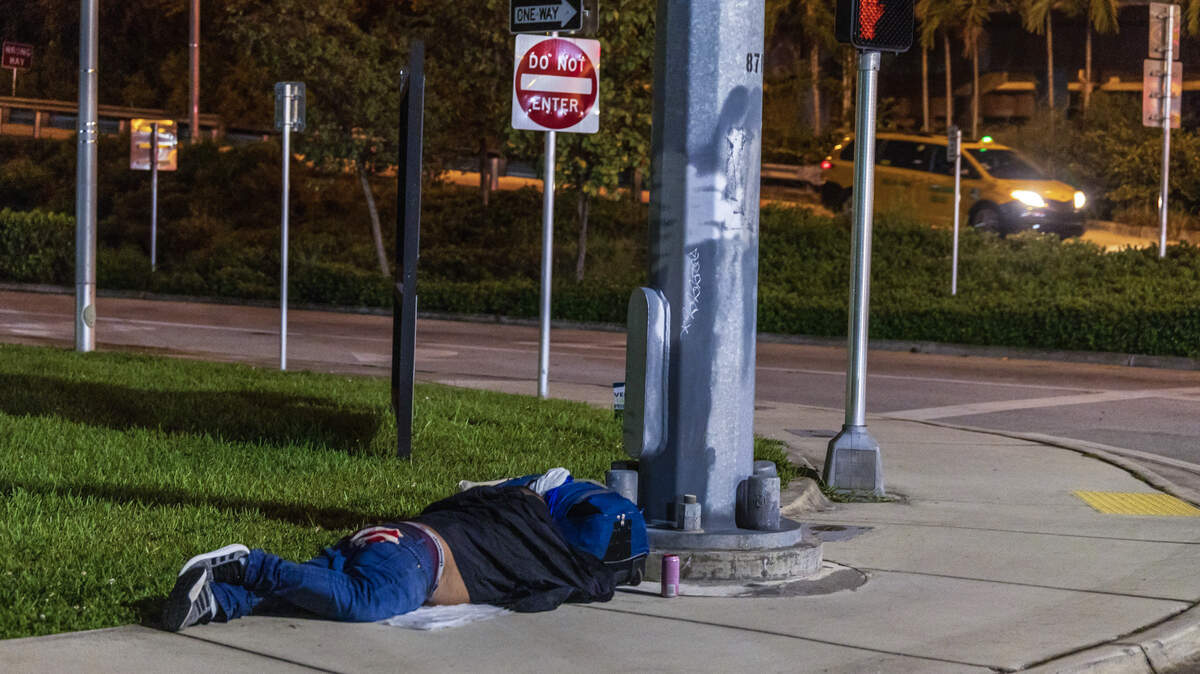
No warning, no time to pack? Miami could make it easier to arrest the homeless
A new proposal could make it easier for Miami cops to arrest people for sleeping on the street.
Read more Deputies fatally shoot armed man in McDonald’s parking lot in Davie, BSO says
Police might no longer need to issue written warnings and give people a chance to gather their belongings and relocate before arresting them for public camping. That’s if District 3 Commissioner Rolando Escalona’s proposal to amend the city code passes July 9, when the Miami City Commission is slated to vote on it. If approved next week, it would need to pass one more vote to go into effect.
Escalona, who’s described himself as a supporter of law and order, has been focusing on quality-of-life issues since his December election. Last month, the commission approved Escalona-backed legislation that tightened enforcement of public urination.
His latest proposal comes as other Miami-Dade cities, such as Miami Beach, escalate crackdowns on their street-sleeping populations, including through arrests.
Florida cities ramped up their enforcement after Tallahassee banned public camping statewide in 2024, telling local governments to get people off their streets or risk lawsuits. The anti-camping bill, HB 1365, allows residents to sue their local governments for non-enforcement of the ban. The state law, however, does not specify what enforcement should look like.
Under the current city code, Miami police officers need to issue a written warning to a person found maintaining an encampment — which could involve anything from sleeping in a tent to sheltering under a piece of cardboard or a blanket, according to the city’s definition — before making an arrest. After informing the person of the outdoor camping ban, the officer must also provide “a reasonable time for the person to pick up his or her belongings” and verify that there are available shelter beds.
Escalona’s proposal would eliminate the option of issuing a citation instead of making an arrest. It would also scrap the requirements that a written warning be issued prior to an arrest and that the person be given “a reasonable time” to pick up their belongings and move elsewhere.
The proposal does require the officer to offer the person a shelter bed — assuming beds are available — or enter a shelter or accept other government assistance “that would result in housing.” If the person refuses, the officer can arrest them. The legislation stipulates that an arrest cannot be made if the officer has verified that there are no shelter beds or government housing assistance immediately available.
In a statement, Escalona said his proposal “is designed to connect individuals with the resources available to them while improving the quality of life for the entire community.”
Read more Inside Fisher Island’s ‘disharmony’ over the future of the exclusive community
“This proposed legislation follows the framework already established under Florida law regarding public encampments,” Escalona said. “It does not authorize an immediate arrest. In fact, it now requires officers to exhaust every voluntary option available before any enforcement action can be considered, including offering placement in a shelter or similar facility with available capacity, or facilitating a mutually agreed-upon reunification with family or friends.”
While Escalona recently sponsored legislation that included creating 20 additional shelter beds, the proposal lands at a time when the county isn’t exactly flush with extra emergency shelter space.
“We have some opportunities to place people,” said Ron Book, chairman of the Miami-Dade Homeless Trust, the county’s homeless services provider. But, “we’re tight.”
The opening of a new, 80-bed shelter in Gladeview, at the western edge of Liberty City, is “imminent,” which could help bolster the county’s shelter bed stock, Book said. He estimated it’d be ready to use in a matter of weeks. As of January, there were 605 people sleeping on the city of Miami’s streets — just over half of the county’s entire unsheltered homeless population — according to the Homeless Trust’s most recent tally.
But even when there are beds available, some people prefer to stay on the street, often because they feel unsafe or overly restricted in the shelters. A recent survey of people sleeping on the city’s streets that was conducted by University of Miami researchers found that 28% of respondents likely wouldn’t accept a shelter bed if offered one.
Putting shelter beds and people’s willingness to accept them aside, Book doesn’t “understand why there’s a need” for the Escalona proposal. Current ordinances already allow for the arrest of people sleeping outside, he said.
And besides, “simply arresting people for the sake of them being homeless is probably an unproductive way to manage and deal with the problem,” added Book.
This story was produced with financial support from supporters including The Green Family Foundation Trust and Ken O’Keefe, in partnership with Journalism Funding Partners. The Miami Herald maintains full editorial control of this work.
Read more Florida Board of Education taps Paul O. Burns as interim commissioner











Post Comment