A conservative court’s rebuke to Trump ends his attacks on Miami families | Opinion
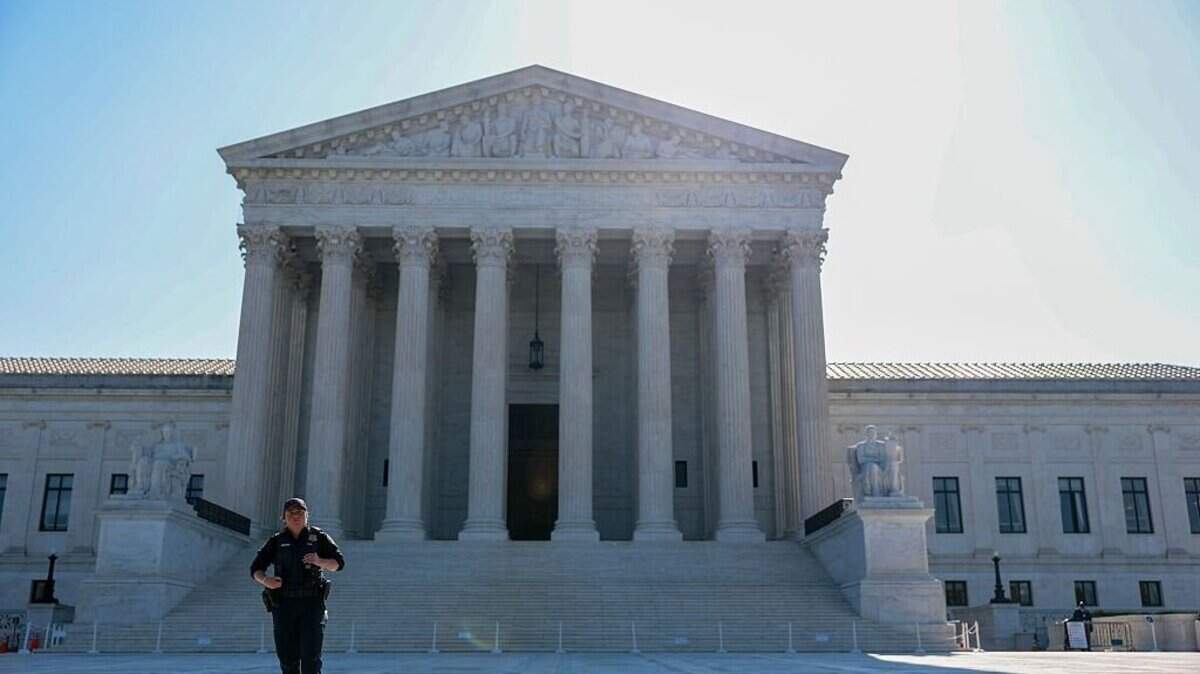
President Donald Trump tried to redefine who’s American, and it took a very conservative U.S. Supreme Court — normally friendly to him — to reaffirm what has seemed obvious for more than a century: Ending birthright citizenship is unlawful.
Read more DeSantis vetoes anti-corruption funding, flood mitigation dollars in Miami-Dade
The court, in a 6-3 Tuesday ruling, struck down the executive order Trump signed on his first day back in the White House denying citizenship to children born to parents who are in the country illegally or have temporary visas for work, travel, school or humanitarian reasons. Trump’s order would have created a bureaucratic chaos, thrown people into legal limbo and probably deemed some babies born on U.S. soil stateless if their parents were not willing or able to obtain citizenship in their countries of origin.
More than 250,000 children would have been born in the U.S. without American citizenship each year — adding up to about 4.8 million by 2045, according . Miami-Dade County, where over half of the population is foreign-born, would have felt the impacts of this order like few other places in the U.S.
Trump’s measure would have created a legion of new undocumented people whose ability to contribute to the country would have been severely curtailed. Without a birth certificate or other documents, these U.S.-born children wouldn’t be able to work legally in the country and their ability to attend college, have careers, open businesses and participate in the American Dream would be diminished. In Miami, we have seen first hand how immigrants and their descendants are essential to our community, including the work they perform in our main industries, such as health care and hospitality, and also create jobs.
Other than punishing migrants and creating a new category of people subject to deportation, how would ending birthright citizenship have benefitted the average American?
The Trump administration contended that birthright citizenship creates an incentive for “anchor babies” and “birth tourism,” where people travel to the U.S. to give birth to a baby who’s a U.S. citizen. Administration lawyers argued that the U.S. Constitution’s 14th Amendment, ratified shortly after the Civil War to guarantee citizenship to formerly enslaved people, did not apply to children born to parents without permanent immigration status.
Certainly, so-called “birth tourism” is an abuse of the rights and freedoms guaranteed in our Constitution, though it’s unclear how widespread that practice is. The Constitution, like every foundational document that delineates our basic rights, cannot prevent every single unwanted outcome. The First Amendment protects racist and hate speech for the most part, but that’s not a reason to attack the Bill of the Rights.
The Supreme Court’s ruling reaffirms what’s been the settled interpretation of the 14th Amendment for over a century — that it automatically grants citizenship to people born on U.S. soil, with exceptions for the children of diplomats and a few other rare cases. That understanding was established in a landmark 1898 Supreme Court case in which a San Francisco man born to Chinese parents was granted American citizenship.
An ideologically mixed group of justices upheld that interpretation on Tuesday. Chief Justice John Roberts wrote the majority opinion and Trump-appointed Amy Coney Barrett joined the court’s three liberal justices. Justice Brett Kavanaugh, also appointed by Trump, agreed with the judgment against the administration, but dissented in part, saying in his own opinion that the Trump order does not violate the Constitution but does violate federal law.
Read more City of Miami weighs ending its ICE partnership. Here’s what to know
For a court that has given Trump wide authority to wield his executive power, this ruling is remarkable. It speaks to the extremes the administration has gone to while targeting immigrants. Trump’s executive order ending birthright citizenship was nothing more than a mean, retaliatory measure — sold to Americans as part of the solution to the challenges facing the country. By now, voters should know that indiscriminate mass deportations and travel bans aren’t making their lives necessarily better.
In Miami, many children of immigrants — here legally and illegally, on permanent or temporary status — have grown up to contribute to our community. The U.S. Supreme Court’s rebuke of Trump is a relief.
BEHIND THE STORY
MORE
What’s an editorial?
Editorials are opinion pieces that reflect the views of the Miami Herald Editorial Board, a group of opinion journalists that operates separately from the Miami Herald newsroom. Miami Herald Editorial Board members are: opinion editor Amy Driscoll and editorial writers Isadora Rangel and Mary Anna Mancuso. Read more by clicking the arrow in the upper right.
What’s the difference between an op-ed and a column?
Op-Eds, short for “opposite the editorial page,” are opinion pieces written by contributors who are not affiliated with our Editorial Board.
Columns are recurring opinion pieces that represent the views of staff columnists that regularly appear on the op-ed page.
How does the Miami Herald Editorial Board decide what to write about?
The Editorial Board, made up of experienced opinion journalists, primarily addresses local and state issues that affect South Florida residents. Each board member has an area of focus, such as education, COVID or local government policy. Board members meet daily and bring up an array of topics for discussion. Once a topic is fully discussed, board members will further report the issue, interviewing stakeholders and others involved and affected, so that the board can present the most informed opinion possible. We strive to provide our community with thought leadership that advocates for policies and priorities that strengthen our communities. Our editorials promote social justice, fairness in economic, educational and social opportunities and an end to systemic racism and inequality. The Editorial Board is separate from the reporters and editors of the Miami Herald newsroom.
How can I contribute to the Miami Herald Opinion section?
The Editorial Board accepts op-ed submissions of 650-700 words from community members who want to argue a specific viewpoint or idea that is relevant to our area. You can email an op-ed submission to [email protected]. We also accept 150-word letters to the editor from readers who want to offer their points of view on current issues. For more information on how to submit a letter, go here.
Read more Property owner’s plan to put 212 apartments by South Beach’s Lincoln Road advances










Post Comment