A Cuban-born commissioner fears ICE — why is Miami still in immigration agreement? | Opinion
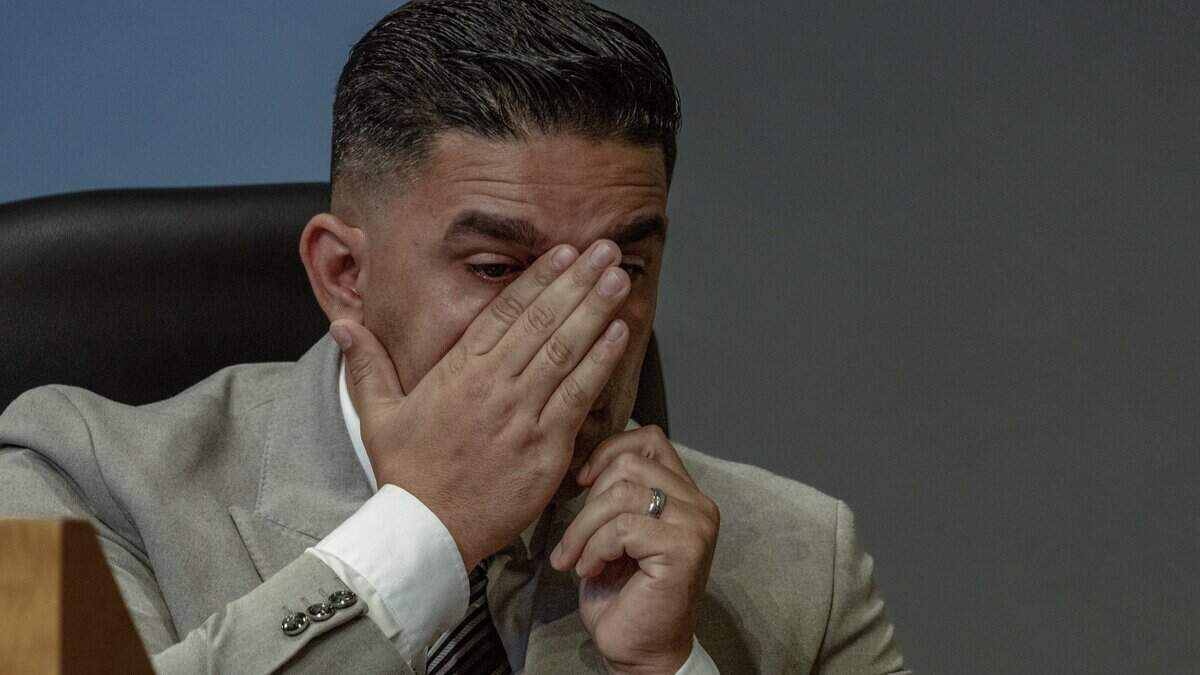
With tears in his eyes, Miami Commissioner Rolando Escalona explained what it’s like to fear that even him, an elected official, could end up in the crosshairs of Florida’s efforts to aid the Trump administration’s mass deportation measures.
Read more Man hospitalized after being stabbed in Lauderhill, police say
“My wife, three weeks ago, got a letter from immigration,” he said during a Thursday meeting in which the City Commission discussed the Miami Police Department’s controversial partnership with Immigration and Customs Enforcement.
“For a full week, we couldn’t sleep,” Escalona said. His wife, a U.S. resident, had an appointment to provide her fingerprints to federal authorities — a process that’s often routine for immigrants.
Escalona’s fears are understandable. Several immigrants have been detained during appointments at federal immigration offices.
His emotional, public statement underscores the pervasiveness of immigration fears in Miami. The city’s 287(g) agreement with ICE is limited, and only two officers participate in it, according to city officials. But many residents are scared that interactions with police could lead to immigration detention, no matter what their legal status may be.
Whether those fears are real or not — and the city says officers are not racially profiling people — this is the environment Florida has created. The state leads the nation with 375 active agreements between ICE and local law enforcement agencies, the Herald reported. Gov. Ron DeSantis and Attorney General James Uthmeier threatened cities with legal action if they rejected those agreements.
Escalona was born in Cuba and came to the U.S. 12 years ago. He worked his way up, attending college and eventually becoming a general manager at Brickell’s Sexy Fish restaurant. He was elected last year to represent District 3, which covers some of the city’s historic immigrant neighborhoods, such as Little Havana.
Escalona embodies the immigrant experience in Miami. He speaks with an accent. He looks Latino. He’s a U.S. citizen.
His 7-month-old twins were born in the U.S., he said. “Two weeks after they were born, I was right there getting their passport, because I was afraid.” Afraid because being a U.S. citizen may not feel like it’s enough when a traffic stop or another interaction with police goes wrong.
On Thursday, dozens of residents asked Miami to exit the 287(g) agreement, which a divided City Commission approved last summer. City Attorney George Wysong warned of potential retaliation from the state if Miami changes its mind.
Escalona and Commissioners Christine King and Damian Pardo said they would like to exit the agreement if it can be done legally. They make up the majority of the commission. The city must look for ways to do so.
City Manager James Reyes told the commission that the two Miami Police detectives trained under 287(g) perform immigration enforcement duties on an as-needed basis, not full-time. Reyes said police have issued only 14 immigration detainers, all resulting from criminal investigations.
Read more Coral Gables city manager’s side gig? It involves a judo dojo
“We, in no way, shape or form, are interested in the immigration status of individuals in our community,” Reyes said. “But if you do, in fact, commit a crime in the city of Miami — whether you’re legally here or not legally here — we are going to go after you and try to apprehend you.”
That sounds reasonable. Most Americans support deporting people in the U.S. illegally who commit serious crimes. Even before President Trump returned to the White House, ICE would routinely pick up inmates from county jails to initiate deportation proceedings.
But police lose community trust when they begin to perform immigration enforcement duties that normally fall under the purview of the federal government. People should not be afraid of speaking to law enforcement and reporting crimes because of their legal status.
As Escalona said, the problem isn’t just the 287(g) agreement. It’s “about the fear that we see in our community.” Unfortunately, the rhetoric coming from Trump and DeSantis created this dynamic.
No matter how much Miami officials try to reassure the community, the city is now embroiled in Trump’s messy and unpopular mass deportation efforts. At the very least, let’s stop making city police officers into ICE agents, even part-time.
BEHIND THE STORY
MORE
What’s an editorial?
Editorials are opinion pieces that reflect the views of the Miami Herald Editorial Board, a group of opinion journalists that operates separately from the Miami Herald newsroom. Miami Herald Editorial Board members are: opinion editor Amy Driscoll and editorial writers Isadora Rangel and Mary Anna Mancuso. Read more by clicking the arrow in the upper right.
What’s the difference between an op-ed and a column?
Op-Eds, short for “opposite the editorial page,” are opinion pieces written by contributors who are not affiliated with our Editorial Board.
Columns are recurring opinion pieces that represent the views of staff columnists that regularly appear on the op-ed page.
How does the Miami Herald Editorial Board decide what to write about?
The Editorial Board, made up of experienced opinion journalists, primarily addresses local and state issues that affect South Florida residents. Each board member has an area of focus, such as education, COVID or local government policy. Board members meet daily and bring up an array of topics for discussion. Once a topic is fully discussed, board members will further report the issue, interviewing stakeholders and others involved and affected, so that the board can present the most informed opinion possible. We strive to provide our community with thought leadership that advocates for policies and priorities that strengthen our communities. Our editorials promote social justice, fairness in economic, educational and social opportunities and an end to systemic racism and inequality. The Editorial Board is separate from the reporters and editors of the Miami Herald newsroom.
How can I contribute to the Miami Herald Opinion section?
The Editorial Board accepts op-ed submissions of 650-700 words from community members who want to argue a specific viewpoint or idea that is relevant to our area. You can email an op-ed submission to [email protected]. We also accept 150-word letters to the editor from readers who want to offer their points of view on current issues. For more information on how to submit a letter, go here.
Read more Miami Venezuelans will ask Trump to defer deportations amid earthquake disaster










Post Comment