How the Miami Circle, a 2,000-year-old site in Brickell, was found and saved
Miami was on the cusp of a new real-estate boom. A developer hoping to build a pair of condo towers razed some rattletrap apartments in Brickell that had long marred a spectacular site, right where the Miami River meets Biscayne Bay.
Read more Grand jury charges Florida Keys man with murder in beating death of his wife
What the 1998 demolition unexpectedly uncovered roiled Miami and provoked a worldwide outcry — a mysterious set of 24 holes carved into the limestone bedrock in a perfect circle, 38 feet in diameter.
What was it? A landing pad for aliens? A remnant from an ancient civilization, Miami’s Stonehenge? The drain field for the old septic tank sitting on the circle’s edge?
Swinging wildly from the sublime to the ridiculous, the debate raged on for months as Miami archaeologist Bob Carr and teams of experts gathered clues, painstakingly excavating, analyzing unearthed artifacts and animal remains, and conducting technical tests at the site.
READ MORE: Miami’s forgotten ancient past is hiding beneath a Joe & the Juice. Yes, really
Their conclusion: The circle marked the foundation of a large, round wooden council house or ceremonial building erected by indigenous people some 2,000 years ago, a centerpiece of a large village likely inhabited by the Native Americans known as the Tequesta.
To Miamians, mostly unaware of the prehistory under their feet, it was a shock.
Archaeologists long knew the Tequesta had a substantial presence along the Miami River, and previous excavations had turned up evidence of indigenous burials and settlement thousands of years old. But the circle was the first confirmation for the broader public of the Tequesta village’s breadth and significance.
Some experts called the circle one of the most important prehistoric sites in North America.
Public officials respond to public pressure
News of the circle went around the world. At the site, protesters were a constant. Schoolchildren joined in. Indigenous people from around the continent chanted, danced, prayed and conducted smoky medicine ceremonies daily outside a fence hastily erected around the property.
The developer, Michael Baumann, offered to pay to chop out the circle and move it elsewhere. But the Coconut Grove stonemason he hired, Joshua Billig, refused the job after inspecting the site. He instead became a voice for preserving the circle in place.
In another first, politicians and officials responded. The Miami-Dade mayor at the time, Alex Penelas, pushed to save the circle. The County Commission voted to seize the property by eminent domain. The start of condo construction was slowed by lawsuits from the county and the preservation group Dade Heritage Trust.
The state then intervened, brokering a deal with the developer. Baumann, who had paid over $8 million for the 2-acre property, agreed to sell for $26.7 million at the end of 1999.
The circle was saved — but that didn’t fully put to rest debates over what to do with it or its function and significance.
Read more Miami construction projects keep turning up ancient bones. What happens to them?
Miami Circle gets historic recognition
Carr and other experts, with the support of Ryan Wheeler, then the state’s chief of archaeology, built a case that gradually came to mainstream scientific and scholarly acceptance. It was based on the wealth of evidence gathered at the circle site, including shells and animal bones, ceramics, tools and other artifacts.
Given the evidence, the federal government added the Miami Circle to the National Register of Historic Places in 2002. In 2009, it was elevated to the status of National Historic Landmark, the highest level of federal recognition.
In subsequent years, the precedents set by the circle’s discovery and preservation helped build fresh public pressure for saving at least portions of some newly uncovered indigenous sites in Brickell and downtown Miami, including two smaller circles on the north river bank, at the Met Square development, and across Brickell Avenue from the Miami Circle at a Related Group development site.
Just south of the circle, subsequent construction of the Icon Miami complex, though, destroyed extensive additional evidence of Tequesta occupation in the bedrock, including scores of holes likely dug for wooden dwelling support posts.
All were part of the same Tequesta capital that extended along both banks of the river to the bay, Carr and Wheeler say.
“You start to get the sense, as those different threads come together, that this was big,” said Wheeler, today director of the Robert S. Peabody Institute of Archaeology in Massachusetts. “This was an ancient city that was here a long time. Like a city, it had different districts. It’s taken people a long time to recognize these are cities like you have in Mexico and Central America.”
READ MORE: Miami’s ancient past is hiding in plain sight. Here are 7 places to find it
What the Miami Circle looks like in 2026
Public hopes for the Miami Circle, meanwhile, have not fully panned out.
The state covered the circle with fill for protection from the elements and took a decade to turn it into a promised public park that finally opened in 2011, initially managed by the Museum of Miami (formerly HistoryMiami).
The museum, where materials recovered from the site are stored, created a small but compelling exhibit in its downtown Miami galleries that includes a variety of artifacts from the circle site.
The museum’s involvement with the park ended five years ago, a spokeswoman said. Ideas for installing exhibits at the site or showing at least some of the circle’s foundation holes by protecting them with glass or a small museum never made much progress.
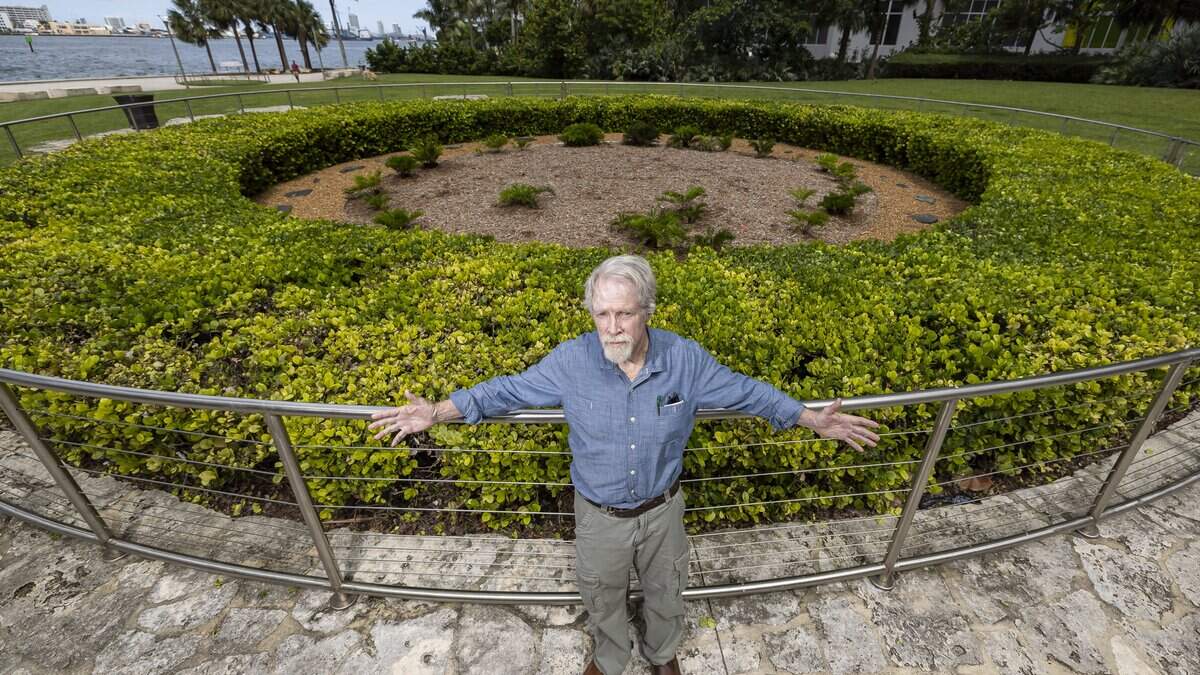
Today, the circle remains covered by dirt and is outlined by plantings and a railing. Of four interpretive signs at the park, used mostly by Brickell residents to walk their dogs, two have faded to illegibility.
Read more Miami’s forgotten ancient past is hiding beneath a Joe & the Juice. Yes, really










Post Comment