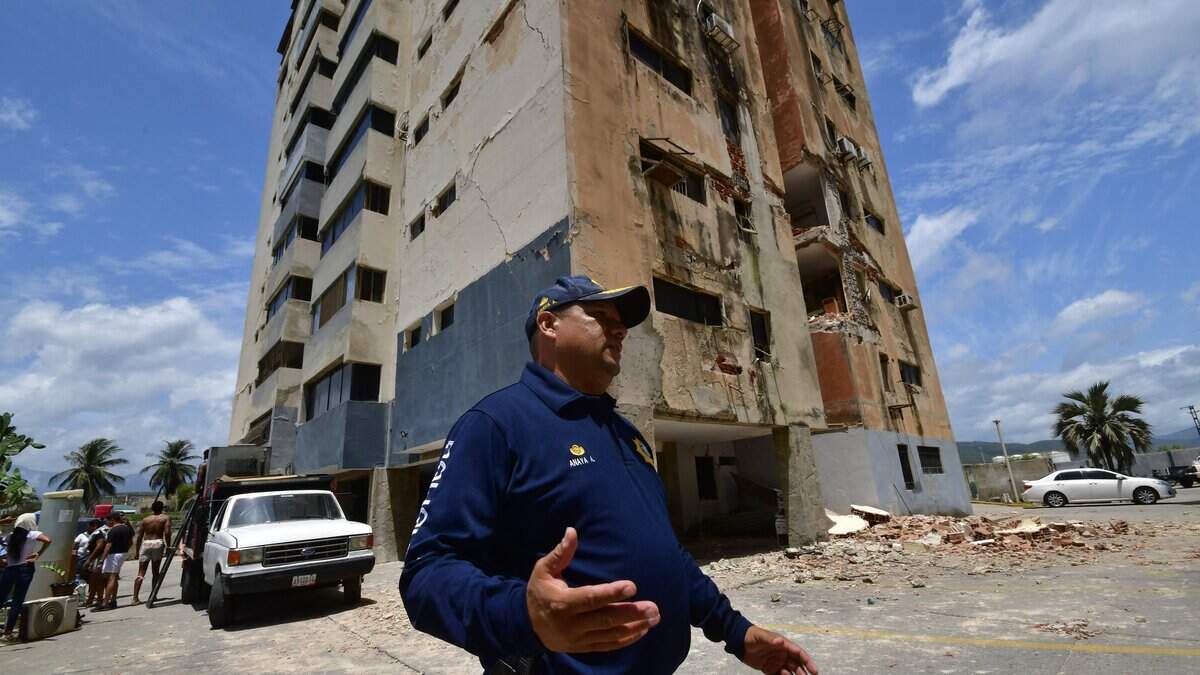
Miami becomes crucial part of U.S. effort to help quake-hit Venezuela
As rescue crews continued clearing debris in earthquake-ravaged Venezuela and families desperately searched for missing loved ones, a massive relief operation was taking shape 1,300 miles away in South Florida, where Miami has emerged as a critical command center for the U.S. response.
Read more ‘We are answering the call.’ South Florida rescue teams deploy to aid Venezuela
Miami has become a central hub in the rapidly expanding American relief effort, with South Florida rescue teams, logistics centers and the region’s large Venezuelan community playing a major role in the humanitarian response, according to a senior administration official.
The United States has launched one of its largest disaster-response operations in Latin America in recent years after the devastating double earthquake that struck Venezuela on Wednesday, killing at least 920 people, injuring thousands and leaving many trapped beneath collapsed buildings.
Among South Florida’s most significant contributions has been the deployment of Miami-Dade County and city of Miami urban search-and-rescue teams, which were federalized and sent to Venezuela alongside elite rescue units from Los Angeles County and Fairfax County, Virginia.
According to the senior administration official, the Miami deployment represents an unusually large mobilization of local rescue assets.
“We activated additional teams, which hasn’t been done, to my recollection, in at least over a decade,” the official said during a call with reporters on Saturday. “We pulled both county and city of Miami teams and federalized them as full deployment units.”
With the addition of Miami personnel, the United States now has nearly 250 specialized civilian rescuers operating in Venezuela. They include firefighters, physicians, structural engineers, canine specialists and heavy-rescue experts trained to locate survivors trapped beneath collapsed structures.
The official said American teams have already assisted in rescue operations and are working around the clock as the window to find survivors narrows.
Miami is also serving as the logistical backbone of the broader U.S. mission.
“We established a hub for our disaster and humanitarian response bureau in Miami,” the official said. “We have a warehouse there and forward-deployed personnel coordinating operations.”
That South Florida hub is being used to consolidate relief supplies, coordinate humanitarian shipments and manage the movement of aid into Venezuela. Additional federal disaster-response personnel have also been sent to Miami to strengthen coordination with local organizations, aid groups and community partners.
The area’s role carries particular weight because of its deep ties to Venezuela. South Florida is home to one of the largest Venezuelan communities outside the country, and the disaster has triggered a powerful emotional response across Miami.
Secretary of State Marco Rubio, a longtime South Florida political figure, has been personally engaged in the response.
“Secretary Rubio is from Miami and very proud of it,” the official said. “There’s a huge Venezuelan and broader Latin American community in South Florida, and we’re working with partners to find ways for people in the community to donate and contribute to relief efforts.”
Officials said the U.S. government is also exploring ways to use military transport aircraft to move community-donated supplies collected in Miami directly into affected areas. Aid groups and warehouse operators across South Florida have already begun identifying food, medicine and emergency supplies that can be rapidly shipped.
The broader U.S. operation includes military airlift, specialized rescue teams, naval assets and $150 million in emergency funding with additional aid packages under consideration.
One of the biggest obstacles in the first 48 hours was Venezuela’s damaged airport infrastructure.
The earthquake severely damaged Simón Bolívar International Airport in Maiquetía, the country’s principal air gateway serving Caracas, forcing U.S. officials to initially rely on MV-22 Osprey tilt-rotor aircraft flying from Puerto Rico to insert the first rescue teams.
Those aircraft transported the initial State Department disaster-response personnel and military teams while fixed-wing aircraft remained unable to land.
Read more 5-year-old boy killed after being hit by a truck at Miami Motocross Park: MDSO
Restoring airport operations quickly became one of Washington’s top priorities.
The United States deployed specialized airfield repair and certification teams to inspect, clear and restore the runway. By Friday morning, one of Maiquetía’s runways had been reopened and certified for C-17 Globemaster military cargo aircraft, dramatically expanding the volume of aid entering the country.
“That is absolutely critical,” the official said. “We’ve got to get the flywheel of logistics going to sustain this response.”
The reopened runway now allows delivery of mobile hospitals, heavy rescue equipment, water-purification systems and large-scale humanitarian cargo. Among the incoming resources are field hospitals operated by International Medical Corps and Samaritan’s Purse, with additional medical support expected in the coming days.
The United States has also positioned the USS Fort Lauderdale off Venezuela to serve as a floating command center and support platform.
The vessel provides helicopter support, offshore logistics and rapid-deployment capabilities to reach areas where damaged roads and collapsed infrastructure have slowed rescue operations. Military officials said the ship provides critical command-and-control capability, fuel support and operational flexibility for sustained air operations.
As U.S. assets continue arriving, the broader international rescue mission is also expanding rapidly.
According to Venezuelan Vice Foreign Minister for Europe and North America Oliver Blanco, the country has received 17 flights carrying more than 1,600 international rescue personnel, with 25 additional flights expected over the next 24 hours.
Rescue teams from El Salvador, Mexico, the Dominican Republic, Switzerland, Ecuador, Spain, Chile, Colombia, the Netherlands, Italy and the United States have already arrived in Venezuela, while officials said personnel from at least 10 additional countries are expected soon.
The growing international presence has added pressure to already strained logistics systems, making the reopening of Venezuela’s damaged air infrastructure — and Miami’s role as a staging hub — even more critical.
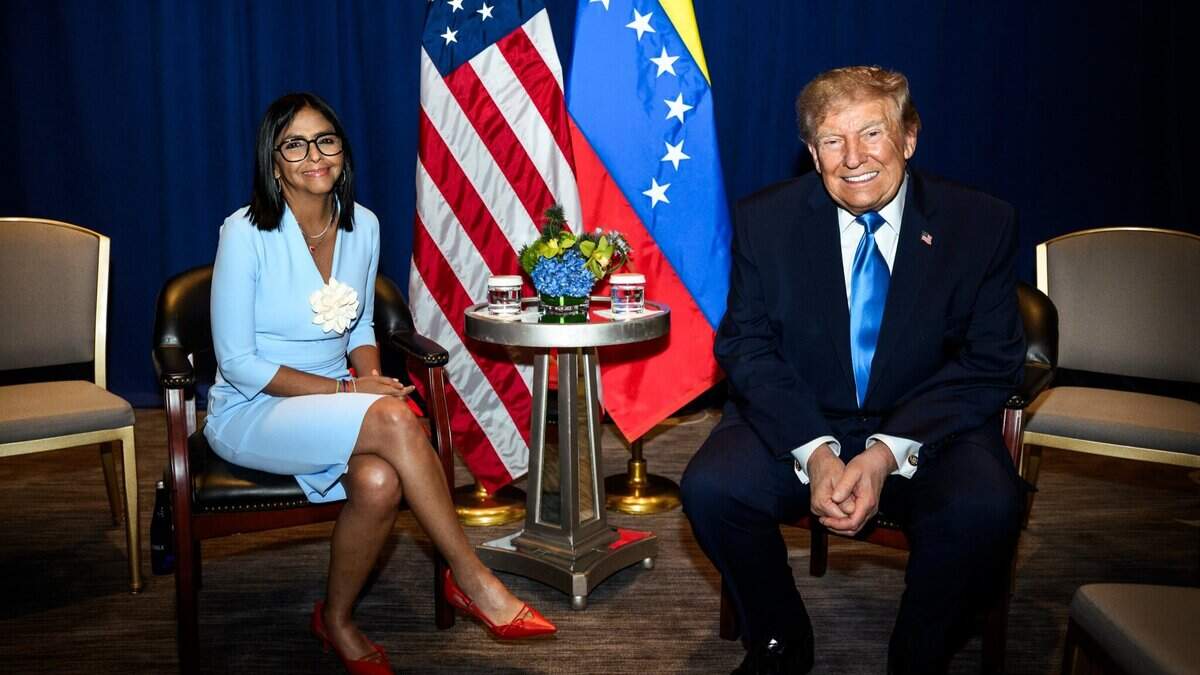
Interim President Delcy Rodríguez said Friday that she spoke with President Donald Trump and Rubio, who both confirmed Washington’s effort to rescue and humanitarian operations.
“They reaffirmed their commitment to support response efforts through the deployment of rescuers, specialized equipment, support for temporary shelters, and humanitarian assistance for affected families,” Rodríguez said in a statement.
Beyond official deployments, thousands of Venezuelan civilians have joined rescue operations, volunteering to search damaged buildings, collect food and medicine and transport donations to hard-hit neighborhoods in Caracas and La Guaira.
That grassroots mobilization has been mirrored in South Florida, where Venezuelan community organizations, churches and volunteers have launched donation drives to send urgently needed supplies to survivors.
The official said the response highlights the importance of combining federal military resources with local expertise from communities like Miami.
“This is a really comprehensive response that we’re very proud of,” the official said.
Despite the scale of the international operation, officials warned the crisis remains severe. The U.S. Geological Survey has warned that the death toll could climb into the thousands as rescue teams continue searching collapsed structures in Caracas, La Guaira and other areas.
A missing-person registry created by Venezuelan civic groups has listed tens of thousands of people as unaccounted for, though those figures remain unverified.
Read more MDSO deputies cleared in fatal car-dealership shooting. Man shot himself: memo








Post Comment