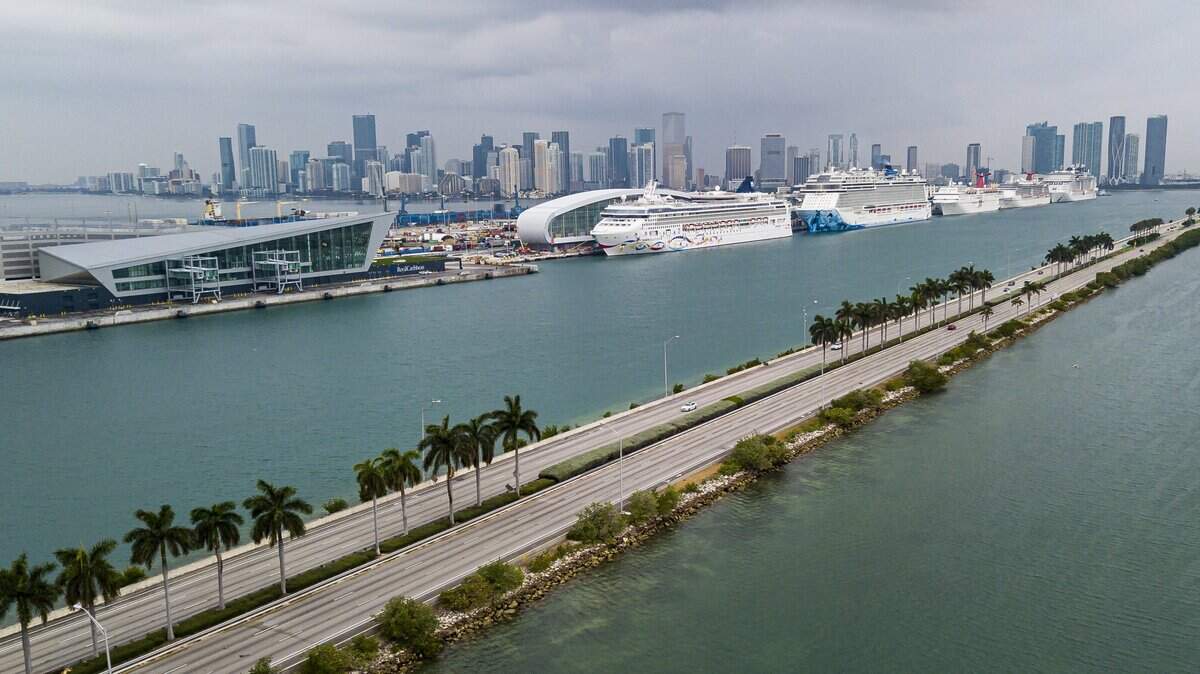
Mayor’s gamble on PortMiami fuel yard faces crucial vote by Miami-Dade commission
To fight it out over the future of PortMiami’s fuel operation on Fisher Island, Mayor Daniella Levine Cava has rejected a pricey deal to solve the problem in favor of an eminent domain proceeding she hopes will yield a cheaper solution.
Read more Gas prices are down in South Florida. Will they fall more? Check your area
But first, she needs the Miami-Dade County Commission to agree with her.
On Tuesday, Levine Cava plans to ask commissioners to back her strategy to ask a judge to force a sale of the 10-acre fuel yard to Miami-Dade instead of allowing developers to build a condominium complex in one of the most luxe communities in the country.
At a recent briefing, Levine Cava’s senior aide, Chief of Staff Chris Hudtwalcker, said the mayor’s strategy comes down to getting a lower price in court than the $400 million deal her administration had negotiated with the developers who bought the privately owned fuel yard last year.
“The fight will really be over valuation,” Hudtwalcker told staff members working for county commissioners on Friday morning during a meeting that was open to the public under Florida’s Sunshine laws.
His comments highlight the risk Levine Cava is taking in rejecting the purchase agreement her administration spent months negotiating with the development group, HRP Fisher Island. That group bought the fuel yard for $180 million last year, so the proposed deal would have meant an instant windfall for the partnership.
The potential profit for developers brought national attention to the fuel yard talks, including questions about why Miami-Dade hadn’t tried to purchase the facility itself when it went up for sale. As local criticism mounted, Levine Cava walked away from her administration’s negotiated deal, calling it too expensive. She also forced the resignations of the two aides who negotiated it, PortMiami Director Hydi Webb and Chief Operating Officer Jimmy Morales.
Now, that partnership, which reportedly includes prominent Miami developers Russell Galbut and the Related Group, is pushing back on the idea of a legal fight over property that Miami-Dade could have bought but didn’t.
“Miami-Dade County was aware of this asset for decades. They were approached directly by former owner TransMontaigne in advance of the public sale process and, later, also invited to participate in the public sale. They declined to purchase the property at each opportunity,” the group said in a statement.
Despite eight months of negotiations, the statement said, Miami-Dade is once again declining to purchase the fuel yard in a private transaction in hopes of using its legal power to force a sale.
“Seizing private property is not the solution for public failure,” the statement read.
Read more Beyond fishing and tiki bars: Can Michelin put Keys food scene in the spotlight?
Tax dollars don’t cover expenses for PortMiami, which uses revenue from cruise and cargo ships to pay for operations and construction. To purchase the fuel yard, Miami-Dade plans to use revenue from fuel sales and a fee on cruise tickets to cover the purchase costs over time. In his briefing Friday, Hudtwalcker said the negotiated $400 million deal would have paid for itself over 30 years.
Even so, he said Levine Cava found the negotiated price too high for Miami-Dade. “She could not, in good conscience, present it to the board,” he said, referring to the County Commission.
A lengthy court fight could mean emergency measures for PortMiami. The port’s existing agreement with the fuel yard’s operator runs through May 2027, and the new owners are obligated to let fuel sales continue under that contract. But if Miami-Dade can’t buy the land before then, fuel sales could halt next summer.
Even worse, the new owners could start clearing the site for a planned development — meaning removal of the fuel tanks and other equipment that would be needed to restart fuel sales if Miami-Dade ever gained control of the land.
Hudtwalcker, who sat in on some negotiations for the original deal, said Miami-Dade lawyers are confident they could win a court injunction barring the owners from removing the fuel yard equipment. But a halt to fuel sales is probably not something the county could fight.
“It’s probably not likely for us to be able to get a court to mandate that operations continue,” he told commission aides. “We do think we can prevent the dismantling of the tanks.”
With that in mind, Miami-Dade has researched emergency options if the fuel yard goes idle. That includes the possibility of a floating fuel barge sending out refueling vessels to cruise ships tied up at the port. “There will be fuel past 2027,” he said. “That’s not in question.”
Key to the county’s legal argument will be making the case that the Fisher Island fuel yard is the only option for PortMiami. On Friday, Levine Cava released a memo outlining various possibilities for a fuel operation on the port property itself, which sits on Dodge Island, Fisher Island’s neighbor. The memo said none of the options were viable, with about 10 years needed for construction at a cost of between $700 million and $1.1 billion.
In the briefing, Hudtwalcker emphasized that a deal was still a possibility even as Miami-Dade pursues a court fight. “From our understanding, 90% of eminent domain cases settle,” he said. “We have every intention of continuing to talk to these guys and get to any number that makes sense.”
Read more Florida man arrested for fleeing from cops twice in one week, deputies say











Post Comment