Will early morning bus service end in Miami-Dade? Mayor pushes a fare increase
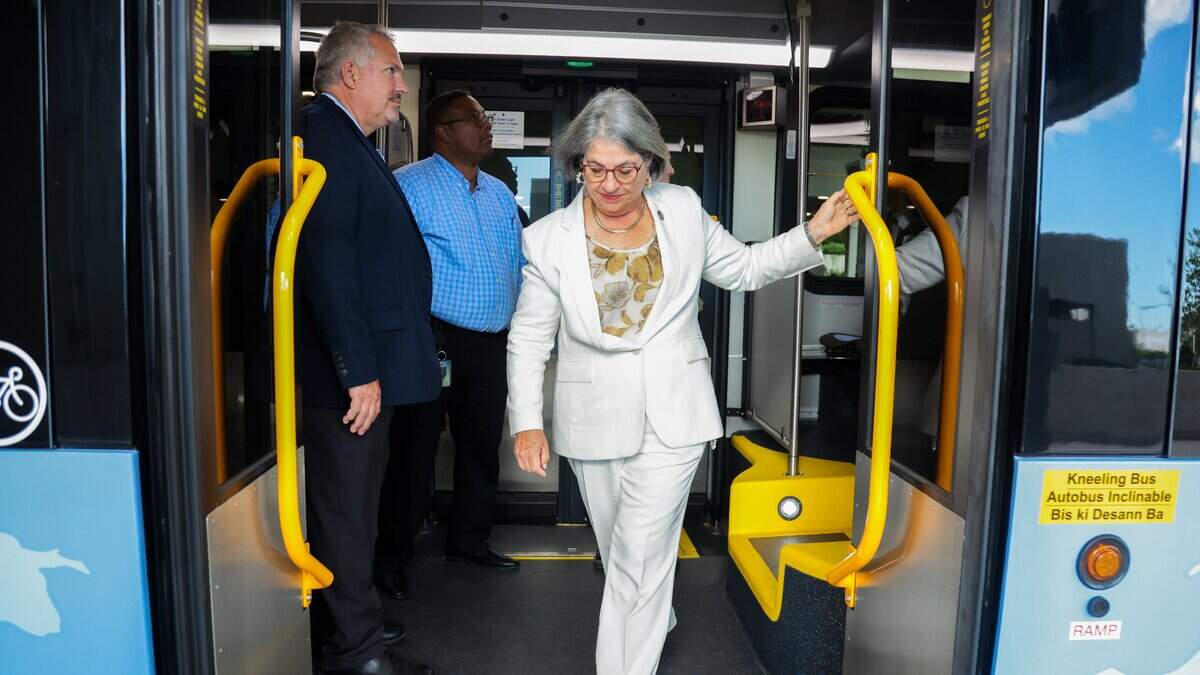
Bus riders would lose pre-dawn service and see a dozen routes eliminated in a controversial transit budget that passed its first vote by the Miami-Dade County Commission early Friday.
Read more Hitting the road for the long holiday weekend? Gas prices are up in Florida
The end of bus departures before 6 a.m. for dozens of routes became a top target during the lengthy hearing on Mayor Daniella Levine Cava’s $14.3 billion budget proposal for 2027, which advanced largely intact after a series of preliminary commission votes after nine hours of public comment and debate. A final vote is scheduled after a second public hearing on Sept. 17.
“What does the county expect these riders to do?” asked Tala Habash, an organizer with Transit Alliance Miami, which is pushing Miami-Dade to restore the roughly million in funding to preserve bus service before 6 a.m.
She told commissioners she’s been canvassing predawn commuters about what they’d do if their early-morning buses stopped running. Many had no idea about the planned cuts.
“I spoke to an exhausted woman on her way home from an overnight shift in Burger King,” Abash said. “You should have seen her face when she heard the news at 5:30 a.m.”
While Levine Cava proposed the bus cuts, she also said she’d rather see the commission approve the 50-cent hike in bus fares that she had tried to get approved last year. She declined to add the contentious issue of higher fares in her 2027 budget, but told commissioners early Friday that the transit system needs passengers to pay more for the first time since 2013.
“Folks, we need to increase the transit fare,” Levine Cava said shortly after 12:30 p.m. Friday. “That is really the bottom line.”
Commissioner Oliver Gilbert, who represents the Miami Gardens area, said it made no sense to run a bus system facing higher fuel prices but charging passengers the same it did a decade ago. “If you do not fix the fares, it’s a problem that’s going to reoccur every year no matter what,” he said.
Commissioner Raquel Regalado, who represents the southern Miami area, urged commissioners to pull back the bulk of the $5.5 million subsidy paid to the MetroConnect transit shuttles, which uses private cars to provide $3.75 rides in areas with limited bus service.
“It’s very popular in my district,” Regalado said of MetroConnect. “But it’s $5 million.”
Her request to have Levine Cava explore a subsidy cut for MetroConnect failed after a majority of the other commissioners voted against it.
This could be the final county budget approved under current funding levels as Florida voters consider a constitutional amendment that would impose a property-tax cut across the state. Miami-Dade estimates Amendment 3 would mean a $700 million loss in property-tax revenue after it’s fully implemented in 2029 — about a 20% cut of the roughly $3.3 billion of property taxes in the current budget.
While Levine Cava’s 2027 budget imposes some long-term austerity measures — including eliminating about 450 vacant positions — almost all of the tough decisions would wait until after the November election.
Miami-Dade Sheriff Rosie Cordero-Stutz, who has declined to give a position on Amendment 3, urged commissioners to approve a 12% increase in the property taxes that fund her independent agency. The funding “translates into deputies on the streets and 911 calls being answered,” Cordero-Stutz told commissioners as off-duty deputies in “We Fight What You Fear” T-shirts rose in their seats behind her. “We are asking for the resources necessary to do the job the public expects us to do, and do it well.”
Levine Cava, who opposes Amendment 3, recommended a 6% increase in property taxes for the Sheriff’s Office for 2027 — half of what Cordero-Stutz requested. Commissioners advanced Levine Cava’s sheriff plan for now, but it’s the second budget vote that matters.
“Public safety must come first, but we must be fiscally responsible,” Commission Chair Anthony Rodriguez said.
Read more ‘Survivor Greece’ star who lost a leg sues producers in Miami-Dade court
More than 150 people signed up to speak during the public hearing that started the meeting at 5 p.m. Thursday, and public comment lasted nearly four hours. It took commissioners another five hours to debate the eight pieces of legislation needed to advance the tax and spending plan for the 2027 budget year, which begins Oct. 1.
The closest vote came for the legislation that would implement a 6% increase in the water rates paid by homeowners across the county. That legislation advanced on a 7-6 vote, with Commissioners Roberto Gonzalez, Vicki Lopez, Natalia Milian Orbis, and René Garcia joining Regalado and Rodriguez in opposing the measure.
After enjoying double-digit increases in property-tax revenues during the recent real estate boom and an influx of federal COVID aid, Miami-Dade is faced with projected payroll and service costs exceeding revenue growth as the housing market cools. While Levine Cava’s 2027 proposed budget is balanced, without service cuts or tax increases.
The county’s emergency reserves are low, too. Budget Director Ray Baker said Miami-Dade should have about $500 million in its rainy-day fund, but the county has less than $90 million available to tap after a calamity like a hurricane.
“We’re significantly below where we should be,” he said
Levine Cava’s budget proposal increases overall spending by 8%, a figure that includes revenue from Miami International Airport, PortMiami, trash and water-bill fees and other funds that don’t come from taxes. The tax-funded part of the plan is up 4%. Payroll expenses and healthcare costs are helping payroll costs to grow a bit faster — up 5% in Levine Cava’s proposal.
The first budget meeting typically serves as a curtain-raiser for a two-week sprint to eliminate as many contentious budget provisions as possible — often with one-time revenue sources that kick the fiscal can to another year.
But Miami-Dade is running low on extra pots of money. Even with the proposed transit cut — including eliminating bus service after 10 p.m. on about three dozen routes — Levine Cava this year is draining an $89 million reserve that was supposed to be a nest egg for future rail projects. Instead, it will pay for transit operating costs and be mostly gone by 2028. A fund for affordable housing is also being used to pay for eviction lawyers and a county-run nursing home.
Members of the public and commissioners targeted a string of budget provisions before the meeting adjourned at 2:11 a.m. Friday, including:
- Dwindling dollars to purchase and maintain wetlands, tropical hammocks and other sensitive areas. Advocates want at least $20 million for the county’s Environmentally Endangered Lands program, but Levine Cava’s budget has only a fraction of that amount. EEL “has been performing miracles, protecting some of our most unique places,” Samantha Barquin, one of more than a dozen people wearing aqua shirts with eels on them, told commissioners.
- County dollars for lawyers to represent low-income residents facing eviction. Levine Cava proposed spending $2 million next year on the county’s eviction-diversion program, matching current funding. Advocates for the program urged commissioners to stick with that plan. Briyana Joseph, a Liberty City resident, used her allotted one minute at the microphone to recall the stress of her family having to decamp to a dingy motel room when they lost their rental home when she was a child. “I was ashamed — an emotion an 8-year-old should never have,” Joseph said. “Please don’t cut the eviction-diversion program.”
- Job cuts in the county’s Solid Waste Department ordered by Levine Cava’s administration after commissioners in May rejected a $14 increase to Miami-Dade’s $702 yearly trash fee. Those cuts wouldn’t affect trash and recycling pickup, but the county is scrapping four of the eight crews devoted to litter pick-up and the removal of abandoned washing machines, furniture and other large items left on roads — a crime known as “illegal dumping.”
- The dozen bus routes slated for elimination this fall to save about $9 million. Levine Cava’s budget called them low-ridership bus routes, but transit advocates said service loss would be devastating for riders who use them. Nicholas Ostermann, a security guard, told commissioners he worries the 2027 transit budget will cost him his job for ending his only affordable way to get to work at 6 a.m. “It is not a convenience,” he said of his bus route. “It’s my lifeline.”
On transit funding, multiple commissioners said Miami-Dade needed to find the funding for people who rely on the county to get to their jobs.
“Limited resources do not mean limited responsibilities,” said Commissioner Marleine Bastien, whose district in the northern Miami area includes neighborhoods with some of the highest poverty rates in Miami-Dade. “We need to find a way to keep these routes open and our workers moving.”
In a memo to commissioners this week, Levine Cava laid out options to restore funding for bus service by revisiting austerity measures that fizzled last year. Those included eliminating the MetroConnect shuttle program, increasing the county gas tax from 3 cents to 5 cents per gallon and increasing transit fares to $2.75 from $2.25. Combined, those steps would generate about $26 million a year.
Commissioner Roberto Gonzalez, who represents a suburban area in western Miami-Dade, urged Levine Cava to find savings by reducing multiple layers of senior directors standing between the mayor and front-line managers and county workers. He said that money, and far more, should be diverted to the Sheriff’s Office to close the $52 million gap between Levine Cava’s proposal and Cordero-Stutz’s.
Gonzalez also warned that the push to cut property-tax revenue is not going away even if the Amendment 3 proposal doesn’t hit the required 60% vote threshold in November.
“Tax relief for residents is coming,” he said. “It doesn’t seem like we’re ready.”
Read more Person injured after car is reportedly hit by lightning: Miami-Dade Fire Rescue











Post Comment