Volkswagen’s CEO just survived the fight that sank his predecessors
Some corner offices come with a trapdoor.
You can spot them by the turnover. The pay is enormous, the mandate is obvious, and the person holding the job keeps disappearing between annual reports. Investors eventually learn to price in the exit before it arrives.
Read more 2010 Rolls-Royce Phantom Coupe for Sale With 22,000 Miles
At Europe’s largest carmaker, the trapdoor has a name, and it is not China. It is not the electric vehicle transition, either, though both have done real damage to the balance sheet.
It is a 20-seat supervisory board where workers hold half the votes, alongside a German state that owns a fifth of the company and almost always sides with them.
Three chief executives have fallen through that trapdoor since 2006. Each one arrived promising to cut costs in Germany, and each one left before he could finish.
The diagnosis was never the problem. The votes were.
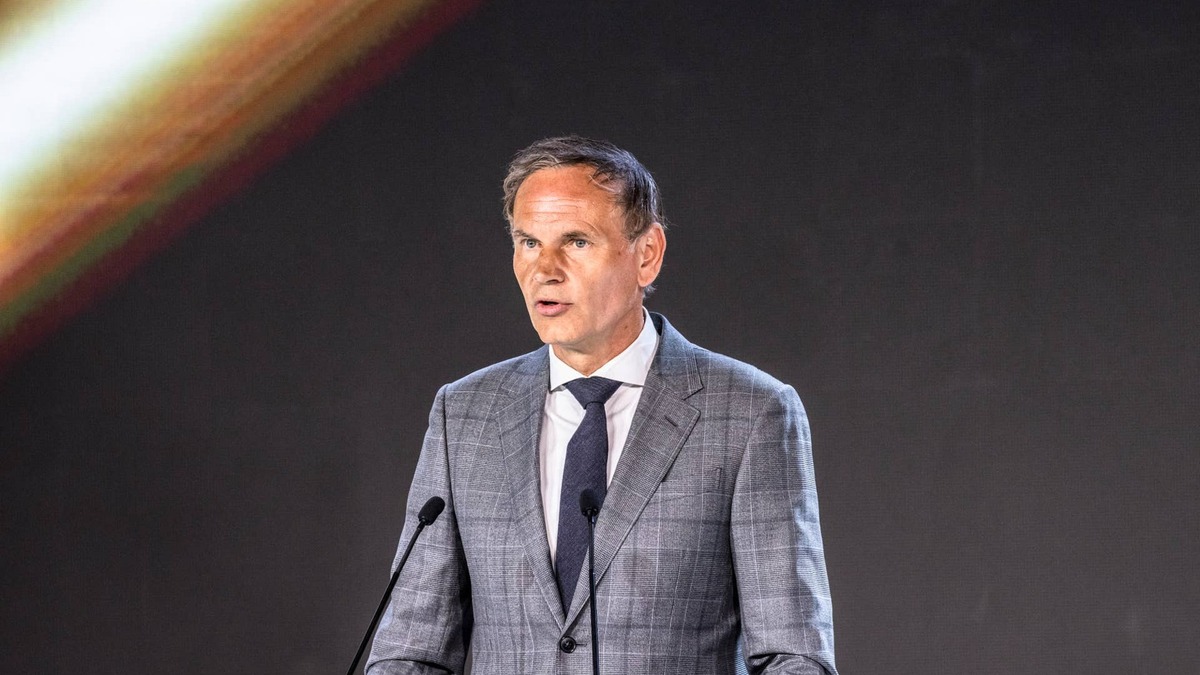
On Thursday, Sept. 3, the fourth one, CEO Oliver Blume, walked into the same room at Volkswagen (VLKAF), asked for the deepest restructuring in the company’s 89-year history, and walked out with a vote of 20 to nothing.
Why Volkswagen keeps losing chief executives to its own board
German co-determination law gives workers real votes in the boardroom, and nowhere is that power more concentrated than in Wolfsburg.
Half of Volkswagen’s supervisory board seats belong to employee representatives. The state of Lower Saxony holds roughly 20% of the company and two more seats, and its representatives typically vote with labor.
That arithmetic means any chief executive who wants to shrink the German footprint needs the consent of the people whose jobs he plans to shrink. It is a constraint BMW has managed to sidestep even while running its own redundancy program.
The record of what happens when a VW boss tries anyway is unusually consistent.
- Bernd Pischetsrieder was pushed out in 2006 after losing the support of key stakeholders, including employee representatives, reported Bloomberg.
- Matthias Müller, who steered the company through the aftermath of the 2015 diesel scandal, was ousted in 2018, according to Bloomberg.
- Herbert Diess was replaced by Blume in 2022 after repeated clashes with the Works Council, a conflict that followed his private estimate that Volkswagen carried 30,000 excess staff in Germany, reported the Irish Times.
I covered the earlier phase of this fight when the plan was still a leak, and what struck me then was how little the numbers had changed across two decades of failed attempts.
Every VW chief since Pischetsrieder has arrived at roughly the same diagnosis. None of them got to write the prescription.
NurPhoto / Getty Images
What Blume gave up to get Future Plan 2030 approved
The version of the plan that reached the board on Sept. 3 was not the version Blume wanted in July.
Two concessions unlocked the vote. Management deferred the decision on four German plants rather than committing to close them, and it dropped a proposal to carve out Volkswagen Passenger Cars and Components, a structure labor argued would have diluted its influence, reported Bloomberg.
Talks ran through the night of Sept. 2 and into the following day before the board’s eight-member executive committee broke the deadlock.
Related: Volkswagen may cut 100,000 jobs in brutal reset
In exchange, Blume got almost everything else. Volkswagen will cut roughly 50,000 more positions, including management roles, on top of a similar number already in progress. It will shrink its model portfolio by about 50% by 2035 and cut offering complexity by around 75%.
It is targeting a 9% operating margin by 2030 on annual sales of about nine million vehicles, with €135 billion earmarked for capital spending and research between 2027 and 2031, according to Volkswagen.
The approval was “a strong signal for the future of the Volkswagen Group,” Blume said in the company statement.
General and Group Works Council Chair Daniela Cavallo framed it differently in the same release, arguing that job security and economic viability are not opposing goals but intertwined ones. Read alongside the concessions, that is a fair description of what labor actually won.
Read more Amazon cargo plane crashes off a runway at Miami International Airport
The governance change hiding inside the Volkswagen resolution
Here is the part that got almost no coverage, and the reason my read is that this vote matters well beyond the layoff math.
Tucked into the same resolution, the supervisory board agreed to limit its own reserved approval rights to measures of material significance for the group, with thresholds adjusted to align with standard DAX practice, according to Volkswagen.
In plain terms, the board that has spent 20 years second-guessing chief executives just voted to second-guess them less often.
More Automotive:
- The failed Honda-Nissan merger just got a second life
- EV maker’s biggest ever recall hits 27,000-plus sedans
- Tesla just set a date for its riskiest launch yet
That is a structural change, not a one-time concession. It does not remove labor from the room, and it does not touch the 50% employee representation that makes Volkswagen unusual among global automakers. What it does is raise the bar for how big a decision has to be before the full board gets a veto.
For anyone holding the stock, that is the difference between a management team that can execute a five-year plan and one that has to relitigate it every quarter.
It matters outside the shareholder register, too. Volkswagen employs roughly 650,000 people worldwide, and the towns built around its German plants have spent two decades watching executives promise change and then vanish.
A board that intervenes less often is a board that lets decisions actually land, for better and for worse.
The market debate was never about whether the company had problems, one analyst noted. It was about “whether those challenges could realistically be addressed” inside that governance structure, said Deutsche Bank analyst Tim Rokossa in a note reported by Bloomberg.
What the unanimous Volkswagen vote still does not solve
Markets responded quickly. Volkswagen shares climbed as much as 10% in Frankfurt on Sept. 4 before settling back, and the broader European autos index rose 4.3%, reported Reuters. Even after that jump, the stock was still down more than 20% for the year.
That gap between the one-day pop and the year-to-date hole is the honest scoreboard here. The board vote fixed a political problem. It did not sell a single additional car in China, where the overall market has contracted by more than 20% this year as domestic rivals flood the segment with new models, reported the Associated Press.
Volkswagen has acknowledged that European capacity exceeds demand by more than 500,000 units, and it now has until the end of June 2027 to produce a workable production concept for Emden, Zwickau, Hanover, and Neckarsulm, according to Volkswagen.
The company has said those plants cannot be guaranteed competitive follow-on models between 2031 and 2034. Alternative uses under consideration reportedly include new industrial partners, potential buyers, and work outside carmaking entirely.
None of that is settled. The vote bought time and political cover, not savings.
“The ball is now entirely in the Executive Board’s court,” said Moritz Kronenberger of VW shareholder Union Investment, reported Reuters.
The thing worth watching is not the next round of job numbers. It is whether the four plants get a decision or another deferral when the June 2027 deadline arrives. Pischetsrieder, Müller, and Diess all won meetings, too.
What none of them ever won was the second vote.
Related: Luxury auto giant cuts 5,000 more jobs in major reset
The Arena Media Brands, LLC THESTREET is a registered trademark of TheStreet, Inc.
Read more Amazon cargo plane crashes off a runway at Miami International Airport
This story was originally published September 6, 2026 at 2:47 PM.








Post Comment