Tropical Storm Fay forms in the Atlantic. South Florida forecast
Tropical Storm Fay formed in the Atlantic Ocean Sept. 20, according to a National Hurricane Center forecast advisory, but there are no coastal watches or warnings, or threats to land.
Read more What Early Decision means for the future of FSU admissions | Opinion
Fay’s 45 mph winds were about 450 miles southwest of the Azores, with the storm moving north-northeast at about 5 mph.
Tropical Storm Fay, the sixth named storm of the 2026 Atlantic hurricane season, remains far from land and poses no threat to South Florida. Residents across Miami-Dade and Broward counties can instead expect heat, humidity and increasing afternoon thunderstorms. The National Weather Service forecasts scattered to numerous storms across the Miami-Fort Lauderdale metro area, with heavy downpours capable of producing localized street flooding in urban and poor-drainage areas.
Shop Amazon for hurricane supplies
➤ Track all active storms
Meanwhile, the NHC is watching two tropical waves in the Atlantic and Caribbean.
The next name after Fay for the 2026 Atlantic hurricane season will be Gonzalo.
➤ Weather alerts via text: Sign up to get updates about current storms and weather events by location
Here’s the latest advisory from the National Hurricane Center as of 5 a.m. Sept. 20.
Miami-Fort Lauderdale weather forecast
For Miami, Fort Lauderdale and the rest of South Florida, the National Weather Service says deep tropical moisture will support scattered to numerous showers and thunderstorms this afternoon and early evening.
Storms are expected to be most concentrated across the interior and east coast metro areas, including Miami-Dade and Broward counties. Some storms could bring torrential downpours and localized flooding in urban and poor-drainage areas, with isolated spots receiving several inches of rain. High temperatures will reach the upper 80s to lower 90s before storms develop. Rain chances remain elevated through much of the upcoming week.
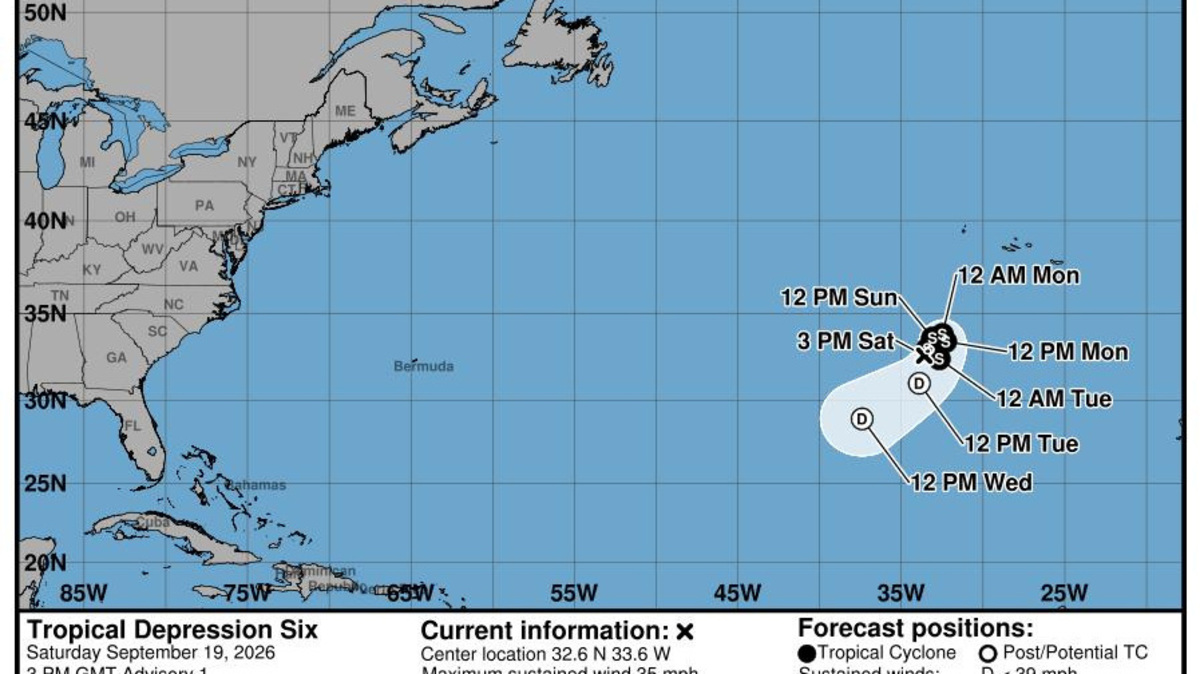
Where is Tropical Storm Fay?
At 5 a.m. ET, the center of Tropical Storm Fay was located near latitude 33N, longitude 33W. Fay is moving north-northwest near 5 mph.
Forecasters say Fay’s general motion is expected for about another day. A turn to the southwest is expected Monday.
Location: About 450 miles southwest of the Azores
Maximum sustained winds: 45 mph
Minimum central pressure: 1004 MB
Spaghetti models for Tropical Storm Fay
➤ Track Tropical Storm Fay
Special note about spaghetti models: Spaghetti model illustrations include an array of forecast tools and models, and not all are created equal. The Hurricane Center uses only the top four or five highest-performing models to help make its forecasts.
Will we get Hurricane Fay?
The National Hurricane Center forecast discussion says the combination of relatively moist air and the merging of warmer and cooler conditions should cause Fay to gain some more strength during the next 12 to 24 hours.
However, an increase in shear and dry air should end its opportunity for strengthening. Fay will likely become a remnant low Tuesday and dissipate by the end of the week.
Could we see a tropical storm or hurricane near Florida in September?
Anything is possible, but chances are low, according to the National Hurricane Center.
Will there be no hurricanes in 2026?
If this year’s Atlantic season has no hurricanes by Nov. 30, it will be only the third time it has happened, and you have to go back more than 100 years for the last times, in 1907 and 1914.
Of course, it is possible there were hurricanes, but records before the satellite era depended on observations from those nearby.
Since the satellite era began in 1966, there have been two occasions where we’ve seen two hurricanes in a season, in 1982 and 2013.
Read more A necessary sacrifice: Saying goodbye to FSU campus residence halls
“We have never gone this late into the Atlantic hurricane season without a hurricane in the satellite era,” said AccuWeather Lead Hurricane Expert Alex DaSilva.
National Hurricane Center tracking Tropical Storm Fay, 2 tropical waves
Along with Tropical Storm Fay, the NHC is tracking two tropical waves:
- A central Atlantic tropical wave has its axis along 45W from 06N to 21N, slowly drifting westward.
- A western Caribbean tropical wave has its axis along 84W south of 20N, from near the coast of Nicaragua to northeast Costa Rica, moving westward around 7-12 mph.
What is a tropical wave?
“Tropical waves are clusters of showers and thunderstorms that act as the seedlings for many tropical storms throughout the Atlantic season,” said Alex DaSilva, AccuWeather lead hurricane expert, via email.
“There are about 60 tropical waves that move across the Atlantic each year, and roughly 10% to 15% of them develop into a tropical system. That’s about one in seven.
“Tropical waves are important because they contribute to about 80% of all major hurricanes.”
When is hurricane season?
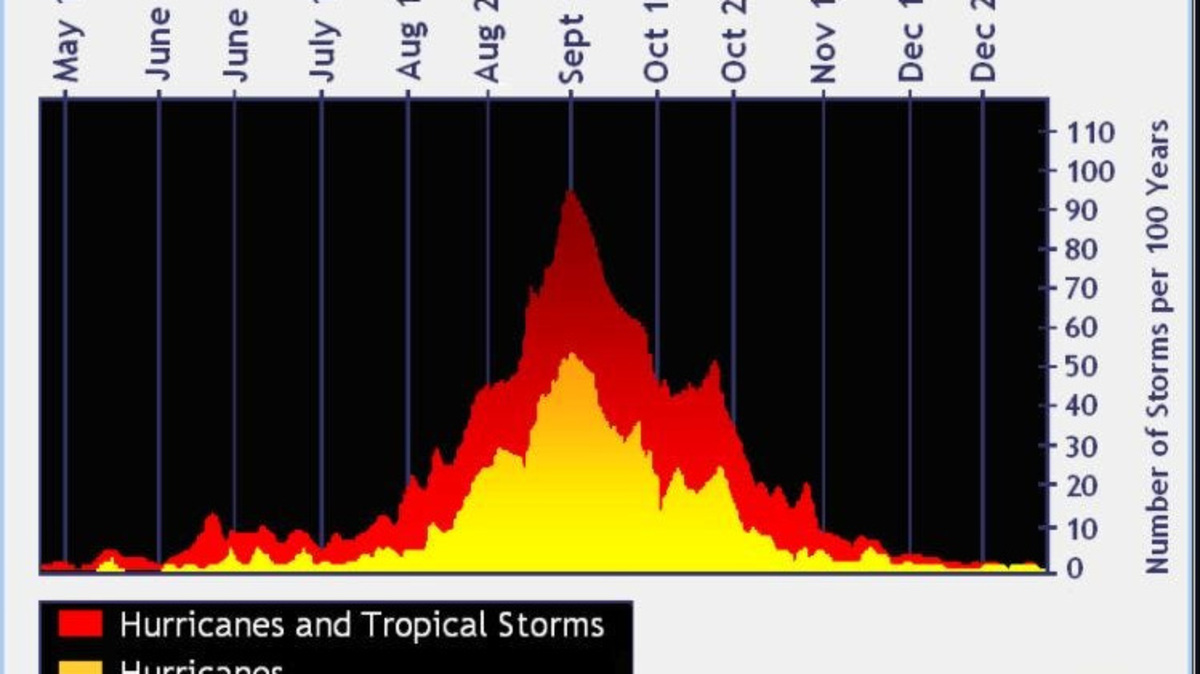
The Atlantic hurricane season runs from June 1 through Nov. 30.
Ninety-seven percent of tropical cyclone activity occurs during this time period, NOAA said.
➤ Hurricane Center testing new cone: What’s changing this season?
The Atlantic basin includes the northern Atlantic Ocean, Caribbean Sea and Gulf of America, as the Gulf of Mexico is now known in the U.S. per an order from President Trump. NOAA and the National Hurricane Center are now using Gulf of America on maps and in advisories.
Countdown clock to end of 2026 Atlantic hurricane season
How many tropical storms, hurricanes are in a typical season?
The 30-year average, from 1991 to 2020, is 14 named storms, seven hurricanes and three major hurricanes.
South Florida weather radar for Sept. 20, 2026
Weather watches and warnings issued in South Florida
When is the peak of hurricane season?
The peak of the season was Sept. 10, with the most activity happening between mid-August and mid-October, according to the Hurricane Center.
What are names for 2026 Atlantic hurricane season?
Here are the names for the 2026 Atlantic hurricane season and how to pronounce them:
- Arthur: Tropical Storm Arthur formed June 17, 2026
- Bertha: Tropical Storm Bertha formed July 20, 2026
- Cristobal: Tropical Storm Cristobal formed Aug. 12
- Dolly: Tropical Storm Dolly formed Aug. 27
- Edouard: Tropical Storm Edouard formed Sept. 1
- Fay: Tropical Storm Fay formed Sept. 20
- Gonzalo, gohn-SAH-loh
- Hanna, HAN-uh
- Isaias, ees-ah-EE-ahs
- Josephine, JOH-seh-feen
- Kyle, KY-ull
- Leah, LEE-ah
- Marco, MAR-koe
- Nana, NA-na
- Omar, OH-mar
- Paulette, pawl-LET
- Rene, re-NAY
- Sally, SAL-ee
- Teddy, TEHD-ee
- Vicky, VIH-kee
- Wilfred, WILL-fred
Interactive map: See how many hurricanes, tropical storms have passed near your home
Stay informed. Get weather alerts via text
What’s next?
We will continue to update our tropical weather coverage to bring you the most current information you need to protect your home and family.
John Gallas and Cheryl McCloud are journalists for the USA TODAY Network-Florida’s service journalism Connect team. You can get all of Florida’s best content directly in your inbox each weekday by signing up for the free newsletter, Florida TODAY, at naplesnews.com/newsletters.
This article originally appeared on Florida Today: Tropical Storm Fay forms in the Atlantic. South Florida forecast
Our editors independently choose our recommendations. Some content is produced with paid support from a third party, however our editorial decisions remain independent. If you buy through our links, the USA TODAY Network may earn a commission. Prices and availability may change.
Reporting by John Gallas and Cheryl McCloud, USA TODAY NETWORK – Florida / Florida Today
Read more ‘Black joy personified’: Project explores spirituality in Florida
USA TODAY Network via Reuters Connect
Copyright Reuters or USA Today Network via Reuters Connect
This story was originally published September 20, 2026 at 8:49 AM.











Post Comment