‘Never, I could not’: Sanon denies wanting Haiti president killed, shifts blame
A Haitian American pastor accused in the international plot that culminated in the July 7, 2021, assassination of Haitian President Jovenel Moïse denied any involvement in his killing or attempted kidnappings, telling a Miami federal jury on Friday that he was shocked by the news of the president’s death.
Read more From Fleetwood Mac to Future: Why your favorite song may come from North Miami
“The death of the president is something I never expected,” Christian Emmanuel Sanon, 67, testified during his second day on the witness stand.
“I was shaking, very upset,” he told the 12-member jury.
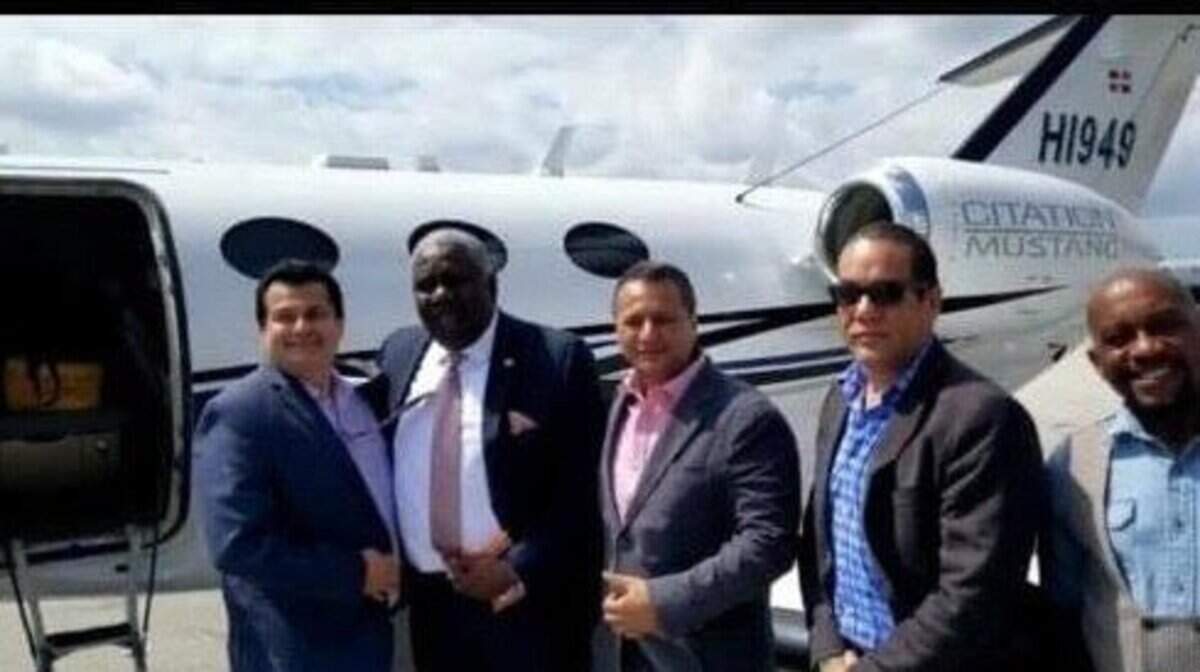
Sanon, who admitted to organizing meetings in Port-au-Prince with Protestant pastors and Vodou leaders as he positioned himself to replace Moïse, is charged with multiple offenses stemming from the sprawling conspiracy that led to the president being shot to death in his second bedroom in the hills above Port-au-Prince.
Partly fashioned together in South Florida, where Sanon and four convicted plotters lived, the deadly conspiracy involved a network of Haitian, Colombian and American participants, including men who posed as U.S. federal agents and claimed to have support from Washington to overthrow Moïse.
A sixth superseding indictment, unsealed days before the start of Sanon’s trial in late September, charges him and 29 others in the expanded conspiracy. The indictment came months after prosecutors won convictions against four South Florida men in May and expanded their investigation to include individuals accused of helping finance the plot by fraudulently obtaining pandemic-relief funds and other government loans.
The indicted group also includes 17 Colombian former soldiers who were jailed in Haiti after being indicted there in the killing. The men had initially been recruited by a Doral security firm to provide security for Sanon in Haiti, and they later stormed the president’s hilltop residence the night he was killed.
Plot unfolded against a backdrop of political turmoil
Prosecutors have portrayed the case as an effort by Sanon and the four convicted South Floridians to violently overthrow Moïse and install a new government that would award them with lucrative infrastructure contracts.
At the time the conspiracy unfolded in early 2021, Haiti was in the midst of deepening political turmoil. Moïse, 53, was ruling by decree, facing widespread anti-government protests and locked in a dispute with opposition forces over when his presidential mandate was supposed to end, Sanon testified. At the same time, Moïse also faced opposition over his desire to rewrite the nation’s constitution, though Sanon testified it was something he favored as a naturalized American, and the killing derailed that.
“It hurt me more because I was expecting that Constitution that would be coming,” he said of the death.
While Sanon claimed that people always wanted him to run for the presidency, he’s been portrayed as a relative unknown. He testified that he had never been interested in becoming president, yet he acknowledged that he had selected a former Haitian ambassador to serve as his prime minister and claimed to have had people helping him identify potential members of his government.
During the testimony, Sanon was careful not to criticize Moïse, who had been described as in text exchanges by the group as “the rat.” On at least one occasion, his account of the political reality conflicted with how things actually unfolded. Sanon testified that Moïse’s selection of Ariel Henry, a neurologist, as prime minister had triggered street protests.
Moïse’s decision before his death to appoint Henry, which became a point of contention after the assassination, had in fact been closely guarded, with Moïse intentionally floating other potential names amid international pressure to form a government capable of building political consensus to help him organize long-overdue elections.
Sanon also sought to distance himself from Joseph Felix Badio, a former government functionary who has emerged as a central figure in the conspiracy and was transferred from a Port-au-Prince prison to Miami along with the 17 Colombians in September. Sanon testified that he did not know that James Solages, one of the convicted men, and former Sen. Joseph Joel John, who pleaded guilty in the conspiracy, were talking to Badio in the days leading up to July 7.
Badio had backed former Supreme Court Justice Windelle Coq Thélot as an alternative to replace Moïse and has been accused of having the plot move from a kidnapping of the president to an assassination.
Prosecutors contend that Sanon, despite being sidelined, had continued seeking a role in a post-Moïse government, while his defense maintains that he had been replaced nearly a month before the killing.
“It was a little bit before June 10. They were just walking away from me,” Sanon testified, adding that the group’s relationship with Thélot had been kept a secret from him.
Sanon faces life in prison if convicted of the most serious charge against him, which is conspiracy to kidnap or kill someone outside the United States. He is also charged with conspiracy to mount a military expedition against a country at peace with the United States, in violation of the Neutrality Act, and illegally shipping 20 bulletproof vests to Haiti for the squad of Colombians.
More than six weeks of trial testimony
Sanon first took the stand in his own defense on Thursday, after prosecutors presented six weeks of testimony and evidence that included text messages, weapons linked to the killing and testimony from former first lady Martine Moïse, who was wounded in the attack. The jury also heard from several cooperators who had pleaded guilty ahead of the first trial.
Read more The Underline’s bike and walk trail is complete. It’s named after a billionaire
He began his testimony by acknowledging that he was not a licensed physician in the U.S., despite being described as a doctor. He also said he had no formal theology training, although he described himself as “a planter of churches.”
His testimony has set the stage for what is expected to be a contentious cross-examination beginning Monday, when prosecutors plan to challenge his credibility and his efforts to shift responsibility for the president’s death to the four men who were convicted in May and now face life sentences.
During a hearing outside the jury’s presence on Friday, prosecutors sought permission to introduce records showing Sanon’s multiple failed attempts at passing medical licensing exams in the U.S., as well as false statements regarding land ownership and his roles in companies during a bankruptcy proceeding.
“He made misrepresentations during a court proceeding,” prosecutor Jason Wu said as one of Sanon’s defense attorneys, Zeljka Bozanic, unsuccessfully tried blocking the evidence.
U.S. District Judge Jacqueline Becerra said prosecutors can use the documents to refresh his recollection. “I think it’s proper impeachment if they believe that they have evidence that he misrepresented financial information, defrauded some,” she said, “they can explore it.”
Well-spoken, Sanon portrayed himself as trustworthy and honest, repeatedly denying knowledge of the violent plot and shifting blame on others. He testified that longtime friend Frederick Bergmann, who testified for the government and is serving a nine-year prison sentence after admitting to shipping the bulletproof vests to Haiti, never told him he was going to send the protective gear.
“He said he was going to send us the medical supplies,” Sanon said.
Sanon also testified that while he sent Bergmann the address for his International Medical Village, he never opened the invoice. He instead forwarded it to Ashkard Pierre, a Haitian diplomat whom he first met in Canada. Pierre was arrested days before the start of Sanon’s trial and is fighting extradition to the U.S.
Pierre is among several people connected to Sanon who were indicted after prosecutors expanded their investigation. Another is Haitian businessman Samir Handal, who owns the house where Sanon and some of the Colombians lived. Sanon testified that he had known Handal for only about a year and provided him a house during his stay as a favor.
Sanon also rejected testimony suggesting he participated in discussions about mobilizing churchgoers and gangs to protest against Moïse and forcibly remove him from the presidential palace.
“I told them I’m against the way they want to do the demonstrations,” he said. “If we would use the protest the way they were doing it … people would get hurt. It would be a violent thing” because around the palace it’s well secured.
“There are more than 600 soldiers in the palace around, and plus you have the military base right across from it,” he added.
Sanon insisted that he never agreed with the owners of Doral-based Counter Terrorist Unit Security or Counter Terrorist Federal Academy, which hired the Colombians, to engage in any sort of violence or kidnapping in relation to Moïse.
“Never, I could not. There’s no way. It’s not part of my life,” he said.
When he learned of Moïse’s death, Sanon said, he called several people, starting with Pierre, who told him that one of the Colombian co-leaders of the group had informed him “the president is dead.”
He then called John, the former senator, who also confirmed Moïse’s death before abruptly telling him to “hand up the phone.” He said he also called Bob Balthazar and Helen Manich, two people whom he described in testimony as advisers who lived in the U.S.
“I want to know what’s going on in the country,” he said, explaining the calls to his attorney Humberto Dominguez. “It was a shock, and I’m looking for people that could talk to me and let me know what’s going on.”
Asked by Dominguez if he had agreed with anybody to kill Moïse, Sanon testified, “Never. That’s not part of my life.”
Three Colombians were killed after the deadly assault, and 17 are awaiting trial after being charged with conspiracy to kidnap or kill Moïse. Asked how he feels about them, Sanon said: “They’re human beings. … They come to Haiti looking for work, and when I saw them, when I saw the pictures, it really hurt me because I said somebody made that craziness by putting these people into this danger.”
Read more This potluck wants to bridge Miami’s faith divides over food







Post Comment