Miami’s pop-up shops are helping small business owners thrive with less overhead
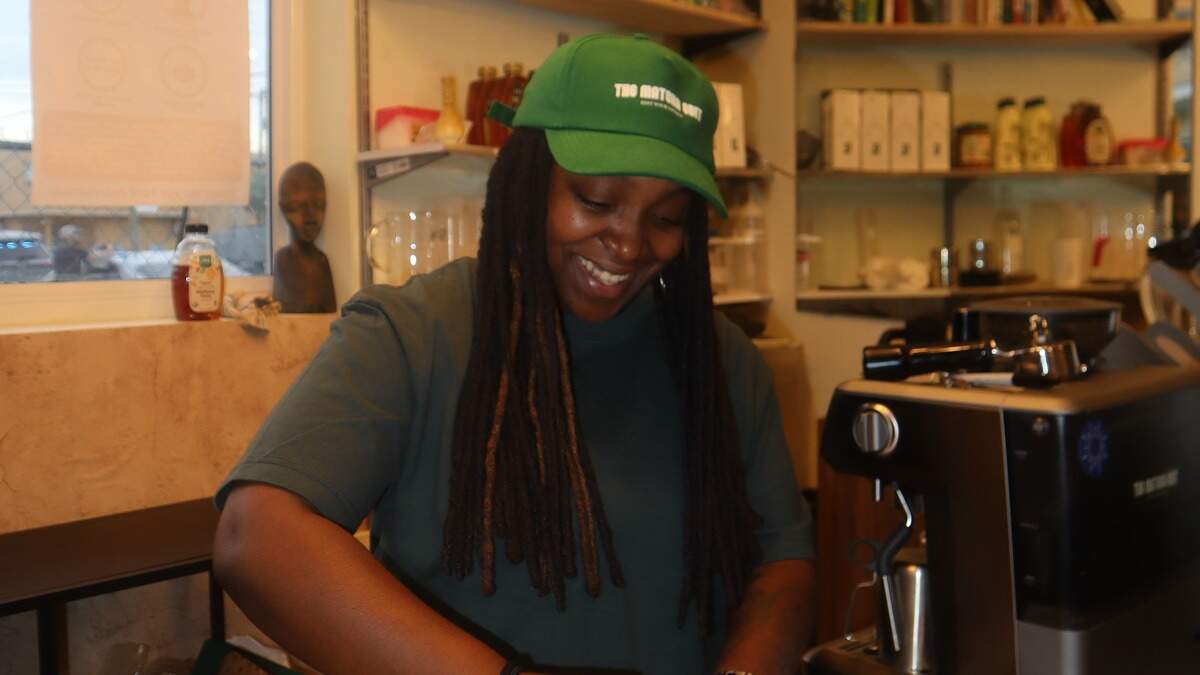
On her 30th birthday, Marissa Johnson stood inside a coffee shop. For the last 10 years, she had dreamed of having one of her own.
Read more How giving a medical marijuana authorization cost a Miami doctor $6,900
“I’m standing in a coffee shop that offers flowers, coffee, matcha,” said Johnson, now 31. “I thought to myself, ‘When you gonna get on it?’”
But, like many other young, aspiring entrepreneurs in South Florida, she found the cost and competition was too great.
“To get a good espresso machine alone runs about $5,000,” Johnson said. “ I don’t have $5,000 to just put into an espresso machine. But I have a couple thousand to put into a brand and business.”
Johnson’s answer was to create The Matcha Edit, a matcha and coffee pop-up bar. Pop-ups are small, limited-time operations with a low financial risk that allow businesses to build up a customer following.
Pop-ups have become a popular alternative to traditional brick-and-mortar operations, even for existing brands. In a survey conducted by Storefront and the University of South Carolina’s College of Retail, existing business owners reported improved market visibility, an increase in sales and increased social media engagement, reporting an 80% rate of success after only one pop-up engagement.
The success Johnson was looking for was found through a partnership with Roots Bookstore, a Black-owned and operated business on Northwest 15th Avenue in Miami, a community she knew well.
Johnson balanced her budding small business with her career as a corrections officer. In the beginning, Matcha Edit’s partnership with Roots Bookstore was about more than sales. It was about the joy her small business was bringing to the community and to herself.
“I feel like I’m happier when I do The Matcha Edit,” said Johnson. “The community is just very grateful for the coffee shop because they don’t have a specialty coffee shop in this vicinity.”
The impact The Matcha Edit pop-up has made on Johnson and the community has not gone unnoticed. Roots Bookstore owner Phil Agnew cannot imagine his bookstore without it.
“They bring not only the people that we want, but people that we wouldn’t imagine,” said Agnew. “What she has brought is a consistency and a loyalty to coming here almost on a daily basis amongst people that we never had and never would have had.”
Matcha Edit also has a supporter in City Commissioner Christine King. King presides over District 5, the area of Miami that includes Liberty City.
King comes from a small business background as the owner of a law firm and considers the success of small businesses in her district to be a top priority.
“I’m familiar with Roots and sampled a matcha from Matcha Edit,” King said. “I never had it before, and now I love it.”
Read more Two South Florida lottery players, one in Miami, held Monday’s jackpot tickets
Over the decades she’s spent as a small business owner and city commissioner, King has noticed that small business owners need technical assistance to make their businesses thrive. Things like co-mingling, or blending personal and business funds, can bring trouble.
“They did not have business accounts,” King said. “I’ve known for decades how important it is to support small businesses. They have great products, but we have to get those products to the community.”
But many South Florida entrepreneurs with pop-up businesses are not just looking to make a profit, but also to build community. Joshua and Smith Matthias, alongside their friend Excelomano Daniel, are two brothers whose community-based event series, Neighborhood Threads, allows local businesses to meet customers.
Neighborhood Threads is an event series operating throughout South Florida since 2023. Inspired by their mother’s experiences working in markets in Haiti, the Matthias brothers combine a marketplace for local vendors with a party celebrating South Florida’s Black culture.
Using the slogan “Love Thy Neighbor,” Neighborhood Threads created a platform to help small businesses gain visibility.
The first event attracted nearly 50 people, mostly students from Florida Atlantic University. The group’s Juneteenth event at NoMi Village last month, meanwhile, had 2,000 attendees.
Smith Mattias, 26, lives in Sunrise and works for Amazon as a robotics engineer. He called his day job a “side job” because of how much he enjoys working on Neighborhood Threads events. It was important for him and his team to create an event that combined shopping in a market with a dance party.
“Neighborhood Threads, it’s solely focused on the vendors. You want to make sure that they’re making money. If they’re not making their money, then we serve no purpose. We have to serve our main purpose, which is to help the community. If the vendors do not make their money, then we are not doing our jobs,” said Josiah Matthias, 25.
Nathania Casimir, the owner of Juicy Squeeze lemonade, brought her business to Neighborhood Threads’ Art Basel event in December and sold out of her customized flavor lemonades, making around $1,100 in one day.
“We’ve had events where we make nothing, and then to come to bigger events like this and make a good profit, it just makes us want to keep going,” Casimir said.
Building a community of supporters allows for pop-up business owners to promote their products and build their brands. For owners like Johnson, who started her pop-up almost a year prior, it allowed her to leave corrections and pursue the expansion of her pop-up brand full time. Taking a chance on her dreams was a risk but allowed Johnson to accomplish more than she knew she could.
“It’s nerve-wracking, but everything in life is,” she said. “It is a risk, but I just don’t wanna be 50 and say I didn’t try.“
Read more Miami-Dade paid more than $4K for three portraits of the same county commissioner







Post Comment