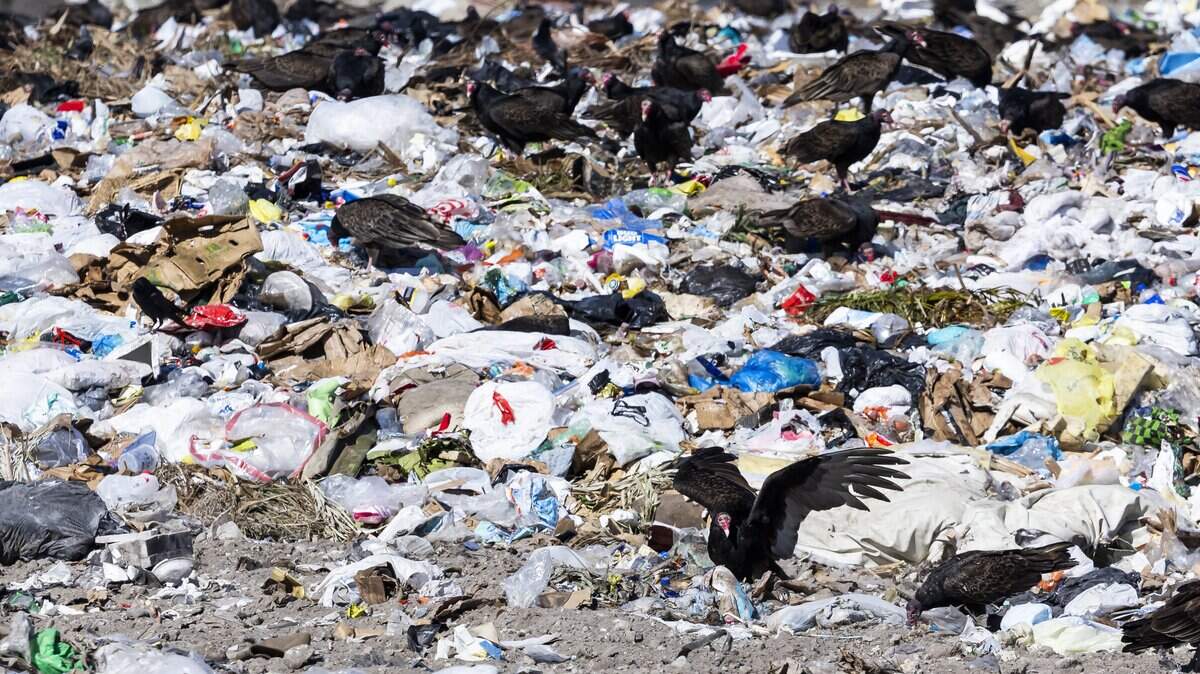
Miami-Dade aims to double recycling as landfill nears capacity. Here’s the plan
Miami-Dade’s landfills could be at capacity within the next five years, so on Friday officials released their plan to reduce the amount of trash that makes it in.
Read more Man who left autistic sons at Miami Beach hotel to drink arrested, police say
The county’s “Zero Waste Master Plan” was announced on Friday at the Miami Marriott in Biscayne Bay, which was fitting as part of the plan heavily involves the hospitality industry making changes like not trashing food scraps.
The plan has been in the works since 2022 and identifies more than 30 strategies to raise the recycling rate from 36% to 77% within the next 13 years. This would be done by also expanding reuse and composting programs.
Dave Dobler, a clean water and plastic-free advocate, said we should already be there.
“We should already about have our contamination rates down. Am I excited that we finally have a plan? Yes. It’s all about implementation and execution of the plan,” Dobler said.
Some of those strategies are already underway, including igniting yard waste and turning it into biochar, piloting composting programs and eliminating single-use plastics throughout county facilities. The latest accomplishment has been standardizing what materials can be recycled across four out of five households.
“There is value in trash,” Mayor Daniella Levine Cava said.
Getting the job done will take the community coming together, but also participation from businesses and the hospitality industry – the county’s largest business sector, Levine Cava said.
“The hospitality industry plays such a critical role in the success of the community, so we need to be part of the solution as well,” said Rolando Aedo chief operations officer of The Greater Miami Convention & Visitors Bureau.
One of their most promising ideas is partnering with the restaurants to give away their food waste to either be eaten by other people or animals or composted.
The strategies are split up between short, medium and long-term goals.
A short-term goal, for example, would be offering incentives — such as a “green business certification” — to encourage restaurants not to send food scraps to the landfill. Another is having events and venues develop “zero waste” strategies and use reusable silverware or compostable materials.
Read more Miami’s heat advisory streak continues, but clouds and storms may bring relief
A long-term goal, for example, would be dish washing businesses. That way, using reusable materials is attainable for events, restaurants, food trucks and festivals that otherwise wouldn’t have the space to wash a ton of dishes.
For households, one that they consider a short-term is a “Save As You Throw” program that charges you based on the garbage can’s weight. Ideally encouraging people to think about their wallets, and potential savings, when choosing which bin to use. Another strategy would be enforcing an existing ordinance to send out more notices and fines for households that don’t recycle right.
A 2024 review of what we throw out found that single-family residences mostly trash food waste (21%), paper (20%), and plastic (15%.)
Food waste, paper and plastic were also the main things trashed by commercial businesses.
If is achieved, it would reduce 1.7 million metric tons of greenhouse gas emissions – that’s enough energy for 230,000 households, Levine-Cava said.
“I don’t care what they say, that matters,” Levine-Cava said.
The plan addresses only “upstream” waste, not its final resting place. Meaning materials that don’t make it into the correct trash or recycling bin aren’t accounted for in the plan, nor are incineration or landfill options.
Aneisha Daniel, director of the county’s Solid Waste department, said the landfills could fill up in under five years or so. The county could look at options to buy more time, such as horizontally expanding the landfill. But it makes it all the more important for use less — and throw less in the garbage.
Levine-Cava called the county’s waste crisis a “massive challenge but massive opportunity.”
Ashley Miznazi is a climate change reporter for the Miami Herald funded by the Lynn and Louis Wolfson II Family Foundation and MSC Cruises in partnership with Journalism Funding Partners.
Read more Man eating garnish jailed for shoving waitress at downtown Miami café: police
This story was originally published July 31, 2026 at 4:07 PM.










Post Comment