Killer who suffocated wife, her 2 girls has ‘extensive brain damage,’ expert says
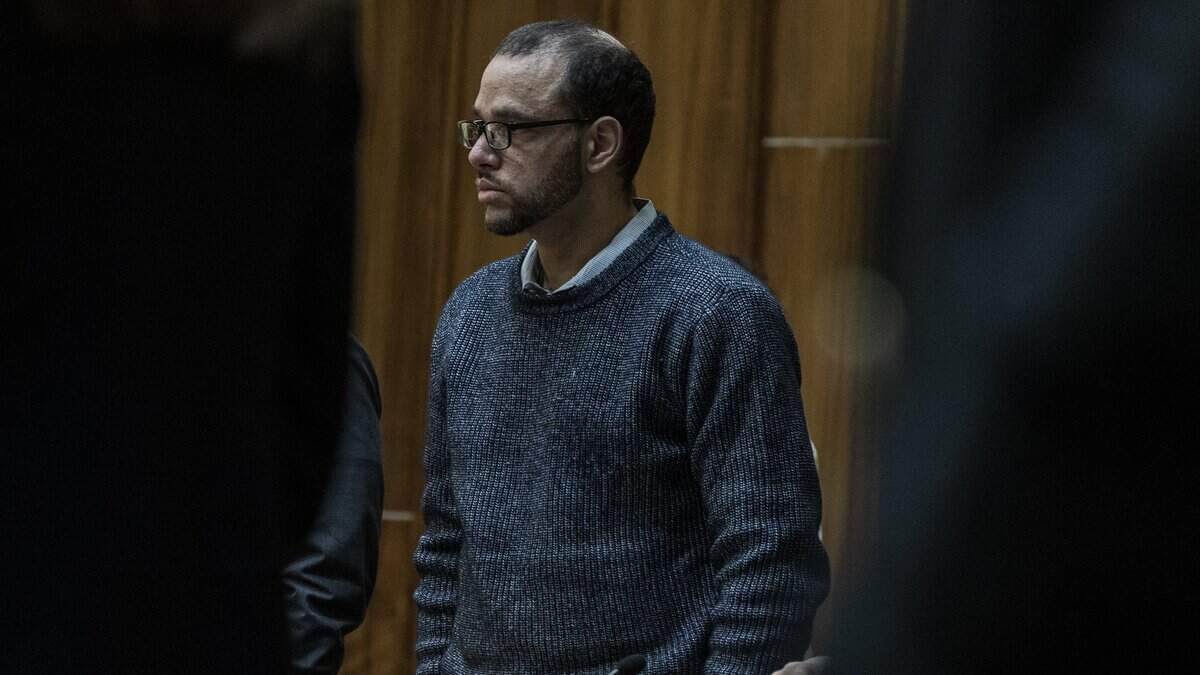
Alberto Sierra, who admitted to snuffing the lives of his estranged wife and her two young daughters with a plastic bag, is missing part of his brain, a neuropsychologist testified Tuesday.
Read more Columbus High withdraws offer to purchase nearby public elementary school
Erin Bigler, who is now retired but formerly ran a brain imaging research lab at Brigham Young University, testified that he reviewed scans of Sierra’s brain and found that Sierra had ”extensive brain damage” linked to a traumatic brain injury. Bigler said a “hole in the frontal lobe” of Sierra’s brain was consistent with being hit by a car.
“The brain is the key to behavior,” Bigler said.
Last week, several of Sierra’s family members testified that he was hit by a car in 1996 at age 12. His mother, Mercedes Pedraza, said Sierra wasn’t the same after the accident, testifying that he would have frequent tantrums, refused to follow rules and ultimately dropped out of high school. That testimony comes as the defense presents its case to jurors in the hopes they will spare Sierra’s life.
READ MORE: Family of killer who suffocated wife, her girls, testify hoping to save his life
Sierra, 42, admitted to suffocating his estranged wife, Gladys Machado, 29, and her daughters Julia, 6, and Daniela, 3, with a plastic bag on Nov. 10, 2012. Their bodies were found inside a closet at the Flagami home they once shared three days after they were killed.
The fate of Sierra is in the hands of 12 jurors who are tasked with deciding whether Sierra, who pleaded guilty to the murders, should be condemned to death or sentenced to life in prison. Miami-Dade Circuit Judge Marisa Tinkler Mendez is presiding.
Appearing in court via Zoom, Bigler said the scans revealed Sierra had “a complete loss of tissue” in a segment of the left frontal lobe near his eyes. Defense attorney Joyce Brenner held up a 3D printed model of Sierra’s brain, which Bigler said he based off of a scan. A removable blue piece of plastic represented the area of the brain that Bigler said Sierra is missing.
When questioned, Bigler said the scans can’t pinpoint exactly how the brain injury affected Sierra. But brain damage is not reversible, he said, and a person with damage to their frontal lobe could lack impulse control and have limited ability to conform their behavior to the norm.
Read more How to Watch Guardians vs Rays for Free: TV Channels, Live Stream Options for ALCS Game 2
The scan “tells you the areas of damage, and it tells you what brain networks would most likely be affected,” Bigler said. “It doesn’t go beyond that.”
Bigler, who didn’t interview Sierra or perform tests on him, said it’s not possible to tell if a person has frontal lobe damage just from observing them. A person with such a brain injury could be able to hold a job, go to school, drive a car and form relationships, Bigler testified.
On cross-examination, prosecutor Lara Penn highlighted how people with similar brain injuries could be law-abiding citizens. Bigler said brain scans alone don’t capture a full picture — and they can’t predict how an injury may affect an individual.
Bigler also told Penn he can’t diagnose Sierra with frontal lobe syndrome, a disorder caused by damage to the frontal lobe. Penn also pointed out that the first brain scan available for Sierra is from 2018, when he had a seizure in his jail cell after using K2, a form of synthetic marijuana.
When pressed by Penn, Bigler said he can’t definitively say what caused Sierra’s brain damage or when it occurred. He also said he couldn’t speculate on how the injury affected Sierra directly.
“You’re not here to tell this jury that his brain injury caused him to kill Gladys, Julia and Daniela, correct?” she asked.
“Correct,” Bigler said.
Sierra’s trial will continue on Wednesday, with Bigler and Sierra’s mother returning to the stand to conclude their testimonies.
Read more Dodgers’ Mookie Betts Has Depressing Admission on Shohei Ohtani’s Struggles











Post Comment