‘It’s really unbearable.’ Haitians in Springfield, Ohio are being summoned by ICE
Haitians in Springfield, Ohio, who were protected from deportation under Temporary Protected Status are being summoned by U.S. Immigration and Customs Enforcement and after reporting to their appointments are being outfitted with ankle monitors, immigrant advocates say.
Read more State Rep. Basabe hires Trump’s childhood friend to fight $450,000 verdict
“They are asking them to come to the appointment the same day they receive the letter most of the time,” said Viles Dorsainvil, executive director of the Haitian Community Help and Support Center in Springfield.
Last month the U.S. Supreme Court cleared the way for the Trump administration to end Haiti’s TPS designation. On Monday the U.S. Supreme Court sent its ruling to a lower court in Washington, D.C. that had issued a stay of the termination. While work permits tied to TPS have expired, lawyers have been awaiting a formal order from U.S. District Judge Ana C. Reyes lifting her stay.
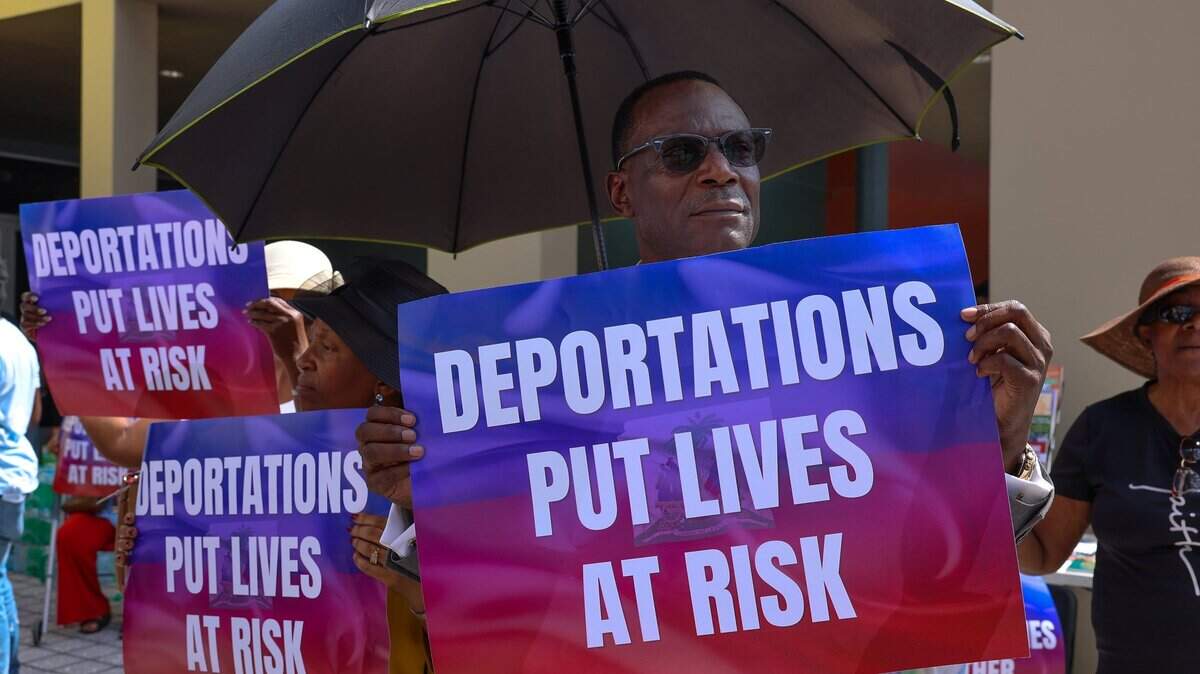
At the same time, immigration advocates and Haitian communities have been bracing for a possible surge in ICE raids in Springfield, Miami-Dade and other communities with large Haitian populations.
Dorsainvil and two other advocates who work with Haitians told the Miami Herald that panicked Haitians are reaching out after receiving the “call-in” letters and asking what to do.
The mailed notices provide recipients with a date, time and location where they must appear in person for a check in. Recipients are instructed to bring “all immigration documents” and warned they must keep the appointment. If they cannot attend, they are told they must state their reason and immediately return the signed letter.
Dorsainvil said after explaining the choices, he warns individuals that “if they don’t go, they will be put in removal proceedings.” He knows several people personally who have received the summons, he added.
It remains unclear whether Haitians outside the midwestern city are also receiving the notices. The advocates contacted by the Herald said so far they are only aware of residents of Springfield, a city that became a political flashpoint during President Donald Trump’s campaign to return to the White House.
While campaigning, Trump and running mate JD Vance vilified Haitians in the city, falsely claiming that they were eating their neighbors’ pets and vowing to deport them if elected.
In an interview this week with CBS News, Ohio Gov. Mike DeWine, a Republican, distanced himself from the president’s immigration policy, saying that the mass deportations of Haitians from Springfield and his state hurts the economy, and doesn’t serve the interests of the U.S.
The Department of Homeland Security did not respond to a request from the Herald about the Ohio notices, including who is receiving them and why.
Read more Hazing victim hires attorney. National frat chapter says accused aren’t members
Dorsainvil said he believes the letters are tied to the termination of Haiti’s TPS designation, which affects as many as 350,000 people, including the city’s roughly 15,000 Haitian migrants.
Though some immigrants used to receive ICE check-in letters, he said. “They never used to put a monitor on their leg.”
On Wednesday, Dorsainvil’s organization heard from 10 people who had received the notice and were seeking assistance.
“They are afraid to go onto the streets, afraid to go to the grocery stores. Even those of them who are eligible to work, they are afraid to go to work,” he said. “So many of them are asking us what to do next because they won’t be able to work or to do anything.”
The community, he said, is dealing with multiple crises.
“People are really traumatized,” Dorsainvil, a pastor, said.
Dorsainvil, who attended seminary in Jamaica, said immigrant advocates are also affected by the end of the TPS humanitarian program. A former missionary in Haiti, he arrived in the United States in 2020 after his family was targeted because of its political views, and applied for political asylum. Like his clients, he also feels vulnerable.
“I’ve been dealing with that level of stress and anxiety because I am some type of voice in the community. I am almost like other media outlets, but I am not really protected by anything,” he said. “People are asking me why I’m doing this, but at the end of the day, there should be somebody to speak on behalf of the community and be a voice for the voiceless. That’s what I’ve been doing.”
Although Haiti’s capital, Port-au-Prince, is surrounded by armed gangs, the danger awaiting Haitian returnees, he said, extend beyond the capital or the gang violence..
“Imagine that you go to Haiti now, you have nowhere to stay. You don’t have any guarantee that you will have a job. People do not have any power to purchase anything,” he said.
“The folks who are there in Haiti, they have been supported by us here in the U.S. It’s just like a collapsed country,” said Dorsainvil, whose own neighborhood in Port-au-Prince is frequently the site of gunfire. “It’s like a catch 22 for us as Haitians, and it’s really alarming.”
The question he hears most from Haitians in the U.S. is what should they do next.
Read more How the loss of Haitian TPS will affect medical care in South Florida
“It’s really unbearable.”









Post Comment