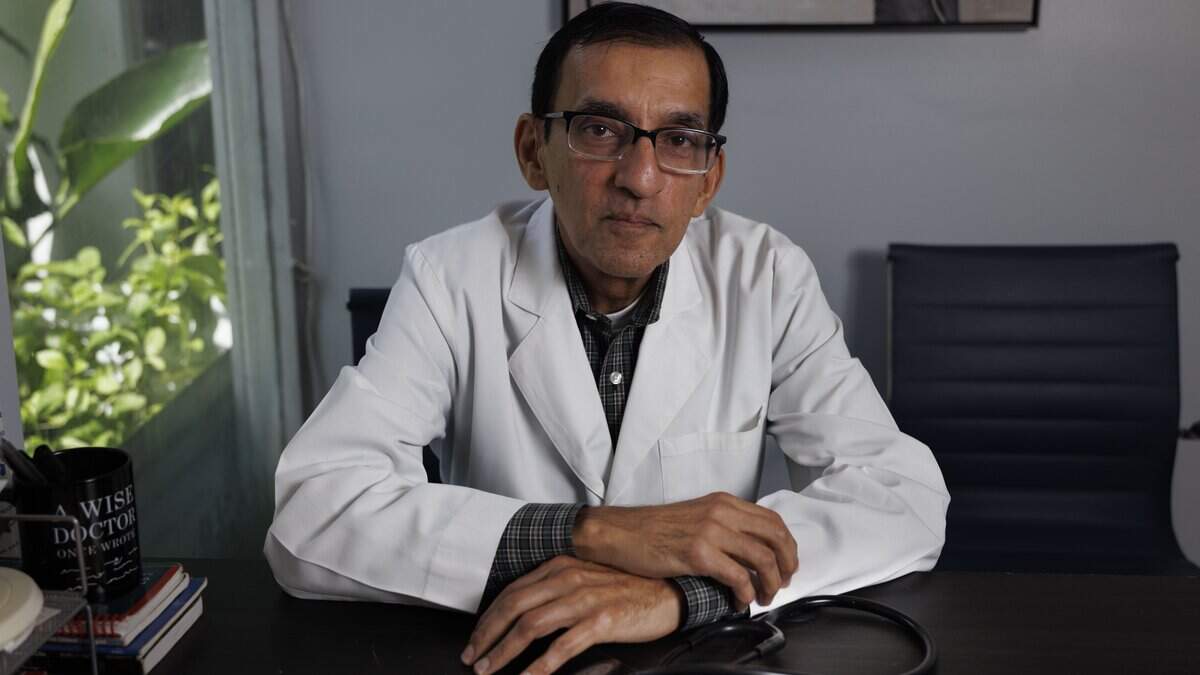
How the loss of Haitian TPS will affect medical care in South Florida
At the UHI CommunityCare Clinic in Opa-locka, anyone without health insurance can get primary and specialty care, including free dental care, eye exams and prescription glasses. Fruits and veggies from a mobile grocery bus. And, starting in August, free ready-to-eat hot and healthy meals.
Read more Man slammed victim to the ground in Walmart road rage attack, Hialeah police say
The clinic has seen an increase in patients since last year when more people were kicked off Medicaid, others dropped their health plans due to costlier health insurance premiums, and the federal government strengthened immigration enforcement, including starting the process to end Temporary Protected Status, or TPS, for thousands of immigrants who were authorized under the program to live and work legally in the U.S. because of turmoil in their home countries.
That includes about 350,000 Haitian TPS holders, many in South Florida, who are expected to lose their legal status any day now.
For Shabbir Motorwala, a founding board member of the nonprofit clinic, UHI’s mission — “to provide health to the people who need it, regardless of any status, ethnicity, religion” — will be critical in the coming days.
Nobody knows how this “is going to end up,” Motorwala told the Herald. But “we are preparing and we are trying to accommodate” patients’ needs as TPS ends, a decision that will cause many to not only lose their legal status but their jobs and health insurance, too.
And patients are already seeking care differently. More of them are asking for telehealth visits, an option the clinic offers and encourages to abate patients’ fears that visiting the doctor could lead to a run-in with ICE, according to Motorwala.
Even though UHI is not government funded, Motorwala said, patients are still “afraid to come, that somebody might be watching them.”
Some of the fear stems from a Florida law that requires hospitals that accept Medicaid to ask patients about their immigration status. Hospitals must report the data, without any of the patient’s identifiable information, to the state, though patients can decline to answer the question and still receive care. The law doesn’t apply to other healthcare providers, including community health centers like UHI, urgent care centers, anti-abortion pregnancy health centers, abortion clinics, and retail pharmacies like CVS Health and Walgreens.
Under the federal HIPAA privacy law, providers are also generally prohibited from using or disclosing a patient’s personal health information without consent. The National Immigration Law Center, in a blog post about doctor and patient rights, explained that healthcare providers “may refuse to provide information about patients to law enforcement officials unless the request is pursuant to a warrant issued by a judge or magistrate for a specifically identified individual or another order issued by a court.”
At UHI, patients only need to provide their name, date of birth and a photo ID, according to Motorwala. No Social Security number, immigration status or other information is needed.
The privately funded clinic, which saw over 6,000 patients last year, was founded in 2008 by South Florida’s Muslim community. The clinic, which moved in 2024 from Miami Gardens to 870 Fisherman St. in Opa-locka, has partnered with many organizations through the years to help provide care, including The Coalition of South Florida Muslim Organizations (COSMOS) and Florida International University’s medical school, whose faculty and students volunteer at the center.
The clinic also has various initiatives to combat food insecurity in the underserved population it cares for, a problem it expects will escalate once TPS ends and people lose their jobs. Opa-locka, where the clinic resides, already has high poverty rates and is often considered a “food desert.”
Read more Hialeah cancels firefighter bargaining session; union says morale sinks even lower
UHI’s partnership with Caring for Miami, an initiative of Christ Fellowship Church, gives people the opportunity to pick up fresh fruits and vegetables once a month from a mobile grocery bus. A new initiative with Islamic Relief USA will have ready-to-eat hot Halal meals available every Wednesday from 11:30 a.m. to 1 p.m. at the clinic starting Aug. 5, said Motorwala. The clinic has launched a community garden and is helping to teach patients how to grow their own food. Another initiative, in partnership with Hunger for America and Quest Diagnostics, will give free food vouchers to patients who come to the clinic to check their heart health to help them buy healthy food.
Jackson Health System is also planning to send a social worker once a week to the clinic to help patients who may be eligible for care through Miami-Dade’s public hospital system, according to Motorwala.
Jackson and South Florida’s other public hospital systems — Broward Health and Memorial Healthcare System in neighboring Broward County — told the Herald that their hospitals, ERs, urgent care centers and other facilities are ready to care for patients, even those who lose their TPS status. As public safety-net health systems, the hospitals take care of everyone, regardless of their ability to pay or insurance or immigration status.
TPS decision affects hospital staffing, too
Even so, the hospitals’ own staffs are not immune to the Supreme Court’s decision last month to allow the Trump administration to end TPS. About 50 of Jackson’s over 15,000 employees are Haitian TPS holders who will lose their jobs once their legal status expires. At Broward Health, there are 47 such employees. At Memorial, 27.
“Jackson Health System recognizes that the expiration of Temporary Protected Status (TPS) is a difficult and uncertain time for affected employees and their families. Jackson has worked closely with these employees to submit any documentation that could establish continued work authorization,” Jackson Health said in a statement, explaining that federal law prohibits it from employing people “whose work authorization expires and who cannot provide alternative eligibility documentation.”
All three health systems said they’ve been working with the affected employees to help them understand the options with their 401(k)s and Health Savings Accounts. Affected TPS holders — not just at the hospitals, but across South Florida — who were enrolled in a work-sponsored group plan for health insurance may also be eligible to continue receiving health coverage under COBRA.
COBRA is a federal law that gives employees who lose their jobs the ability to stay on their previously work-sponsored health insurance plan for a certain period of time. The affected employee usually has to pay the full premium for COBRA, though some employers may agree to pay some or all of the cost as part of the severance package, according to the U.S. Department of Labor.
At Broward Health and Memorial, affected TPS employees will have health insurance coverage through the end of July and will then be eligible to continue health insurance coverage through COBRA for 18 months if they assume the cost of the premiums.
All three health systems also indicated that all affected TPS employees could be hired again if the situation changes.
“Jackson has continued to employ affected team members for as long as federal TPS extensions remained in effect, and we would welcome them back should they regain work authorization,” Jackson said.
Read more State Rep. Basabe hires Trump’s childhood friend to fight $450,000 verdict











Post Comment