How will Carnegie Mellon change Wynwood? Housing and transit at a crossroads
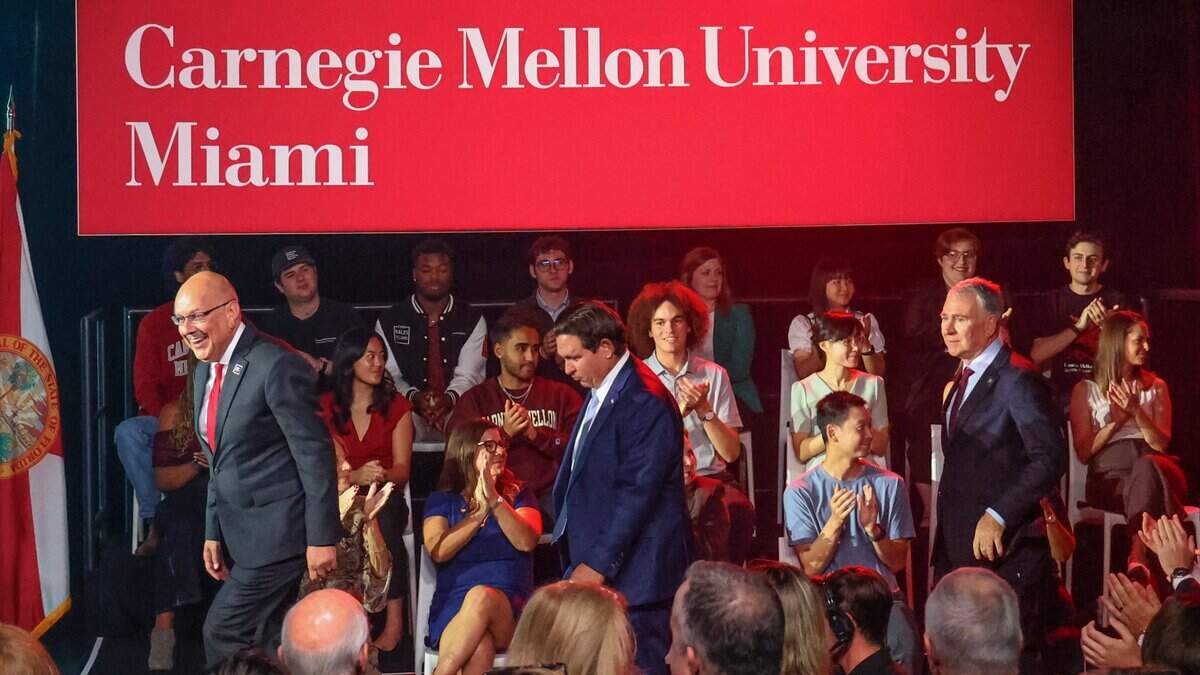
Carnegie Mellon University’s new Miami campus will likely give a boost to Wynwood as the neighborhood continues to undergo changes and challenges.
Read more How much are you paying for gas in South Florida? Check your area for changes
Developers, architects and planners are optimistic the coming campus could lead to even more investment and development in the area, a vibrant arts hub and emerging tech hotspot.
Billionaire hedge fund executive Ken Griffin is putting up $2 billion to fund the 35-acre college campus, which will bring classrooms, labs and dormitories to the area. Developers say they expect offices, restaurants, housing and hotels to spring up around the campus.
Some highlighted the existing need in Wynwood for more affordable housing and better public transit access. The new campus could intensify that demand, and some hope it will lead to more investment in those areas.
Moishe Mana, the billionaire businessman who sold the land where the campus will be built, said he believes the land is now in “better hands” with Griffin, who is worth an estimated $57.1 billion.
“Ken brought a vision that’s incredible,” Mana said during an interview with the Miami Herald. “He is doing a great job for the city.”
The Citadel CEO paid $1.1 billion to buy Mana Wynwood, an event venue that hosts festivals, conferences and expos. Griffin is donating the land to the university. The purchase was part of a donation that totaled $3 billion, $1 billion of which went to Carnegie Mellon’s main Pittsburgh campus. It was the largest gift Griffin has even given and the largest gift by any single individual to a university.
Construction is expected to begin on Carnegie Mellon’s tech-focused Miami branch next year, and its first students are expected to enroll in 2028. Eventually, the campus is expected to accommodate more than 3,500 graduate and undergraduate students, as well as 300 faculty and 600 staff.
Campus expected to spur development
With the announcement of the coming college campus, Wynwood seems to be on the verge of yet another wave of transformation.
Kobi Karp, a prominent Miami architect based in Wynwood, said he thinks this is the start of a “new chapter” for the neighborhood and the city. He thinks the campus will help Miami attract and retain top talent. And he hopes to hire young architects out of Carnegie Mellon.
Karp also expects to see offices, labs and hotels, as well as apartment and condo buildings, develop around the campus.
Steve Wernick, a land use attorney who was involved in a massive zoning overhaul in the neighborhood that began more than a decade ago, said he anticipates a “significant increase” in the number of projects being proposed and built in Wynwood in the coming years.
“It’s going to have a major impact and jump-start what’s already been happening in Wynwood,” Wernick said.
Ned Murray, an urban planner and Florida International University professor, said vibrant neighborhoods often grow up around university campuses. He pointed to Boston University and Columbia University’s campus in Manhattan as examples.
Read more Google is bringing 500 free tech certifications to Miami. What to know
“This is an ideal opportunity for the city and a real opportunity to create that mix of uses,” said Murray.
For developers already building in the area, the announcement was welcome news.
Ryan Shear, a managing partner at Miami developer PMG, said it’s too early to say exactly how the campus will affect his firm’s condo projects that are under construction in Wynwood. But he predicts it will boost property values and likely lead to more enthusiasm about the neighborhood.
“I just know the value of the real estate went up,” Shear said. “That’s a certainty.”
Matthew Rieger, the president and CEO of Housing Trust Group, called the investment “monumental.” His firm is redeveloping Rainbow Village, an aging public housing development sandwiched between Overtown and Wynwood, with workforce, affordable and market-rate apartments.
Rieger said in light of the campus announcement, the Rainbow Village development, which is across Northwest 22nd Street from Mana Wynwood, “makes more sense now” than it did when it was first approved.
Concerns about affordability and transit
The reaction hasn’t been all positive. Under a Herald Instagram post on the coming campus, people were concerned about traffic and affordability in the rapidly gentrifying neighborhood.
“City is finished. More expensive, less local anything, more out-of-towners, more traffic, more generic restaurants from other cities, more fake ‘Miami culture’ being dictated by people not from Miami,” one commenter said.
Murray, the urban planner, said transit and affordable housing are two areas in which Wynwood falls short.
Wynwood is not connected to Metrorail, Metromover or Brightline. And rents in Wynwood have become wildly expensive. The average rent for an apartment in the neighborhood is $3,468, well above the city’s average of $2,761, according to data from the online rental platform RentCafe.
Murray said the arrival of Carnegie Mellon, which will bring more than 4,000 students, faculty and staff to Wynwood, will only compound the area’s need for transit and housing. But he hopes the city, county and private sector see the new campus as a reason to invest in these areas.
Karp, the architect, said he expects to see more privately operated transit in the neighborhood, rather than public transit. This could look like shuttles run by the university for its students or by employers for their employees, he said.
Rieger, whose Rainbow Village project will bring more than 1,000 units to the area, said he hopes the apartment buildings will provide places to live for Carnegie Mellon’s students, faculty and staff. He’s optimistic about Carnegie Mellon coming to Wynwood, but he said he hopes there are “serious conversations” about housing affordability in the neighborhood as the campus is planned and built.
“An investment of this magnitude is going to really increase the demand,” Rieger said. “But what does that mean for housing affordability? It becomes even more important.”
Read more Man’s conch chowder craving ends in Florida Keys arrest, sheriff’s office says










Post Comment