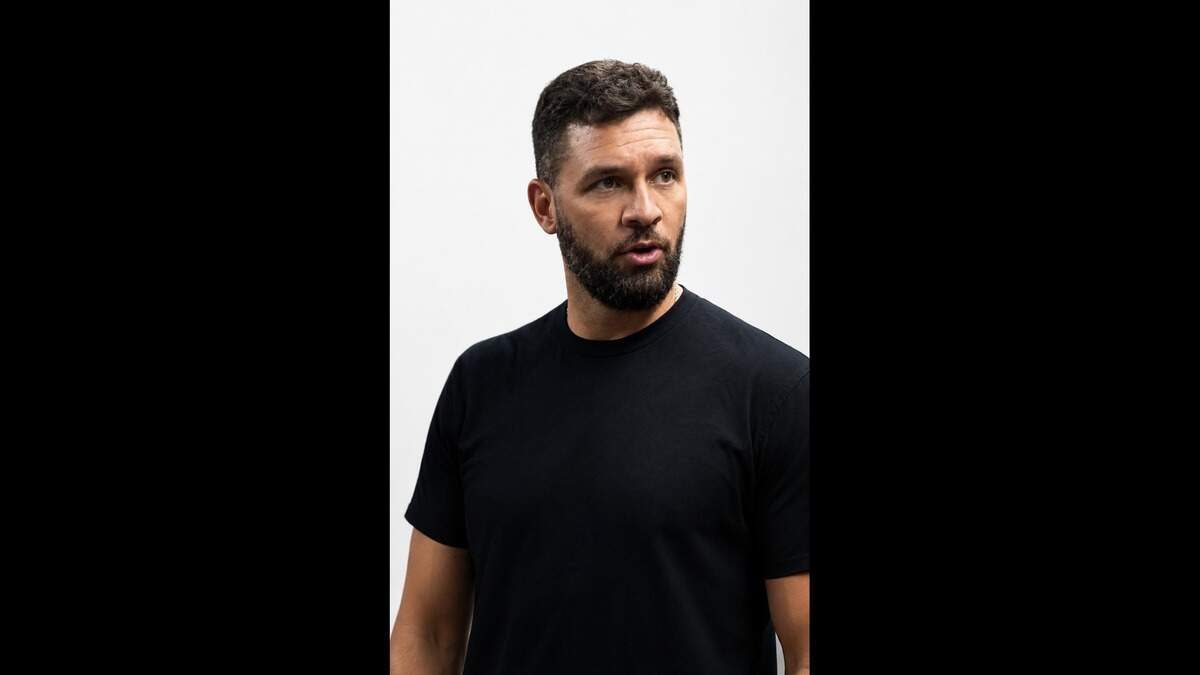
Haitian businessman Dimitri Vorbe has been locked up for over 300 days. He’s not alone
Exactly 260 days after immigration agents arrested a prominent Haitian businessman at his South Miami home, U.S. District Judge Darrin Gayles questioned why Dimitri Vorbe had been held for so long without due process.
Read more Broward food company recalls powder after a customer’s medical issue
“I am concerned about the whole idea that the petitioner can just be detained indefinitely,” Gayles said on June 9 at Vorbe’s hearing on a habeas corpus petition, which challenged the government’s legal basis for detaining him. “How long can the government just keep him in custody if it can’t effectuate his removal?”
Exactly 53 days since that hearing, Gayles has still not ruled on whether to order Immigration and Customs Enforcement to release Vorbe, raising the question about why a legal process that should be swift has dragged on for nearly a year. Vorbe’s habeas petition forced the government to justify why it can legally hold him.
Although Vorbe entered the country legally and was already before an immigration court at the time of his controversial arrest, he is among thousands of detainees now stranded in South Florida due to the Trump administration’s crackdown on immigrants since last year. The record number of immigration-related habeas cases, leading to a massive backlog, far surpasses the typical number of a few dozen per year in South Florida under prior presidents.
“The only thing I would say to our outstanding judges in this district is: ‘Don’t blame the victims or their lawyers,’” Miami immigration attorney Ira Kurzban said as he condemned the lack of action on habeas corpus cases.
“To the extent the courts simply sit on the habeas petitions and take no action, they are accommodating the Trump administration in allowing the detention and illegal removal of non-citizens in this district,” Kurzban, one of the country’s top immigration lawyers, told the Miami Herald.
Vorbe targeted
Vorbe, 52, ran one of Haiti’s biggest electric power providers until a clash with then-President Jovenel Moïse made him a target of Haitian and U.S. authorities during the first Trump administration. He entered the United States with a valid U.S. visa in January 2020. He was arrested months later on dubious claims of overstaying his U.S. visa.
Though he was released after his lawyers presented proof that he had not violated his visa, Department of Justice lawyers confiscated his Haitian passport and kept his case open.
On Sept. 23, 2025, after his immigration hearings were repeatedly postponed or rescheduled, he was arrested again and has remained in detention ever since — a total of 313 days so far, yet no immigration judge has ordered his removal from the United States.
Vorbe, who was arrested by ICE after Secretary of State Marco Rubio accused him of consorting with Haitian gangs against U.S. foreign police interests, has been detained almost all that time at the Krome North Detention Center in southwest Miami-Dade County. Due to a fire threat in June, he and dozens of other immigration detainees were moved outside South Florida for a temporary time in violation of court orders to keep them here.
That relocation further opened the federal court’s eyes to a larger problem involving ICE detainees, whose only recourse for fighting detention after being denied an immigration bond hearing is to file a habeas petition in federal court.
Habeas petitions crisis
The crisis is unfolding as more than 350,000 Haitian immigrants will likely lose their Temporary Protected Status this week and now face deportation by the Trump administration, which rescinded the policy allowing them to legally work and stay in the United States despite the rampant gang violence, political instability and a worsening humanitarian crisis in Haiti.
The federal judge in Washington, D.C., overseeing the Haitian immigrants’ TPS case discounted Rubio’s allegation against Vorbe after the government tried to use his arrest as justification for ending Haitians’ TPS.
“My father has spent his life advocating for the Haitian people and speaking out for those who have suffered from violence, corruption, and instability. Throughout this entire process, all he has asked for is the opportunity to respond to the allegations against him and to see the evidence supporting them,” Nathan Vorbe said about his father. “As his family, it has been incredibly difficult to watch him remain detained for more than 10 months while still waiting for that opportunity.”
Court orders
Vorbe may be among the most notable detainees seeking release from the Krome Detention Center as he fights his deportation to Haiti. However, thousands like him in immigration custody in South Florida have turned to the federal court for habeas corpus relief seeking release because immigration judges denied them bonds or bond hearings. Immigration lawyers say the immigration-court judges, appointed by the U.S. Attorney General, fear losing their jobs if they don’t hew to the Trump administration’s aggressive policy.
During a mid-July hearing in Miami federal court, a prosecutor revealed for the first time that since the Trump administration’s aggressive targeting of immigrants last year, ICE detainees have filed more than 1,800 habeas petitions in the Southern District of Florida.
As a result, the federal court in South Florida has been besieged with habeas petitions. Assistant U.S. Attorney Matthew Feeley said his office, which collaborates with ICE, was “on pace” to handle 3,116 habeas petitions in the district this year — 15 times more than in 2025.
Feeley explained the significance of the skyrocketing rate to U.S. District Judge K. Michael Moore by noting that the U.S. Attorney’s Office handled 31 habeas cases in 2023 and 22 in 2022 during the Biden administration.
“So we are taking affirmative intentional steps to try to staff up to meet the crisis because we understand that we’re not doing well enough,” Feeley told the judge, noting that the U.S. Attorney’s Office has increased the number of prosecutors in the civil immigration unit.
The prosecutor disclosed the escalating case numbers in court while trying to provide some context for Moore, who recently held a hearing to determine whether to find ICE in contempt of court for violating his and other judges’ orders. The orders prohibited ICE from moving detainees outside the Southern District of Florida if they have habeas petitions.
Read more As TPS ends for Haitians, Miami archbishop makes last-ditch plea to lawmakers
Moore called federal prosecutors and immigration officials into his courtroom to find out why ICE failed to notify judges about moving detainees with pending habeas petitions out of the district over the past year without the court’s approval. At first, Feeley and ICE officials said the temporary removals of detainees from Krome and other South Florida immigration facilities totaled 47 and resulted from fire threats in June and other factors, such as a lack of beds.
Vorbe himself was transferred to a facility in Mississippi and then returned to Krome after his lawyers protested it violated the judge’s order that he not be moved.
Feeley admitted that ICE violated 116 court orders to keep detainees with habeas requests in South Florida by transferring them elsewhere since last year.
“And just so we can get a scope of this, we’re not talking about one or two or three violations of the court order,” Moore admonished Feeley. “We went from 47, which I found astounding, and then even that wasn’t correct because we went from 47 to 116 times the orders were violated.”
“Right,” Feeley responded.
In August, Moore plans to hold another hearing with prosecutors and ICE officials. He is expected to impose a strict policy requiring them to notify federal judges if they plan to move detainees with pending habeas petitions outside the district for emergency or other reasons.
Court chaos
Immigration lawyers blamed the court chaos on the Trump administration, along with local, county and state authorities who have been deputized with rounding up immigrants with questionable or no legal status.
“The situation with the delay in deciding habeas petitions is dismal. Habeas petitions should and were in this district typically ruled upon in 7 to 10 days,” said Kurzban, whose firm is involved in the Haitian TPS litigation in Washington and also represents clients with habeas petitions. ““That is just not fair, and the result is that many people are being taken to hellholes in Louisiana and Texas to force their involuntary removal or simply removed illegally.”
Vorbe’s attorneys agreed.
“District court judges are overwhelmed and some may even be frustrated by the influx of habeas corpus petitions filed by immigrants seeking release from unlawful detention,” immigration lawyers Patrick Taurel and Catherine Walker said in a statement to the Herald. “But they have an important obligation in our constitutional order, especially with an executive addicted to immigration detention and willing to push the law well past its breaking point.
“We continue to have faith that Judge Gayles understands this solemn duty, and that he grasps the wisdom behind the adage that justice delayed is justice denied. Habeas corpus must be swift to be meaningful,” Vorbe’s attorneys added. “Every passing day Mr. Vorbe languishes in ICE custody is a day he does not get to hold his grandkids, it’s a day of freedom he will never get back.”
Rubio’s declaration
ICE agents arrested Vorbe after Rubio declared that he has acted against the foreign policy interests of the United States by allegedly consorting with Haitian gangs — a position the Trump administration says is not reviewable by the federal courts.
Vorbe, his family and lawyers vehemently refute the accusation. While Rubio might have the power to use the rarely used statute, they argue he has shown no evidence to back up the allegation.
They see Vorbe’s continued detention without an explanation or movement as punishment without due process.
Vorbe’s arrest came amid a broader State Department effort targeting members of Haiti’s political and business elite after the administration designated some of the Caribbean nation’s most powerful gangs as foreign and global terrorist organizations. Several people had their visas revoked upon arriving at Miami International Airport from Haiti. Others like Vorbe became the targets of public accusations and Haitian bloggers linking them to instability and violence.
One of the first high-profile Haitian figures detained was one-time presidential hopeful Pierre Réginald Boulos. A wealthy entrepreneur and physician who once counted senior State Department officials in his close circle, Boulos was arrested in July 2025 by federal agents in Palm Beach County. He was accused of failing to disclose his political involvement and supporting Haitian gans when he applied for a green card after he had renounced his U.S. citizenship.
As in Vorbe’s case, Rubio applied the same “foreign policy ground” letter to Boulos, whose efforts to obtain evidence and factual assertions underlying the determination was met with resistance, first from the Department of Homeland Security and later through federal courts in habeas corpus proceedings. By the time U.S. District Judge Beth Bloom handed Boulos a favorable ruling in April, he had already elected to depart for Colombia after the South American nation agreed to receive him.
Waiting on federal judge’s ruling
Vorbe is still waiting for Gayles, the judge reviewing his habeas petition, to make up his mind about his fate.
Meanwhile, Vorbe’s family says it feels unmoored without him. Vorbe’s wife said the “waiting, uncertainty and prolonged injustice” have been an unbearable burden.
“For 10 month, our family has endured a separation that has taken away precious moments we can never get back,” Gaël Vorbe told the Herald. “The hardest part has been watching our children miss their father and witnessing the pain this absence has brought into our family. We carry this heartbreak every day, yet we continue to hold on to faith, hope, and the belief that truth and justice will prevail.”
His adult children see injustice in the delay as well as the arrest itself.
“As a son and now as a father myself, that has been incredibly painful to witness,” Nathan Vorbe said. “Our family is simply hoping for a decision so we can finally begin putting our lives back together.”
Read more FWC officers, U.S. Navy air crew rescue three lobster divers in Florida Keys
Miami Herald staff writer Syra Ortiz Blanes contributed to this story.








Post Comment