As TPS ends for Haitians, Miami archbishop makes last-ditch plea to lawmakers
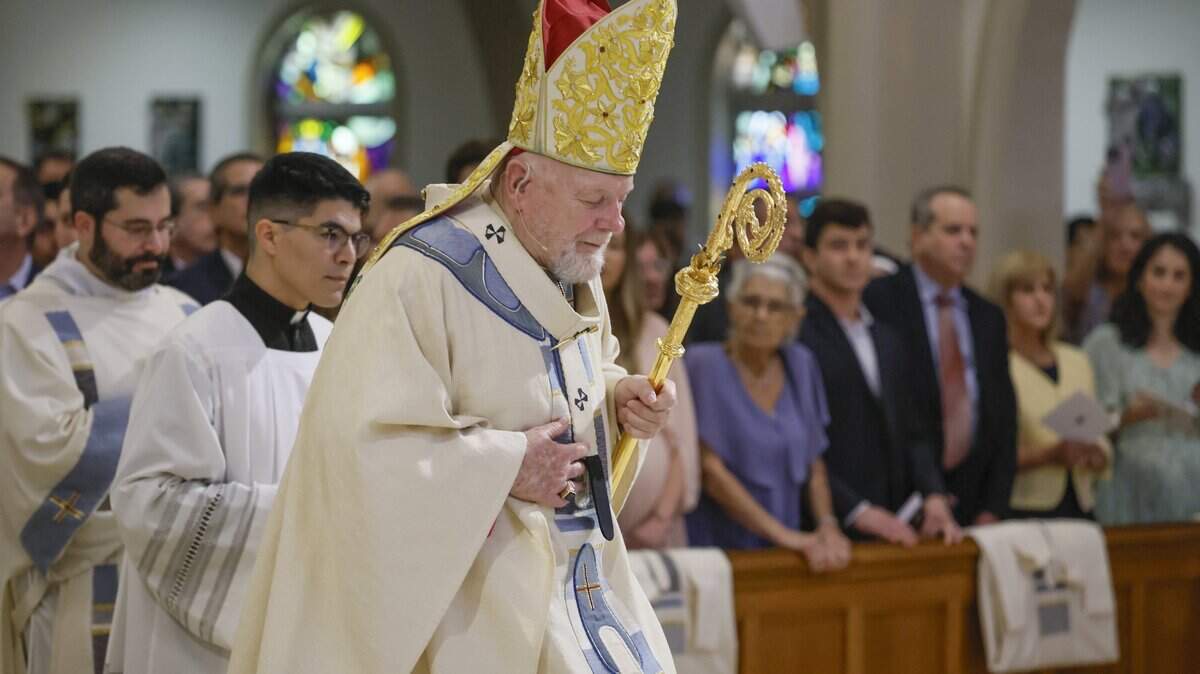
Miami’s top Catholic leader is continuing to advocate for a three-year extension of Temporary Protected Status for hundreds of thousands of Haitian immigrants in the United States, calling the humanitarian crisis in Haiti a “house on fire,” that would be “unconscionable” to send people back to.
Read more FWC officers, U.S. Navy air crew rescue three lobster divers in Florida Keys
Archbishop Thomas Wenski traveled to Washington, D.C., earlier this week to urge elected officials to find solutions to help protect about 350,000 Haitians immigrants, many who live in South Florida, as their TPS comes to an end this week.
“We’re not giving up, but I would describe it as a Hail Mary,” Wenski told the Miami Herald.
The U.S. Supreme Court cleared the way for the Trump administration to end TPS for Haitians in June, and on Monday, the Supreme Court sent its ruling to a lower court in D.C. that had issued a stay of the termination. Meanwhile, as work permits expire, Haitians in Florida and elsewhere are bracing themselves for the formal ending of TPS and ultimately, deportations to Haiti.
Wenski along with Haitian Cardinal Chibly Langlois of Les Cayes, Archbishop Casey of Cincinnati, and Bishop Fabre-Jeune of Charleston spoke with senators to advocate for policy solutions to protect Haitians from being deported back to a country that has faced increasing political instability, gang violence and recurring humanitarian crises.
For months Wenski and other South Florida faith leaders have been calling on Florida lawmakers to support a bill (S.B. 4814 & H.R.1689) that would designate Haiti for Temporary Protected Status, extending protections for Haitians for at least another three years.
Wenski said he walked away from Tuesday’s meetings with elected officials feeling hopeful but realistic about the fact that the bill, which has passed in the House, may not get as far as it needs to in time to make a difference. One senator the Catholic leaders spoke with, who Wenski would not name, vowed to vote for the bill but wouldn’t co-sponsor it. The bill still needs to be passed in the Senate, where it currently has 30 co-sponsors, all Democrat or Independent lawmakers.
“Most of the Republican staffers that we talked to were sympathetic … everybody realizes that our immigration system is broken,” Wenski said. “Everybody knows that it’s a question of having the political will to fix it, and that they haven’t done it for over 20 years.”
The impact of TPS ending for Haitians is particularly felt in South Florida, home to hundreds of thousands of Haitians, and in the Archdiocese of Miami, which has a number of Haitian clergy and an estimated 40 to 50 employees at Catholic Health Services on TPS who are facing uncertainty.
“These men and women are more than employees—they are members of our Church and our community. They care for the sick, comfort the elderly, and serve some of the most vulnerable among us with compassion and dedication,” the Archdiocese of Miami wrote in a statement.
Haiti was first designated for TPS in 2010 after an earthquake devastated the country, killing more than 300,000 people and displacing 1.5 million others. In the years since, the country has faced extreme gang violence, widespread hunger and political instability leading to repeated extensions of the humanitarian program. The United Nations estimates that gang violence has killed over 2,300 people in Haiti since the beginning of this year.
Read more Judge rules for Palm Beach County in lawsuit over $1 billion Israeli bond investment
For Catholics and many other advocates, sending Haitians with TPS back to Haiti would place them in an extremely vulnerable position, Wenski said.
“It’s a humanitarian disaster, as I describe it, a house on fire. So, telling people to go to walk into a house that’s on fire is unconscionable,” Wenski said.
The Archbishop said he would be open to other solutions for Haitians, including a temporary form of relief called Deferred Enforcement Departure which would allow people from certain countries and regions facing political hardship or natural disaster to stay in the United States. But, the DED designation is one that’s at the discretion of the president.
“There are other alternatives. It doesn’t have to be as black and white as rounding up people, putting them on planes and shackles and then dropping them off in Haiti,” Wenski said.
On Monday, the Department of Homeland Security had a message to those on TPS: “it’s closing time. You don’t have to go home, but you can’t stay here,” the department wrote on X.com.
READ MORE: With work permits expired, Haitians await federal judge’s order for formal end of TPS
Wenski and others celebrated mass together on Tuesday evening at Our Lady of Sorrows in Maryland in solidarity with Haitian community. The tone was somber but hopeful, he said.
“It was a hopeful mass. When people ask me if I’m optimistic, I say optimism is a secular value, but hope is a theological virtue. So we always have to have hope,” Wenski said.
This story was produced with financial support from Trish and Dan Bell and donors in South Florida’s Jewish and Muslim communities, including Khalid and Diana Mirza and the Mohsin and Fauzia Jaffer Foundation, in partnership with Journalism Funding Partners. The Miami Herald maintains full editorial control of this work.
Read more Plantation man paid for child porn videos while on Bahamas cruise, feds say








Post Comment