Florida’s DEI purge coming for Miami-Dade holidays, civic boards, charity grants
Thema Campbell never had trouble convincing county grant writers about the value of offering girls-only tutoring and after-school programs for the Miami charity she runs, Girl Power Rocks. But now, she’s worried somebody might declare those Miami-Dade dollars illegal under Florida’s looming anti-DEI law — a set of rules cracking down on local spending tied to ethnicity, sexual orientation or gender.
Read more Stinky wastewater backup at IHOP among worst South Florida restaurant issues
“We’re very concerned,” she told the Miami Herald on Thursday, hours before Miami-Dade commissioners were set to vote on a county budget with a $223,000 grant for Girl Power Rocks. “We spent a lot of years building out this program based on research and firsthand experience. We know firsthand what our girls need.”
So far, Miami-Dade has taken no action against Girl Power Rocks or any other charity whose name or mission might get crosswise with the law known as Senate Bill 1134. The grant funding was added by Mayor Daniella Levine Cava to her 2027 budget proposal, and her administration has mostly stayed mum on how it plans to enforce the state laws once they go into effect Jan. 1.
But the impact of the looming rules is starting to bubble to the surface. This week, Levine Cava revealed a planned purge of the county staff working for volunteer Miami-Dade boards that promote diversity and activities aimed at different ethnic or racial groups.
“Our last meeting is coming up. And that’s it,” said Liliam Lopez, a member of Miami-Dade’s Hispanic Advisory Board. “There is no more Hispanic Affairs board for the county. That shocked me.”
In a memo released Wednesday about last-minute changes for her 2027 budget proposal, Levine Cava wrote that 19 employees staffing the volunteer county boards would be shifted to a different department. At a budget hearing Thursday night, Commission Chair Anthony Rodriguez said the county would be “sunsetting” certain county boards but that nobody from the Office of Community Advocacy would lose their jobs after Jan. 1. People familiar with the matter say word has gotten out that Miami-Dade will be dissolving the Hispanic Affairs board, as well as the following boards: Asian American, Black Affairs, LGBTQIA+, and the Commission on Women.
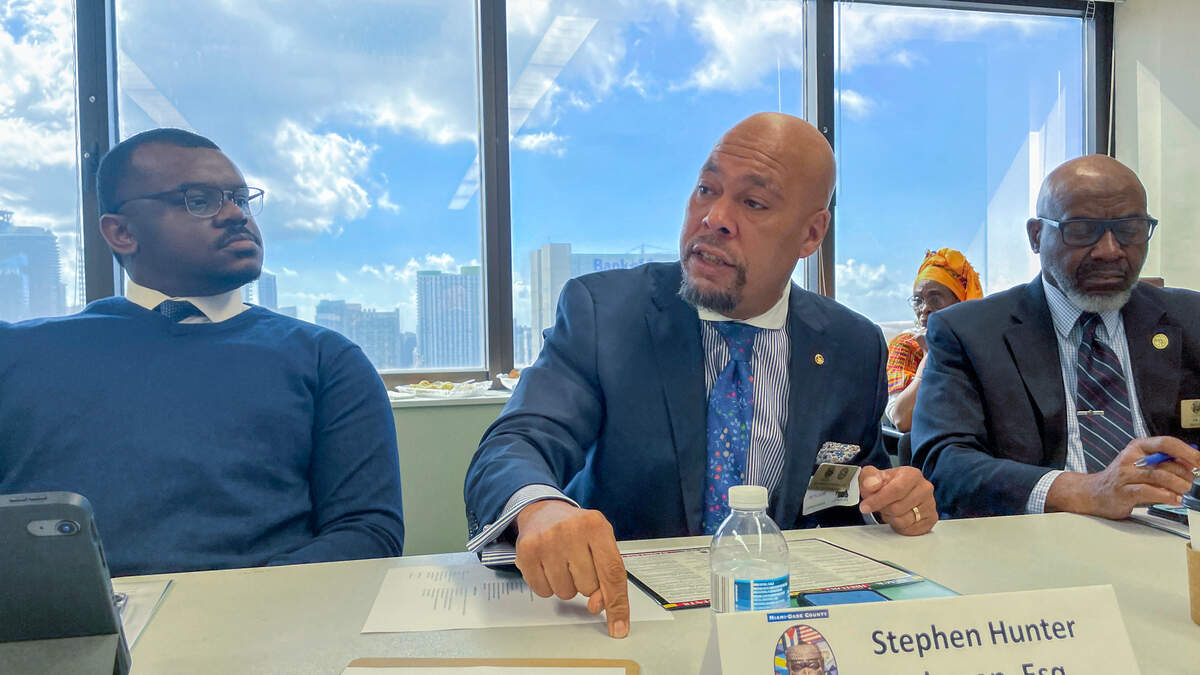
“The official statement is the county attorney is still looking at the issue,” said Stephen Hunter Johnson, a lawyer and a member of Miami-Dade’s Black Affairs Advisory Board. “The unofficial statement is it’s a wrap as of Dec. 31.”
The Black Affairs board meets regularly to both discuss issues of importance to Black residents and help organize and promote events celebrating Miami-Dade’s Black population. Recent initiatives include promoting a new events space in Overtown called the Corner and playing host to the “Pillar” awards honoring contributions to the Black community. Johnson said it also gave Black residents a chance to be heard by an official arm of county government, with any recommendations from the volunteer board making their way to the County Commission.
Read more Texans Guard Has Clear Mentality Against Bengals in Week 2
“It was a way for us to highlight what was going on and what might need attention from our commissioners,” he said.
Without detailed rules from Tallahassee on how broadly to interpret the rules, local governments may wait to see what happens if the law is challenged. In July, Miami-Dade commissioners passed a resolution authorizing county lawyers to pursue legal action if needed to figure out how to implement the state legislation. “I think it’s important to get some clarification,” said Commissioner Vicki Lopez, a former state lawmaker who has been warning of sweeping consequences in Miami-Dade spending from the coming state rules. “Oftentimes, the only way to do that is to go to the courts.”
Already, the law is rattling local elected leaders. In North Miami, a municipality with a large segment of South Florida’s Haitian American population, the city typically funds a party each year to celebrate Haitian Flag Day in May. That won’t be the case in 2027.
“It’s off,” said Mayor Alix Desulme. “We have no choice.”
He also expected North Miami to stop paying for free joumou — the traditional pumpkin soup that was previously a staple at Haitian celebrations. “We’ll have to be very careful during Haitian Heritage Month,” he said.
Florida’s anti-DEI law does not mention national origin, so Desulme said he could see how it might be OK to spend government money celebrating heritage tracing back to a country instead of an ethnicity. But with the state penalties so severe — an elected official can be removed from office for violating the law — the mayor said North Miami is unlikely to test the rules.
The state law may have a loophole for Girl Power Rocks, too. A provision of the law says the rules don’t apply to charities providing single-sex programs helping at-risk youth.
The Girl Power Rocks website says it provides a safe space for “at-promise” girls — a term Campbell said is a gentle way to describe a child who is “at-risk.” The exemption would seem to be encouraging wording for Girl Power Rocks, provided Miami-Dade’s grant office sees it the same way and clears the charity for funding after Jan. 1. Without county funding, Campbell said Girl Power Rocks would need to make severe cutbacks.
Read more Cubs can’t afford slipup in weekend series against Reds
“It would be devastating,” she said.









Post Comment