Experts warned of Venezuela’s earthquake risks for decades. Little done, they say
Franck Audemard knew that it was only a matter of time before a major earthquake hit Venezuela.
Read more Climate change has given this tropical fruit a warm welcome in Florida yards
So when two jolts shook his bed and walls in his Caracas apartment, just as he was about to watch Brazil face off against Scotland in Miami during the World Cup, it made sense. He watched the water in a pitcher on his table oscillate, and fled with his family down two flights of stairs.
Just 19 days prior, he had issued a warning on Facebook.
The Venezuelan Foundation of Seismological Research had recorded 61 tremors in the area between magnitudes 1.7 and 5.3 in a single week. Audemard, a geologist who had worked at the foundation for over 30 years, posted that report.
“Let’s keep our eyes open! To raise awareness NOT cause alarm,” Audemard wrote. “This region has a rough recurrence interval of about 60–70 years for Mw 6.0+ earthquakes.”
It was a warning he had been issuing for years. In 2017, he co-wrote a report that concluded the Boconó fault, which triggered the 1967 earthquake that struck Venezuela’s north-central coast and killed more than 200, was due to release another one of 7.4 magnitude.
On June 24, that same fault unleashed two back-to-back earthquakes, of magnitudes 7.2 and 7.5. They occurred just 39 seconds and three miles apart.
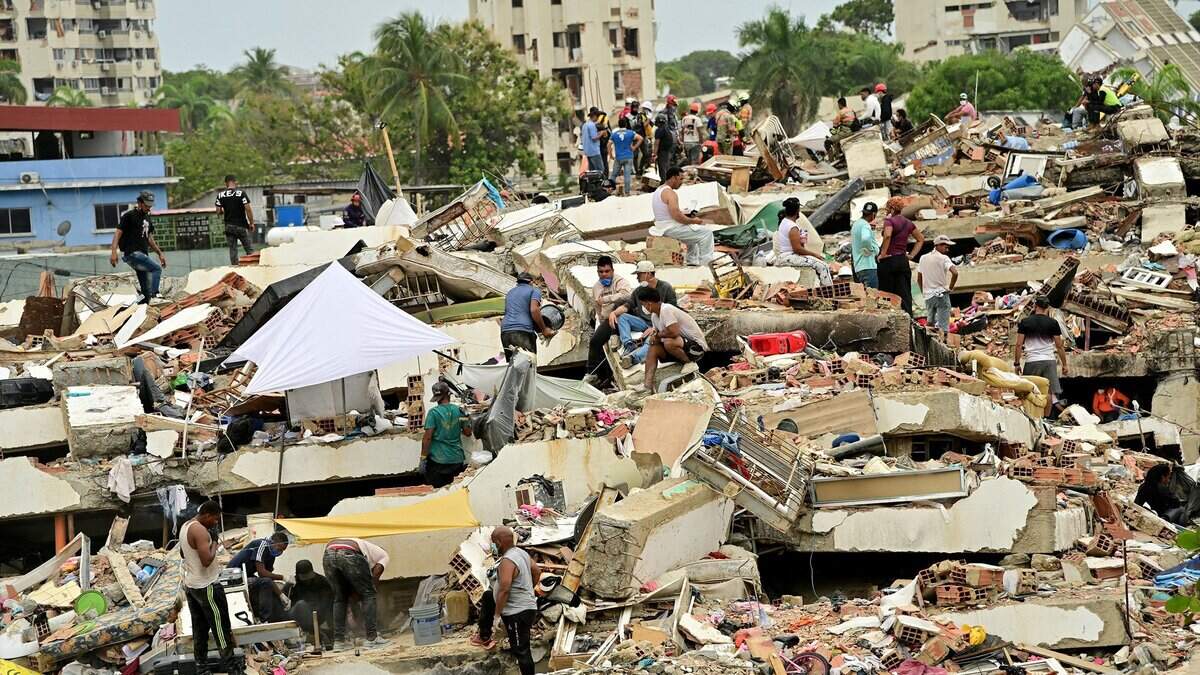
The official death toll was over 5,300 as of Thursday, but tens of thousands remain missing. Hundreds of buildings were destroyed – and families continue to dig through rubble in hopes of finding loved ones.
“It wasn’t a surprise. For me, at no point was it a surprise. It was more anticipated than a long-desired baby,” Audemard said in an interview with the Herald.
Warned for decades
Earthquake and engineering experts inside and outside of Venezuela had warned for decades about the country’s seismic risk and lobbied for earthquake-resistant construction practices. There are multiple faults in Venezuela and about 80% of the population lives in seismically risky zones.
They warned about building on vulnerable soil, with soft sediment amplifying vibrations during earthquakes. They warned about destruction of certain buildings that needed reinforcement. They proposed studies that were never completed. In the case of one heralded study commissioned by former Venezuelan President Hugo Chávez, there is little evidence that the recommendations set forth were fully implemented.
The studies, and lack of follow-through, raise the issue about what could have averted the still-climbing death toll, and what steps need to be taken to prepare for an inevitable next earthquake.
La Guaira — a state bordered by sapphire-blue Caribbean Sea and separated from Caracas by the Avila mountain range — bore the brunt of the earthquakes.
The state, then called Vargas, had another natural disaster in 1999, when landslides killed thousands. The event is known to Venezuelans as “la tragedia de Vargas,” or the tragedy of Vargas.
Audemard’s Caracas apartment building was constructed into bedrock, reinforcing it. But in La Guaira, a coastal state that was the hardest hit, apartment buildings were leveled, and several public housing towers, part of Chavez’s Misión Vivienda housing project, fell like dominos.
Matthew C. Larsen, former director of the Smithsonian Tropical Research Institute, visited La Guaira in 2000 after the landslides to conduct field research for the U.S. Geological Survey and the Venezuela Ministry of Environment and Natural Resources.
His team concluded certain areas were good for parks or golf courses — but not for permanent structures, like housing.
“Lack of care, or interest in profit over thoughtful careful planning unfortunately leads to these terrible catastrophes,” Larsen said.
Mountains ‘spit rocks’
Though there is no official complete inventory of collapsed buildings yet, informal reports — based on websites where people track damaged structures — suggest that over 500 buildings collapsed in La Guaira, causing heavy loss of life.
One month later, tens of thousands of Venezuelans remain missing under the rubble, including babies and children. The number of victims is expected to keep rising as people desperately dig through the rubble, with little help from authorities.
“This type of disaster is preventable,” said Larsen.
Even before Larsen arrived in La Guaira in January 2000 to study the impact of debris flow and flash floods in the landslide, he heard that Indigenous people had long warned the Spanish when they first colonized the area that the mountains “spit rocks.”
Still, their warnings were ignored. Buildings had been constructed between the mountains and the sea. Boulders the size of houses tore through them in the 1999 landslides.
“Memory is short, and also because the really bad disasters don’t occur every few years, people forget or they die off, and no one remembers,” Larsen said. “Unless it’s well documented, people are destined to repeat it.”
The U.S. Geological Survey, completed at the request of the U.S. Embassy in Caracas, was published in 2002. It warned about the quality of the soil along coastal Caraballeda, a parish in La Guaira destroyed in the mudslides and again in the June earthquakes.
“Sadly, many modern buildings, just like the ones we see in the current earthquake disaster, had suffered major destruction, not from earthquakes, but from what we call debris flows: huge torrents of water, rock, mud, sediment ripped down these very steep channels from the Sierra Avila,” he said of the mountain range framing Caracas.
One of the main recommendations at the time, he said, was to not build in the same areas, called “alluvial fans,” that is, landforms carved out by the flash floods and debris flows.
“I suspect they were not followed very closely because that’s prime real estate,” Larsen told the Herald, noting that Caraballeda, the area they studied, is right by the Caribbean Sea.
La Guaira has always been a beach getaway for Caracas residents. After the landslides, with new construction of high-rise apartment buildings, many bought vacation apartments by the water. The new buildings also provided cheaper housing options for Caracas workers who couldn’t afford to live in the city.
The Herald sent Larsen a map created by NASA from its satellite images, which highlighted what structures were likely damaged after the June earthquakes. Much of the damage was concentrated in the same coastal region he studied decades ago.
“It seems clear that the majority of structures denoted in red (to indicate earthquake damage) are located on alluvial material, meaning they are constructed on unconsolidated material,” he wrote in an email, after reviewing the map. “Any large, multi-story structures would need to be founded on bedrock to be resistant to earthquake damage.”
Questions about building codes
Climbing through the rubble, residents questioned online the viability of their homes.
Venezuela has updated its building codes multiple times since the 1967 earthquake, and the process of actually designing buildings and getting permits is exhaustive, said Jesus Rodriguez, a structural engineering specialist and former university professor at various Venezuelan universities. But that doesn’t mean that codes are always followed during construction.
“In Venezuela, we face the problem of a lack of technical inspection on construction projects,” he said.
“So, no matter how much effort an engineer puts into designing a building in compliance with regulations and standards, we live, unfortunately, in a corrupt country where oversight is lacking and the state fails to address this public need,” he added. “Consequently, there is no one to ensure the project is executed correctly.”
Still, Rodriguez and other experts the Herald spoke to said it was too soon to tell whether the buildings collapsed because of bad construction or because of the magnitude of the back-to-back quakes.
Jose A. Martinez Cruzado, a civil engineering professor at the University of Puerto Rico in Mayaguez and director of a program that tracks high-intensity earthquakes on the island, has been a leader in earthquake engineering in the Caribbean for over three decades.
He’s focused his research on earthquake-resistant design and reinforced concrete structures. He visited Venezuela after a 1997 earthquake in the town of Cariaco, over 200 miles east of Caracas.
While not on the ground assessing the most recent quakes’ damage, he said the photos and videos of pancaked buildings may suggest the buildings were built with few or no structural walls — specifically, shear and slender walls, which prevent structures from collapsing.
Read more New Greek restaurant opens in former Sereia space in Coconut Grove
“The building has to support the load solely with the beams and columns, which have to be able to withstand lateral displacement,” said Martinez Cruzado.
“If construction is deficient, it’s setting up the scenario for what happened,” he said.
Engineers often place safeguards in their building designs to avoid complete collapse, he said. Even so, the building’s location on the coastline, and so close to the fault systems, put them at risk.
“Very high accelerations take place. More than vibrations, it’s an impulse. And that impulse knocks down buildings,” said the engineer.
Chávez-commissioned study
Since the twin earthquakes, a 2005 Japanese study requested by Chávez, who died in 2013, has dominated public conversation. It warned that most buildings in certain Caracas neighborhoods built before 2001 were not earthquake resistant.
The scientists proposed a $2.8-billion plan that would reinforce buildings and bridges, control debris flow, relocate people from high-risk areas, establish early warning systems, educate the population about earthquake risks and set up an emergency command center.
The study projected that, if the recommendations were implemented, they could be completed by 2020. There’s no indication, however, that Chavez or his successor, Nicolás Maduro, followed through. The study did not include La Guaira.
Martinez Cruzado, the University of Puerto Rico engineer, said that if changes proposed in the 2005 Japan study had been implemented and applied in La Guaira, the outcome of the June 24 earthquakes could have been different.
“I’m not saying no one would have died, but the collapses probably would have been significantly reduced,” he told the Herald.
Experts who spoke to the Herald said that it likely wasn’t a priority to implement recommendations from scientific studies because earthquakes are viewed as rare events that skip generations in places like Venezuela. People opt to prepare for more immediate natural disasters such as hurricanes and tropical storms.
“People will tend to forget within a generation or two. There’s a disconnect between the human experience and the scientific phenomenon we study because geologic time is so much slower,” said Elizabeth Vanacore, a seismologist at the Puerto Rico Seismic Network and University of Puerto Rico researcher.
Vanacore said that for thousands of years, people have built cities in places with high tectonic activity. She pointed to Mount Vesuvius, near Naples in southern Italy, which destroyed the ancient Roman cities of Pompeii and Herculaneum in the first century.
“Look at modern-day Naples, they rebuilt in the same area, same area, same footprint and that could repeat in the future,” Vanacore said. “It’s human nature.”
Gustavo Coronel, a professor and coordinator of the seismic engineering department at Universidad Central de Venezuela in Caracas, co-authored a book published in 2024 that also warned about the seismic risk in Caracas. He identified buildings that still needed structural corrections.
He told the Herald the risk could have been underestimated, despite warnings and alerts from the scientific community, because of the infrequency of large seismic events in Venezuela compared with places like Chile, Japan, New Zealand, and the United States, where earthquakes are more common.
“The risk is constantly on their minds, which has prevented it from being underestimated and has fostered well-informed decision-making to properly manage and mitigate these risks,” Coronel said.
Those countries also have more resources to tackle earthquake risk. California, for example — which has a dense population living around two interconnected fault systems — is the fourth-largest economy in the world.
Despite Venezuela’s petroleum-rich reserves, its citizens have endured extreme poverty, food insecurity and political instability for decades.
“Perhaps addressing this issue was not prioritized given the state’s many other needs,” Coronel said. “Risk reduction in schools and educational buildings may not have been treated as a priority; while there were a few isolated, successful examples — very few buildings were actually rehabilitated and seismically reinforced.”
Other studies
Even after the 2005 study from Japan, scientists continued trying to understand the faults that run across Venezuela and how its population could stay safe in the event of future earthquakes.
Michael Schmitz, a geophysicist professor at Simon Bolivar University in Caracas, participated in a study that ran from 2004-2009 on microzones in Caracas, subdivisions of the region based on seismic risk.
They identified ground conditions in the Los Palos Grandes and San Bernardino areas of Caracas that amplified shaking. Both areas have deep sediment soil that sit atop alluvial valleys. That creates a phenomenon known as “liquefaction,” where solid ground behaves like liquid during an earthquake. Schmitz said structures need to be retrofitted to withstand shaking.
Ideally, he said, the recommendations from this study would’ve resulted in municipalities adopting seismic microzoning regulations and using funds to retrofit buildings to make them safer. But that only happened on a small scale.
Schmitz had also proposed a microzoning project in La Guaira in 2018, but couldn’t get the funds to do it. Though it likely would’ve been too late to prevent what happened, he still thinks the project would be imperative for rebuilding — mapping out how the ground behaves before actually starting any work.
“All that has to be investigated in detail before we start the reconstruction, and I think we can do that project in less than one year if we have the funds and we organize,” he said. He noted the economic and political crises Venezuela, both past and present, has affected the ability for anything to get done.
“The official politics is very much focused on giving food to the people once a month,” Schmitz said, referring to the food boxes for the poor distributed by former president Maduro, who is in U.S. custody facing criminal charges. “So, they would not really focus on this fundamental problem.”
Looking ahead
Audemard, the retired geologist who warned about a large-scale earthquake for years, said the experts’ recommendations need to be reflected in laws and building codes. As Venezuela enters into what will be years of reconstruction, those guidelines need to be strictly enforced, he said.
He also said that municipalities should have engineers and geologists working hand-in-hand to determine where and how structures should be built, and that geological studies must be carried out.
He stressed the importance of better communication between scientists and lawmakers. Though earthquakes may not be as common or predictable as hurricanes, Audemard said, they need to be taken just as seriously.
“Ultimately, government leaders and decision-makers have to address issues—and they often prioritize the urgent over the merely important,” he said.
Funding for further research is also needed, he said.
Audemard recently visited what was left of a public housing complex set up in 2013 by Chavez in La Guaira, one called “Urbanismo Hugo Chávez.” The government provided housing there for those left homeless after the landslides in 1999. Many of them died during the recent quakes or are homeless again.
Audemard said two-thirds of those buildings collapsed, and everything in the complex will need to be demolished.
“I don’t know if the land will be reused,” he said.
Learning from others
Other countries that have experienced higher magnitude earthquakes with less damage, can serve as models to follow, Martinez Cruzado said.
In Chile, for example, builders use higher-than-normal levels of structural walls with reinforced concrete and steel, which provide the rigidity to minimize lateral movements between the base and the roof of a building. And buildings with critical infrastructure like hospitals should have base isolation technology, which allows lateral movement without destruction in an earthquake.
For thousands of years, people have built in places where the earth roared long before human civilizations arose. San Francisco, Lisbon, Tokyo, Christchurch are all cities that have been rebuilt stronger and safer after devastating earthquakes. In the end, scientists said, the destruction that follows is rarely an act of nature alone.
“The reality is an earthquake doesn’t kill people, a building kills people,” said Vanacore, one of the Puerto Rico experts. “To rebuild, you need to take into account the hazard, the possible hazard, and the earth science there to build a more resilient city.”
Read more This could be the deadliest year for child drownings in Florida’s history








Post Comment