DeSantis administration blows deadline to detail emergency, immigration spending
The DeSantis administration isnearly a month late on a state-mandated report detailing howit’s been using disaster dollars, missing a deadline that lawmakersset after the agency spent more thanhalf a billiondollars in emergency funds on immigration enforcement.
Read more His crime ring sold ‘square groupers’ found in the Keys. Now he’s headed to prison
The report was due to the Senate president and House speaker on July 15. Spokespeople for both offices said they haven’t heard from the Florida Division of Emergency Management — the state agency tasked last year with overseeing illegal immigration operations — on when it will arrive.
The report is supposed to project how much money will be left in the fund at the end of the year, detail its cash flow, list all current and pending purchases and provide updates on federal reimbursements.
The division’s spokespersoninitially said it had submitted the report on July 28. But emails reviewed by the Herald/Timesshowed that the agency sent five spreadsheets to the governor’s office and the Legislature — none of which was the quarterly report required under SB 7040, the law passed in March that set the July 15 deadline.
Sen. Nick DiCeglie, the St. Petersburg Republican who shepherded the legislation, said he expects the law to be followed.He said the reports are meant to give legislators a clear picture of the emergency fund’s status.
“I am inquiring with FDEM(the Florida Division of Emergency Management) regarding the status of the report and the reason for the delay,”DiCeglie wrote in a text message.“I expect reporting requirements established by the Legislature to be followed.”
The agency spent $566 million on immigration enforcement last fiscal year from Florida’s Emergency Preparedness and Response Fund, a pool initially created in 2022 at Gov. Ron DeSantis’ requestto quickly pay for disastersand other emergencies like hurricanes.
DeSantis in 2023 declared a state of emergency on immigration — one he’s renewed at least 20 times since — allowing the money to be used on immigration enforcement.
Those immigration operations accounted for more than two-thirds of the entirety of last year’s emergency spending.
Read more Argentine semi-pro soccer player detained by ICE at Ft. Lauderdale Airport
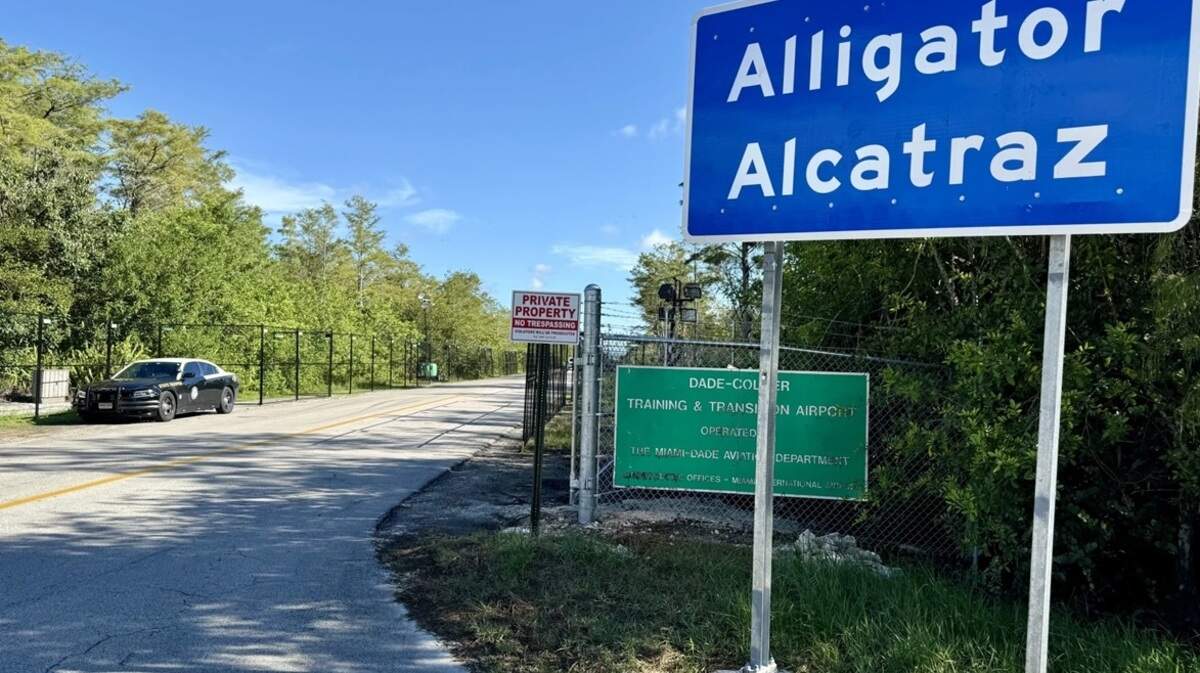
That tab drew the eye of the Legislature during the 2026 session after the fund paid for private jet flights for staff going to and from South Florida’spop-up immigration detention center that officials named Alligator Alcatraz. The emergency fund was also tapped to pay forrestaurant mealsfor staff andfor vendors overseeing Florida’s detention centers.
As of Tuesday, the state owes more than $502 million to contractors.
In March, in a largely bipartisan vote, lawmakers imposed new rules on how the emergency fund could be used. This included a ban on purchasing boats or aircraft (although leases are allowed) and quarterly reports on spending beginning July 15.
The law, however, does not specify penalties for missing the reporting deadline. An earlier House proposal would have requiredthe Florida Division of Emergency Management’s director to sign off on the reports under threat of perjury, but the Senate struck that provision before it became law.
What were the July 28 emails?
On July 28,the division sent five Excel files to the governor’s office and the Legislature itemizing various disasters that the emergency fund paid forover the years, including the 2022 Chipola wildfires and multiple hurricanes.
Only one of the documents, a cash flow spreadsheet, referenced immigration. It showed that roughly $823 million is anticipated to be spent on Florida’s state-run migrant detention centers: Alligator Alcatraz — which shuttered in June — and Deportation Depot in Baker County.
Records show that Florida has so far received $84.6 million of the $608.4 million in promised federal reimbursement. Another $54 million is expected to be approved shortly.
These files did not include the itemized accounting of inventory, assets or invoices required for the new quarterly report.
Read more Miami-Dade schools plans to get into the weeds on fake grass debate











Post Comment