
Condo residents furious after Miami inspectors nix visit; city says hands tied
Furious residents at a Brickell condo overtaken by partying Airbnb guests have been pleading with City of Miami leaders for years to help them reclaim their homes. They had their hopes dashed — again — on Thursday when an inspection at the building was canceled.
Read more Michelin-starred Miami Beach restaurant, nine bars named among best in the world
Homeowners at The Club at Brickell Bay, a 43-story condo that’s a popular Airbnb destination, had scheduled a visit from city code compliance inspectors who planned to gather evidence of hazardous building code and short-term rental violations. But inspectors backed out, saying they needed “open access” to units or they would be considered trespassers on private property.
It was another setback for the shrinking number of full-time residents at The Club, where about 540 of the 643 units are listed on short-term rental booking sites such as Airbnb and VRBO despite the fact that the building does not have the city permit required to operate as a condo-hotel.
Their frustration with the city’s inaction was echoed by residents throughout Miami, from the clerk of Miami-Dade courts, who lives next to an illegal short-term rental, to the dozens of people who contacted the Miami Herald following a recent article about chaos at The Club.
“Our city has laws to prevent this kind of mayhem in our communities, but nobody enforces the law,” said Katherin Fernandez, an owner at The Club since 2004 and HOA board president in 2011. “You have to wonder why. Why are we — the taxpaying constituents — ignored? Why are we left out here living in the wild, wild West?”
READ MORE: ‘Save your condo before it’s too late.’ How Miami condo turned into ‘Animal House’
The Club, located at 1200 Brickell Bay Drive, has been transformed into a vacation hotspot over the past eight years by the former HOA board and president, who installed a hotel reservation system and promoted the building as a place where property investors could make bigger profits renting by the night instead of by the month or year.
But a multi-family residential condo needs a Certificate of Use from the city for lodging rentals of less than 30 days. The Club doesn’t have one, the Herald found.
“The city of Miami isn’t a functioning government. It’s a circus,” said Ernesto Cuesta, president of the Brickell Homeowners Association. He was on an anti-Airbnb task force created last year by ex-Commissioner Joe Carollo and Carollo aide William Ortiz that was rendered inactive when Carollo was defeated. “We are only going backwards. Nobody listens. Nobody works for real change.”
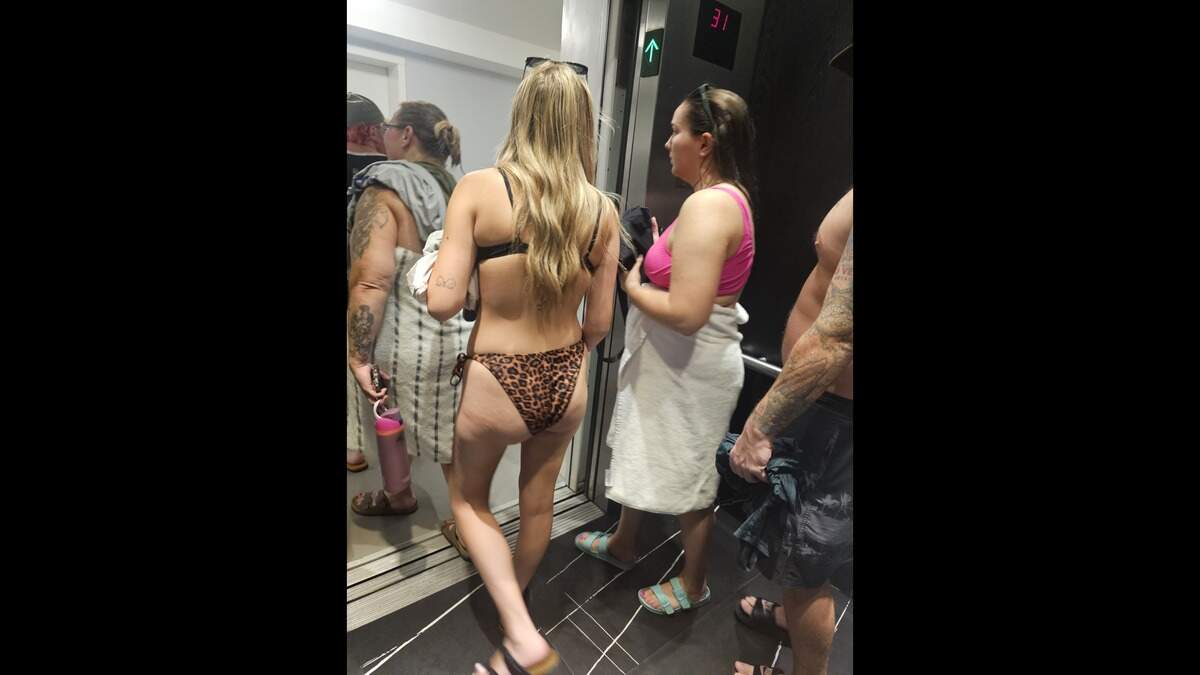
Homeowners at The Club have complained to city officials and elected leaders about raucous disturbances, vulgar behavior and dangerous strangers and the destabilizing effect on the neighborhood. They’ve sent documentation of safety hazards and code violations — jury-rigged repairs to the parking garage, laundry room and swimming pools, packed elevators constantly breaking down, and units subdivided with unpermitted walls that enable hosts to jam a dozen guests into 2-bedroom units originally designed to accommodate half that number.
They have email chains as tangled as a bowlful of spaghetti as proof of their exasperating attempts to get somebody to do something.
“The way the City of Miami and politicians refuse to be accountable is something to be studied; it’s like their superpower,” said Christina Lardon, Club homeowner since 2008. “Not taking responsibility is irresponsible. No other city in the country would blow off the ruination of a community. Isn’t leadership all about solving problems? What’s it going to take? A tragedy in our condo?”
READ MORE: Having problems with HOA board over short-term rentals? We want to hear from you
Miami Mayor Eileen Higgins and District 2 Commissioner Damian Pardo have told homeowners to contact Florida’s Department of Business and Professional Regulation. Homeowners have done so previously, and got no relief other than an election monitor assigned to count ballots at last month’s HOA board election. The monitor detected forged ballots and other voting irregularities.
READ MORE: Voter-fraud accusations roil one of Miami’s largest condos
Miami-Dade County Commissioner Vicki Lopez is helping homeowners file new complaints with the state agency, which oversees HOAs and Airbnb licenses. But it has no authority over local code, zoning, building or short-term rental regulations.
Lopez was also responsive in 2024, when she was a state legislator. Lopez met with The Club’s HOA board to discuss safety concerns that homeowners said were caused by overcrowded units, such as a shaking elevator that dropped multiple floors and water leaking into hallways. Her legislative aide at the time, Alessandro Marchesani, forwarded complaints about Airbnbs to the state agency, city officials and city inspectors. He set up meetings between police and Miami-Dade State Attorney’s Office investigators and a group of homeowners who delivered a box of HOA records that they alleged was evidence of fraud.
“Our lobby still looks like Grand Central Station,” Fernandez said, noting that three of seven elevators are currently broken. “Where is the respect for our rights?”
Read more South Florida Catholic schools see double-digit enrollment growth in past 5 years
Pardo said the city’s power is limited.
“Out-of-control short-term rentals is a horrible problem that we don’t want infecting our neighborhoods,’’ Pardo said. “It’s a very weedy, legally complex issue. We are working with all city departments, the county, the state and other jurisdictions to find lawful solutions. We also want to help residents structure their own cases so they can go to court or the proper regulatory agencies.”
Pardo said city leaders met last week to discuss a “coordinated enforcement approach.” One impediment is the Catch-22 of code enforcement: Inspectors can’t enter private property — the condo units violating building code and Airbnb regulations — without permission, and they must personally observe and document any violation in order to issue a citation.
Inspectors have responded to calls, but “without access, the city’s ability to verify alleged violations and enforce the code is significantly limited,” Pardo said.
Previous code-enforcement inspections
Inspectors can get access with the assistance of homeowners, but it can be tricky and requires persistence.
“Yes, they can get in, and if they give up, that’s laziness,” Cuesta said.
Two inspectors were escorted into The Club one night last year by homeowners who had targeted Airbnbs occupied by guests. When guests answered the door, inspectors were able to verify that they were staying in a vacation rental and photograph their booking contracts. The inspectors were forced to leave the building when the former board president found them on the 16th floor and told them they were trespassing.
The five citations they issued were subsequently dismissed by the city’s code compliance department because the hosts removed their online listings and promised to cease. Homeowners protested the dismissals, arguing that the listings would resume, which they did, within days.
That circuitous email chain between homeowners and city officials, including an assistant city attorney, illustrates how homeowners have been stonewalled, Lardon said.
“I could enlist more action from a beached whale than city leaders and department heads,” Lardon said. “Our entrapment in this madhouse has hit a nerve with people all over Miami. Shame on the city for hoping the fervor of this scathing criticism will just fade away.”
Homeowners are determined to keep the heat on even though, under the previous board president, they were subjected to retaliation every time they complained. They received cease-and-desist letters from the HOA attorney threatening them with eviction.
‘I am incredibly frustrated’
Disappointment extends beyond The Club and its regular citizens. Not even County Clerk Juan Fernandez-Barquin can get help from the city.
He lives next door to an illegal short-term rental property in the City of Miami. He sent documentation “multiple times” to the code compliance department, including online listings and photos, but “they have done nothing,” he said in an email to the Herald.
“The code enforcement rep said there still wasn’t enough evidence, that they need to send someone during the day,” Fernandez-Barquin said. “I politely pointed out that during the day the guests are probably gone already.
“I am incredibly frustrated.”
Downtown Neighbors Alliance President James Torres said the city of Miami should examine how other cities like New York and Miami Beach have cracked down on short-term rentals.
“Other cities have managed to impose and enforce tougher regulations, such as a 60-day minimum, or the host has to be present at the property,” Torres said. “You’ve got to listen to the community. They will tell you what’s happening and how to fix it.”
There is ample blame to go around, Cuesta said.
“It’s a combination of board associations breaking laws, management companies looking the other way because they want to keep the account, city administration not doing its job, elected officials failing to provide leadership, and political appointees on the code enforcement board lacking knowledge of the code they are supposed to enforce,” Cuesta said. “It’s the perfect storm.”
Read more Residents of Frederica Wilson’s district want her successor to ‘be rebellious’









Post Comment