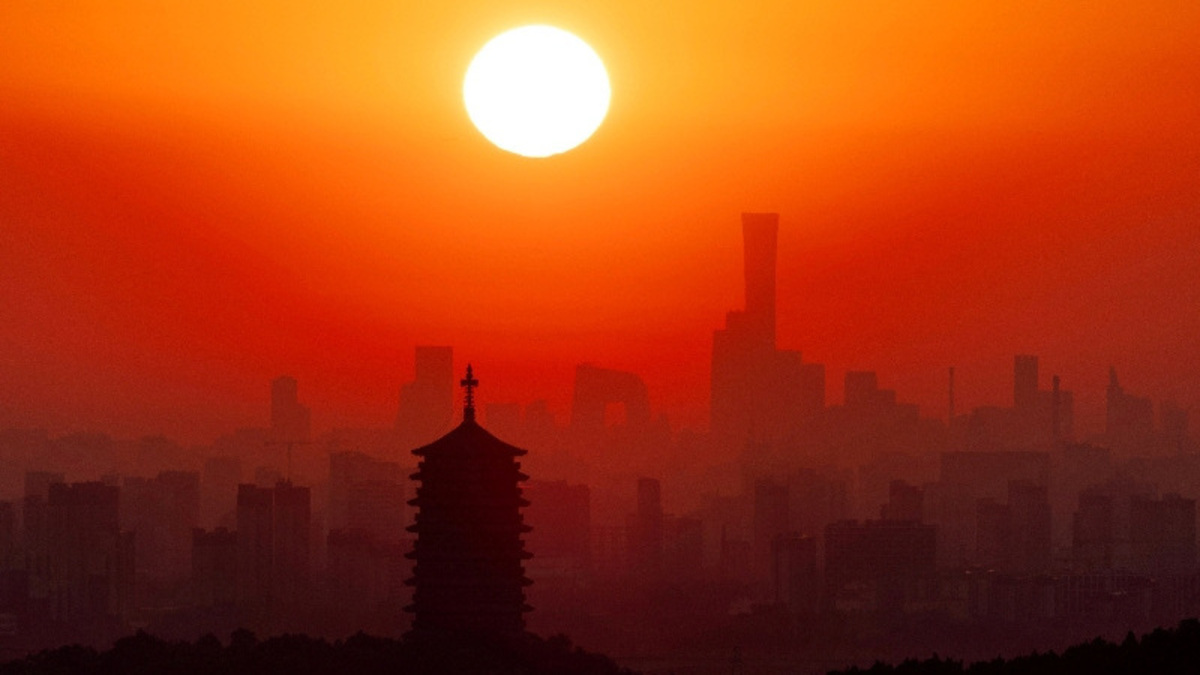
Companies left China to dodge tariffs. Now some are heading back
BEIJING/HONG KONG, Sept 14 (Reuters) – A year after shifting production and sourcing out of China to avoid higher U.S. tariffs, some companies are learning that replicating the country’s factory ecosystem is not so easy and are bringing manufacturing back.
Read more Chevron eyes Argentina, Mediterranean for global LNG growth, deal with India
Last year, as President Donald Trump’s tariffs set off a global rush to diversify supply chains, Heather Kuang’s China-based metal casting company lost business when a major U.S. customer shifted some orders to India.
The customer has since returned with new orders after running into problems there, said Kuang, vice president of family-owned Dawang Metals, based in the northeastern Chinese city of Dandong. She declined to identify the agricultural machinery company.
Dawang also explored moving some production offshore before abandoning the plan.
“China’s supply-chain advantage is still too great, and it is difficult to replicate domestic production elsewhere,” Kuang said.
Companies continue to invest in Southeast Asia’s manufacturing hubs, but the “China plus one” push, under which firms hedged China exposure with operations in other lower-tariff countries, has proved harder to execute.
While there is not yet hard data showing how much sourcing is returning to China, some buyers who shifted production elsewhere said they are keeping or restoring Chinese suppliers because factories abroad struggle to match its skilled labour, supplier networks and reliable power.
Even so, rival manufacturing hubs India, Indonesia and Vietnam have attracted investments from electronics, automotive and other manufacturers despite persistent concerns.
The shifts are unfolding ahead of an expected meeting between Trump and Chinese President Xi Jinping this month, which businesses will watch for clarity on a proposed mechanism to lower barriers on some non-sensitive goods.
U.S. retailer Target has moved some orders back to Chinese suppliers, two people familiar with the matter said, citing supply-chain disruptions and production constraints. The sources did not disclose the value or duration of the orders.
Shein, the Chinese fast-fashion retailer, is also scaling back some operations in Vietnam, according to people familiar with its operations there.
Target and Shein did not immediately respond to a request for comment.
Jin Chaofeng, an exporter of outdoor furniture in Hangzhou, eastern China, said he shut a workshop in Ho Chi Minh City that he opened in 2024 and moved production back to China this year.
He said he had trouble finding the equipment he needed in Vietnam, and needed to bring in basic items from China such as screws and moulds for cup holders.
The arithmetic that once justified moving abroad has changed, he said. “Once I factored everything in, the overall cost was not much different, so there was no point.”
One reason for the shift from China was to exploit differences in U.S. tariff rates.
Read more Pratt voters could play pivotal role in deciding LA’s next mayor
China faced an effective U.S. tariff rate of about 20%, compared with 6.1% for Vietnam, 13.4% for Indonesia and 4.5% for Thailand, according to Economist Intelligence Unit estimates in July. But that advantage has narrowed as Washington extended tariffs to a wider range of countries, prompting some Chinese manufacturers to rethink overseas investment, the EIU said.
BEYOND TARIFFS
Access to power has become as decisive as price, especially after the Middle East crisis tested the energy reliability of manufacturing bases, some companies said.
Stanislaw Krykun, CEO of Poland-based packaging firm DST Pack, worked with his six-year Chinese manufacturing partner to get through the painful period when plastic input costs spiked 15% in April because of soaring oil prices.
“In case of any crisis, the Chinese production plants will be the most stable plants you can use,” Krykun said.
DST Pack sources 80% of its production from a factory in Shenzhen, with 10% each from long-established backup plants in the U.S. and Europe, he said.
Those alternatives cost two to three times more per unit.
Krykun had dismissed relocating to Southeast Asia after seeing a business partner struggle in Vietnam. “He faced a lot of issues starting with production and finishing with the export,” he said. “The system there doesn’t really work as smoothly as it works in China.”
Guan Baokui, a Qingdao-based lawyer who advises manufacturers, said Vietnam and Indonesia suffer from an “unstable and not continuous” electricity supply, a problem that intensified as global oil prices surged.
Not all exporters are seeing U.S. demand return. Summer Hu, a Ningbo-based sales agent for gift and outdoor sports products, said her company had not seen U.S. orders increase.
“We are not that optimistic,” Hu said. “The competition is too intense.”
Vietnam remains one of the biggest beneficiaries of supply-chain diversification, attracting billions of dollars of foreign investment.
Yu Yangxian, who sells electric lockers and vending machines, said her company is keeping roughly one-eighth of its total capacity in Vietnam as a hedge.
She said the company could expand there again “if Trump goes crazy” and tariffs spike.
Exporters said they do not expect the Trump-Xi summit to resolve their problems.
“We gave up expecting much from Trump long ago. We can’t depend on him for our livelihood or pin all our hopes on him. We have to find export markets to sustain ourselves,” Kuang said.
(Additional reporting by Casey Hall in Shanghai; Editing by Philip McClellan and Jacqueline Wong)
Read more He was a highly educated doctor. Now, he faces the death penalty for a lawyer’s murder
Copyright Reuters or USA Today via Reuters Connect
This story was originally published September 14, 2026 at 3:57 AM.








Post Comment