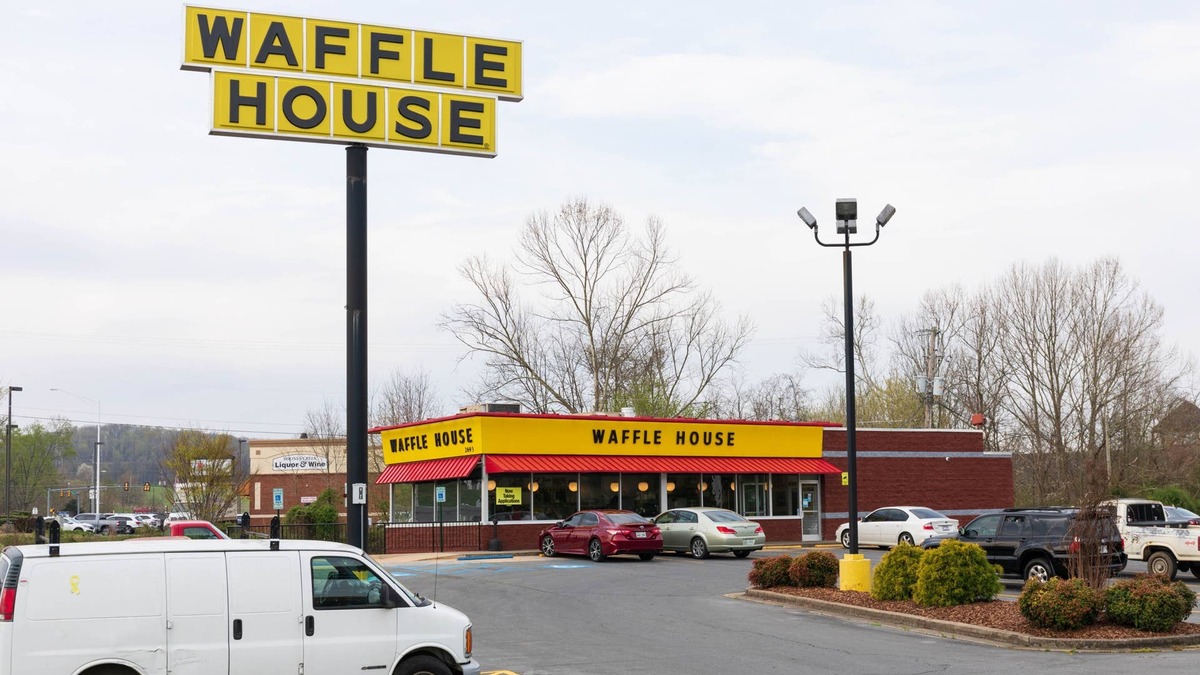
The ‘Waffle House Index’ is real, and Apple is filming it
Every crisis eventually produces a number.
Unemployment rate. VIX. The Saffir-Simpson scale. We reach for official measurements because they promise something solid to hold onto while everything else is moving.
Read more See photos, video as 8 kids leave U.S. to live with deported parents
The trouble is that official numbers arrive late. Government data gets revised. Damage assessments take weeks.
So people improvise, and some of the improvised gauges turn out to be more useful than the real thing.
Wall Street has done this for decades. The Big Mac index compares currencies through burger prices. The lipstick index reads consumer confidence through cosmetics sales. Neither shows up on a terminal, and both keep getting cited anyway, because a scrappy indicator you can check right now beats a rigorous one that lands next quarter.
The federal government does it, too. Its favorite improvised disaster gauge is not a satellite feed or a sensor network. It is a chain of 24-hour diners in the Southeast that sells hash browns scattered, smothered and covered.
That gauge has now been optioned by the most valuable company in the world.
Apple (AAPL) has bought a science fiction thriller built around it, and the reason shareholders should care has very little to do with waffles.
How the “Waffle House Index” became a federal disaster gauge
The index works on one assumption. Waffle House almost never closes.
The chain built its reputation on staying open through weather that shuts everything else down, and on reopening fast when it cannot. That preparation, including trained jump teams that reopen damaged stores, made the company’s restaurants a live readout on local conditions.
Craig Fugate developed the index while running Florida’s emergency management agency, then carried it with him to FEMA, where he served as administrator. The gauge runs on three colors, and each one tells a responder something different.
- Green means a full menu, which signals limited damage and working power.
- Yellow means a limited menu, which signals generator power at best and thinning food supplies.
- Red means the restaurant is closed, which signals severe damage or unsafe conditions.
- Source:Waffle House
Red is the one that matters. Because the chain plans for outages and keeps a stripped-down storm menu ready, a full closure is rare enough to function as an alarm.
“That’s really bad. That’s where you go to work,” Fugate has said of arriving to find a closed location, according to Waffle House.
The chain is privately held, so there is no ticker to trade on any of this. Its restaurants stretch from the mid-Atlantic through Florida and across the Gulf Coast, which is precisely the geography that hurricanes visit.
If you have ever sat through a hurricane watching a utility map refuse to update, you already understand why the index caught on. A closed diner is information you can verify in one phone call. A federal damage assessment is information you get in three weeks.
That gap between what people need to know and what institutions can confirm is the same gap that makes the Big Mac index useful, and it is the reason a breakfast chain ended up in the emergency response toolkit at all.
Anadolu / Getty Images
Apple’s Waffle House movie lands with Plan B behind it
Apple Original Films picked up the package for a reported seven figures, according to Deadline. Plan B Entertainment is producing, Louis Paxton is directing, and Andrew Nunnelly wrote the script, which landed on the 2025 Black List.
Inde Navarrette will star and executive produce. She was cast as Rogue in Marvel’s coming X-Men film earlier this year, and broke out in the horror hit “Obsession.”
More Streaming:
- YouTube just sent creators a message about their views
- Disney’s new CEO announces his biggest bets
- CDs outpace vinyl while streaming music remains king
The plot is considerably stranger than the premise suggests. A waitress working the graveyard shift has her night interrupted by a stranger with a gun, and what follows involves a mass flood, killer crocodiles, a nuclear explosion, a magical bunker under the restaurant, and aliens, according to the Hollywood Reporter.
That combination is not an accident. Plan B is the same production company behind “F1,” the Brad Pitt racing drama that became Apple’s first genuine box-office hit.
Read more Factory Five Mk2 Roadster for Sale With 9,000 Miles Shown
What one movie already did to Apple’s services revenue
Here is where the story stops being a fun casting item and starts being a markets story.
When I pulled Apple’s fiscal third-quarter numbers against the earnings call commentary, the connection was hard to miss. Apple reported revenue of $109.4 billion for the quarter ended June 27, up 16% from a year earlier, according to Apple.
Services set a June quarter record at $30.7 billion. It also came in under the roughly $31.2 billion analysts had modeled, reported Variety.
Related: Apple’s new CEO inherits a fortune and an AI question
Chief Financial Officer Kevan Parekh pointed to the comparison against the June 2025 theatrical release of “F1,” which grossed more than $630 million worldwide and left Apple without an equivalent title this year, according to NewscastStudio.
Read that again. A single movie’s absence moved a segment that generates more than $30 billion a quarter enough to matter to the consensus estimate.
That is the part my analysis keeps circling back to. Apple’s entertainment slate has quietly become a swing factor in the segment Wall Street pays the highest multiple for. Bank of America’s $380 price target on the stock leans on continued services expansion among its pillars, as TheStreet reported.
Services carry margins that hardware cannot approach, and they recur. A hit film feeds the funnel twice, once at the box office and again when it lands on Apple TV and pulls subscribers into an ecosystem that now counts more than 1.5 billion paid subscriptions.
Why Apple’s next disaster movie is really a subscriber story
John Ternus took over as chief executive on Sept. 1, and he has already signaled that the entertainment spending continues.
“We have such tremendous momentum right now in Apple TV,” Ternus said at a season premiere, according to Reuters.
Apple TV posted its highest quarterly viewership on record in the June quarter, and the company collected 89 Emmy nominations this year. The strategy under Tim Cook was never volume. It was selectivity, a handful of swings taken at properties Apple believed it could make distinctive.
A Waffle House disaster movie is an odd swing. It is also a cheap one by Apple’s standards, and it comes attached to the producer that delivered the company its only theatrical breakout.
I went back through Apple’s theatrical record before writing this, and the pattern is unflattering until “F1.” Expensive auteur projects earned prestige and lost money. The film that finally worked was a commercial one with a recognizable star and a real hook.
A waitress, a storm, and a bunker full of aliens is not prestige filmmaking. That may be the point.
For anyone holding Apple, the thing worth watching is not the crocodiles. It is whether Ternus turns a seven-figure script purchase into the kind of release that shows up in a quarterly services line, the way the last Plan B collaboration did.
The Waffle House Index was built to tell responders how bad things had gotten. Apple is betting it can also tell investors how a movie studio is doing.
Related: Apple is quietly preparing a major change inside its stores
The Arena Media Brands, LLC THESTREET is a registered trademark of TheStreet, Inc.
Read more Far-right AfD posts historic German state election win, exit polls show
This story was originally published September 6, 2026 at 11:47 AM.











Post Comment