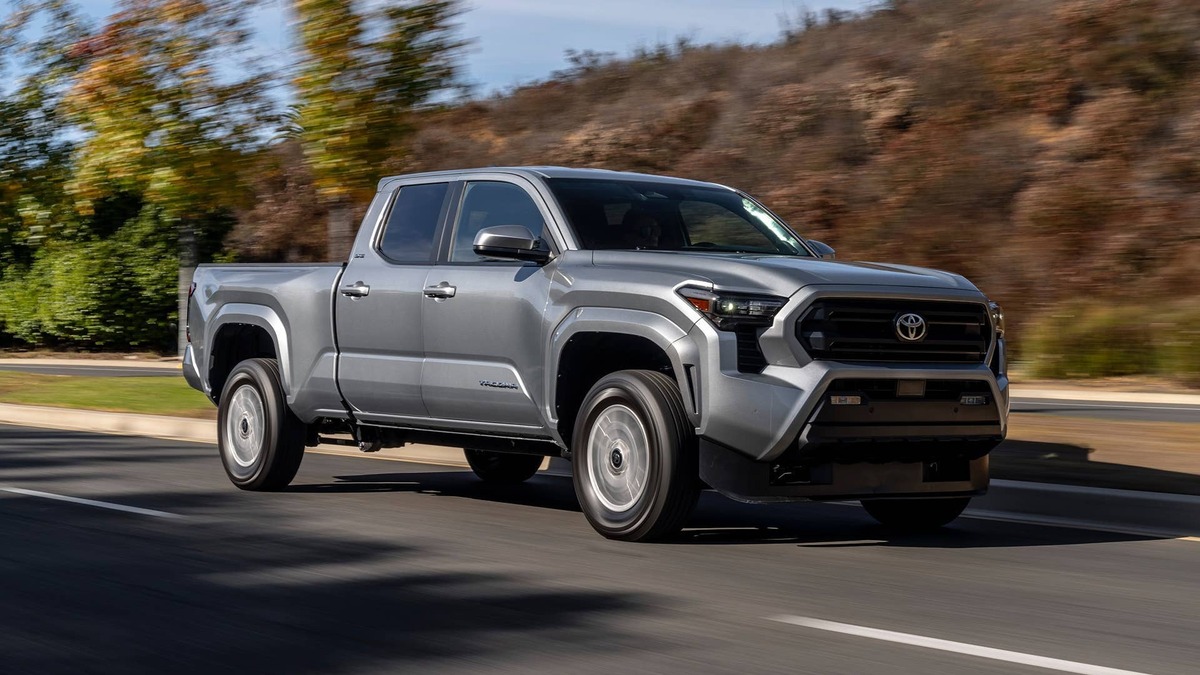
2026 Toyota Tacoma vs. Ford Ranger: One Makes a Stronger Case for Your $36,000
$36,000 is where the midsize truck segment gets interesting and where the Tacoma’s best argument becomes unavailable. Toyota’s i-FORCE MAX hybrid produces 326 horsepower and 465 lb-ft, the most muscular midsize powertrain on sale, and it sits well above this budget. What $36,000 buys is a 228-horsepower Tacoma against a 270-horsepower Ranger that also tows 1,000 lbs more and costs $555 less. The Ford wins the transaction comfortably. The Toyota wins the five years that follow, and by more than the sticker suggests.
Read more New details emerge about the victims of mass shooting at Minneapolis apartment tower
What’s New for 2026
Toyota’s fourth-generation Tacoma carries the widest powertrain range in the segment, spanning a 228-horsepower turbocharged 2.4-liter at the entry point, a 278-horsepower version higher up, and the i-FORCE MAX hybrid at 326 horsepower and 465 lb-ft. It remains the only midsize truck offering a manual transmission, and standard safety equipment runs across every trim. The SR Double Cab starts at $33,905.
Ford’s Ranger continues with the cleanest redesign in the class and three engines. The 2.3-liter EcoBoost produces 270 horsepower and returns 22 mpg combined, the 2.7-liter EcoBoost V6 sits above it at 315 horsepower, and the Raptor tops the range at 405. Towing reaches 7,500 lbs when properly equipped and payload 1,805 lbs, both leading this pairing. Crew Cab pricing starts at $33,350, and no hybrid is offered.
Specs and Pricing
Toyota Tacoma
- Price: $33,905 for the SR Double Cab
- Base engine: 2.4-liter turbocharged four, 228 hp
- Higher-trim engine: 2.4-liter turbocharged four, 278 hp, 317 lb-ft
- Hybrid: i-FORCE MAX, 326 hp and 465 lb-ft, up to 24 mpg combined
- EPA city / highway: 20 / 26 mpg
- Transmission: 8-speed automatic, with a manual available
- Towing: Up to 6,500 lbs
- Maximum payload: 1,705 lbs
- Estimated annual maintenance: $478
- Standard safety: Full suite across every trim
Ford Ranger
- Price: $33,350 for the Crew Cab
- Base engine: 2.3-liter EcoBoost, 270 hp, 310 lb-ft
- Available engine: 2.7-liter EcoBoost V6, 315 hp
- Performance engine: 3.0-liter V6, 405 hp in the Raptor
- EPA city / highway: 21 / 25 mpg
- EPA combined: 22 mpg on the 2.3-liter
- Transmission: 10-speed automatic
- Towing: Up to 7,500 lbs properly equipped
- Maximum payload: 1,805 lbs
- Curb weight: 4,240 lbs
- Hybrid: None offered
Ford undercuts Toyota by $555 and delivers 42 more horsepower at that price, which is the clearest advantage either truck holds at this budget. The Tacoma range offers the widest choice of cab, bed, trim and powertrain combinations in the segment, and the Ranger lineup spans XL, XLT, Lariat and Raptor with three engines.
Ford’s fuel advantage extends across the segment, where the Ranger beats the Chevrolet Colorado by 2 mpg in every matched configuration.
Powertrains and Driving
At this budget Ford wins power outright and the gap is not small. The 2.3-liter EcoBoost produces 270 horsepower and 310 lb-ft against the entry Tacoma’s 228, a difference of 42 horsepower, and it pairs with a 10-speed automatic against Toyota’s eight-speed.
Toyota’s stronger engines exist and cost more. The 278-horsepower version of the 2.4-liter appears higher in the range, and the i-FORCE MAX hybrid at 326 horsepower and 465 lb-ft is the most muscular midsize powertrain on the market, with electric assistance delivering torque instantly at low revs and helping low-speed crawl on off-road trims. Neither is reachable at $36,000.
Ford’s own upgrades are also outside this budget. The 2.7-liter V6 at 315 horsepower and the Raptor’s 405 both sit above it, so the honest comparison at this figure is 270 horsepower against 228.
The manual transmission is Toyota’s structural advantage and it is available on selected trims. Ford offers no manual Ranger at any price, and the Tacoma is the last midsize truck in America to offer one. Towing separates them by 1,000 lbs, at 7,500 for a properly equipped Ranger against 6,500 for the Tacoma with its standard engine. Payload adds 100 lbs in Ford’s favor at 1,805 against 1,705.
Real-World Fuel Economy
The two are within a mile per gallon and the cycles split, which makes this the least useful section for deciding between them.
The Ranger returns 21 mpg city and 25 mpg highway with the 2.3-liter, working out to 22 mpg combined. The Tacoma returns 20 mpg city and 26 mpg highway, near 22 mpg combined. Ford wins the city cycle by 1 mpg and Toyota wins the highway by 1.
Independent testing found real-world figures within 1 mpg across comparable trims, which confirms what the labels suggest. Neither truck stands out and neither is a reason to choose the other.
The hybrid is the exception and it is out of reach here. The i-FORCE MAX returns up to 24 mpg combined while producing 326 horsepower, which is the only meaningful efficiency gap in this pairing, and Ford has no hybrid Ranger at any trim to answer it. Both run on regular unleaded, so neither carries a fuel-grade penalty.
Design and Presence
Ford built the newer-looking truck and it shows. The Ranger’s redesign is the cleanest in the class, with squared surfaces and proportions that read as modern rather than rugged, and it is the more refined-looking of the two.
Toyota’s Tacoma leans into heritage. Its shape signals off-road intent before any badge does, and the range includes trims that back it up with genuine hardware rather than appearance packages. Outward visibility is comparable in both, as expected from two upright body-on-frame trucks with tall glass.
The Ranger’s interior is the bigger and more refined of the two according to independent testing, which is consistent with its redesign being newer, and it holds a marginally higher technology score at 8.9 against the Tacoma’s 8.7.
Cabins and Technology
Ford wins on displays and interior refinement. The Ranger’s larger, more intuitive screens and smartphone integration produce the more modern digital experience, and reviewers describe the cabin as bigger and better finished than the Tacoma’s.
Toyota’s answer is standard content. The full safety suite arrives on every Tacoma trim regardless of price, which means a $33,905 SR carries the same driver-assistance equipment as trims costing far more, and Ford distributes some of its equivalent across option packages.
Toyota’s answer is that it offers the widest range of cab, bed, trim and powertrain combinations in the segment. A buyer who wants a specific configuration is considerably more likely to find it in a Toyota showroom, and that includes the only manual transmission left in the class.
Interior space favors Ford, whose cabin is the bigger of the two, and the Ranger’s crew cab rear seat is the more accommodating.
The practical difference at this budget is that a $33,905 Tacoma SR carries the same assistance content as the top of the range, and an entry Ranger requires stepping up for some of Ford’s equivalent. Both trucks perform well in independent testing and neither buys a decisive advantage on crash results.
Resale and Cost of Ownership
Toyota wins this section decisively and it is the widest gap in the comparison.
The Tacoma’s resale is described consistently as outstanding and it is the nameplate’s most cited strength, holding value better than any rival in the segment. Applied against a midsize truck reference for the Ranger, the Tacoma sheds $10,850 across five years and the Ranger $14,007, a difference of $3,157 despite the Toyota costing $555 more to buy.
Read more TPD: Three arrested after 15-year-old opens fire in Tallahassee mall garage
Maintenance points the same way. The Tacoma’s estimated annual figure is $478 against a midsize truck reference of $650 for the Ranger, and Toyota adds ToyotaCare scheduled maintenance for the first two years or 25,000 miles, which Ford does not match.
Lease economics run the other way and are worth knowing. Ford has offered aggressive lease terms on the Ranger, materially better than Toyota’s on comparable trims, though the Tacoma’s resale recovers most of that gap by the end of a term.
Depreciation is the largest single line in either ownership column, and the point at which the curve flattens decides whether selling at year three or holding longer is the less expensive move.
What Five Years Actually Costs
Assumes 12,000 miles a year over five years, 60,000 miles total, regular fuel at $4.00 a gallon, a midsize truck depreciation figure of 32% for the Tacoma given its segment-leading resale, 42% for the Ranger, and repairs at Toyota’s demonstrated $478 a year against a midsize truck reference of $650 for the Ford.
Toyota Tacoma
- Purchase price: $33,905
- Fuel over 60,000 miles at 22 mpg: $10,909
- Depreciation over five years at 32%: $10,850
- Maintenance at $478 a year: $2,390
- Five-year cost to own: $24,149
Ford Ranger
- Purchase price: $33,350
- Fuel over 60,000 miles at 23 mpg: $10,435
- Depreciation over five years at 42%: $14,007
- Maintenance at $650 a year: $3,250
- Five-year cost to own: $27,692
The Tacoma costs $3,543 less to own across five years despite costing $555 more to buy. Depreciation accounts for $3,157 of that and maintenance for $860, while Ford claws back $474 on fuel. That gap is more than six times the purchase difference, and Toyota’s two years of included servicing is a further advantage this table prices conservatively.
Which Version to Buy
At $36,000 the honest guidance for both ranges is that you are near the entry point and the best versions of each truck sit above it. On the Toyota side, the SR Double Cab at $33,905 fits with room for a few options, and the full safety suite is standard so nothing important is missing. Buyers should understand that the 278-horsepower engine and the i-FORCE MAX hybrid both sit above this budget, so the Tacoma’s most compelling powertrains are unavailable at this figure. The manual is worth pricing for anyone who wants one, since it is the last in the segment.
On the Ford side, the Crew Cab at $33,350 with the 2.3-liter EcoBoost delivers 270 horsepower and 22 mpg combined, which is the most power available in this comparison at this money. Reaching the 7,500-lb tow rating requires proper equipment, so buyers who tow should price the tow package rather than assuming the headline figure. The 2.7-liter V6 and the Raptor are both different budgets.
Anyone whose priority is the hybrid should save for it rather than choosing between base trucks, because the i-FORCE MAX is the most distinctive powertrain in the segment and nothing at $36,000 approaches it.
Scorecard
- Design and presence: Ranger. The cleanest redesign in the class with a bigger, more refined interior
- Cabins and technology: Ranger. Larger, more intuitive screens and a marginally higher technology score
- Powertrains and driving: Ranger. 270 hp against 228 at this budget, with the 10-speed automatic
- Practicality and space: Ranger. 7,500 lbs of towing against 6,500 and 1,805 lbs of payload against 1,705
- Real-world fuel economy: Draw. Within 1 mpg across comparable trims, with each winning one cycle
- Capability: Tacoma. The widest range of cab, bed, trim and powertrain combinations, plus the only manual left
- Resale and cost of ownership: Tacoma. $3,543 less across five years, and 32% depreciation against 42%
Ranger 4, Tacoma 2, one draw.
So Which Makes a Stronger Case for $36,000?
The Tacoma, and the scorecard goes the other way, which is worth stating rather than adjusting. Ford wins four categories including power, towing, payload and the interior, and at this budget those are real advantages a buyer feels immediately.
Ownership decides it. The Tacoma costs $3,543 less across five years despite a $555 higher sticker, because it sheds $3,157 fewer depreciation dollars and costs $172 a year less to maintain. That gap is more than six times the purchase difference, and Toyota adds two years of included servicing Ford does not match. On a truck kept the way midsize trucks are kept, resale is the largest single number in the ownership and Toyota owns it.
Standard safety content reinforces it at this specific budget. A $33,905 Tacoma SR carries the same full safety suite as trims costing far more, where an entry Ranger requires climbing for some of Ford’s equivalent. For a buyer at the bottom of both ranges, that matters more than it would higher up.
Ford’s case is genuine and it rests on what $36,000 buys today. Two hundred seventy horsepower against 228 is a 42-horsepower gap at the same money, 7,500 lbs of towing against 6,500 is a thousand pounds, and 1,805 lbs of payload against 1,705 adds a hundred more. The interior is bigger and better finished, the screens are larger, and the truck costs $555 less.
Three buyer profiles should take the Ranger. Anyone towing above 6,500 lbs, since that is Toyota’s ceiling and no Tacoma trim exceeds it. Anyone who wants power now rather than resale later, because 42 horsepower at this budget is the largest performance gap in the comparison. And anyone leasing, since Ford’s terms have been materially better and a lease never realizes Toyota’s resale advantage.
One honest caution on the Toyota. The i-FORCE MAX hybrid at 326 horsepower and 465 lb-ft is the Tacoma’s strongest argument and it is not available at $36,000, so a buyer at this budget chooses the Tacoma for its resale and safety content rather than for the powertrain that makes the nameplate distinctive.
Take the Ford Ranger for power, towing, payload and the better cabin. Take the Toyota Tacoma for a five-year cost $3,543 lower, standard safety on every trim and the only manual left in the class.
Alternatives to Consider
The Chevrolet Colorado produces 310 horsepower and 430 lb-ft from one engine across five trims and tows 7,700 lbs. The GMC Canyon is its mechanical twin with notably stronger resale. The Honda Ridgeline uses a unibody platform and a naturally aspirated V6 for a considerably better ride. And the Ford Maverick Hybrid returns 38 mpg combined for buyers who do not need 6,500 lbs of capacity.
Frequently Asked Questions
Which is more affordable?
The Ranger at signing by $555, at $33,350 against $33,905. Across five years the Tacoma costs $3,543 less to own because it sheds $3,157 fewer depreciation dollars.
Which tows more?
The Ranger, at up to 7,500 lbs properly equipped against the Tacoma’s 6,500, a difference of 1,000 lbs. Payload favors Ford at 1,805 lbs against 1,705.
Which is more powerful at this budget?
The Ranger, with 270 hp against the entry Tacoma’s 228. Toyota’s 278-hp engine and 326-hp hybrid both sit above $36,000.
Does either offer a hybrid?
Only the Tacoma, with the i-FORCE MAX at 326 hp and 465 lb-ft returning up to 24 mpg combined. It is not available at this budget.
Read more Miss American in West Palm: Teen winner crowned in night of glamour
Copyright 2026 The Arena Group, Inc. All Rights Reserved
This story was originally published September 6, 2026 at 2:30 PM.










Post Comment