‘When I had no one, I had them’: Young moms lose FSU foster care program lifeline
At 19, Danitra Grays was grappling with postpartum depression, caring for her newborn daughter, Naiyla, and struggling with anxious thoughts that weighed heavily on her mind.
Read more Miami approves up to $150 million to lease new ambulances, street sweepers
Sudden Infant Death Syndrome. Natural disasters. Whether her baby was eating enough.
“There’s an unspoken rule where you’re not supposed to tell people that you’re going through postpartum depression,” Grays said. “I was so scared. I just didn’t want her to have anything wrong.”
Grays — who now lives in Liberty City — had recently moved into extended foster care and was navigating motherhood without the family support many new parents rely on. When the nights became too overwhelming, she would call the workers at the Young Parents Project, a home-visiting program for pregnant and parenting youth in foster care.
“I would call, and I would just need somebody to talk to, and they would just listen, and they would help me, guide me,” she said. “They made it comfortable for me to tell them what I was going through.”
But now, the program that became Grays’ lifeline is about to disappear.
The Young Parents Project will close July 31 after Citrus Health Network, the lead agency overseeing Miami-Dade’s child welfare system and a partner of the program for five years, eliminated its $577,453 contract to help address a budget deficit. Citrus said the deficit is driven in part by the rising cost of caring for children who enter foster care, including increased costs for caregiver support and services.
The closure means the 18 young mothers currently served through the child welfare contract will lose access to the intensive home-visiting program, which provides mental health support, parenting education and practical assistance as they navigate pregnancy and early parenthood.
For Grays, who is now 23, it was devastating news.
“They are like family to me,” she said. “When I had no one, I had them.”
The workers helped Grays navigate postpartum depression, encouraged her when she doubted herself and reminded her she was doing enough.
“Even just telling me, ‘You’re doing a good job,’ made things easier,” she said.
Founded in 2007 through a partnership with Florida Judge Lester Langer, the Florida State University Center for Prevention and Early Intervention Policy’s Young Parents Project (YPP) was established to help break the multigenerational cycle of trauma. After witnessing the same families repeatedly return to his courtroom across generations, Judge Langer sought a new preventive approach that would support young parents in foster care.
The program serves court-involved pregnant and parenting girls and young women in both foster care and delinquency between the ages of 13 and 23. All participants have experienced significant childhood trauma, including sexual abuse, human trafficking, neglect and family violence. Through weekly visits from registered nurses and infant mental health specialists, participants receive medical care, mental health support, parenting education and practical assistance ranging from transportation to doctor’s appointments to diapers and baby supplies.
The program’s staff — a small team of six women — fill a unique, hands-on, almost motherly role in the young women’s lives, becoming trusted adults and consistent sources of support.
By addressing immediate needs and trauma early, the program has helped prevent future child welfare involvement, reduce long-term societal costs and build stronger families.
Citrus officials said the project was one of the difficult cuts made to reduce the deficit.
“We had to look at what our primary responsibilities as a lead agency were and prioritize those,” said Leslie Veiga, director of communication at Citrus Health. “It wasn’t a decision that we came to lightly. We value YPP as a partner and their services have been beneficial.”
The program itself will not disappear entirely. A smaller group of young parents will continue receiving services through a separate contract with the Department of Juvenile Justice, which serves parents involved in the juvenile justice system. But the 18 young mothers served through Citrus’ child welfare contract do not qualify for that program because they are not involved with the court system through probation, post-commitment supervision or other juvenile justice pathways.
READ MORE: Life can be hard after leaving Florida foster care. These places offer soft place to land
Breaking the cycle
Grays was 8 when her mother moved her and her two younger siblings from Ohio to South Florida in search of a better life. Soon afterward, however, child welfare authorities removed the children from her home after concerns about their living situation.
Grays says she bounced around to a couple of homes in Miami and experienced severe abuse. The maltreatment eventually led her to run away, later re-entering foster care. There, she met another girl whose father began trafficking them both. She was just 16 years old at the time.
After the Florida Department of Children and Families became aware of the trafficking, Grays was placed in another group home and later became pregnant at 19.
“I was fresh out of foster care as well, so I didn’t have any family here,” she said.
Soon after, she was recommended to YPP by Citrus, and she got a home visit from the project director and things took off from there.
When her daughter, Naiyla, struggled to keep down baby formula, they helped her try different brands until they found one that worked. When she had trouble walking, they were in the home — offering guidance and tips. They also helped Grays build strong parenting habits.
Each morning before Grays drops her now 2-year-old daughter off at daycare, the two share a ritual of positive affirmations. Grays will tell herself she’s beautiful and smart. Naiyla – eager to join in – will say that she’s special and extraordinary.
It’s a daily tradition Grays never experienced growing up — one she’s determined to pass along to her spirited daughter.
Read more Experts warned of Venezuela’s earthquake risks for decades. Little done, they say
“It was an amazing experience,” she said about the program. “I don’t know if I would have gotten this experience anywhere else.”
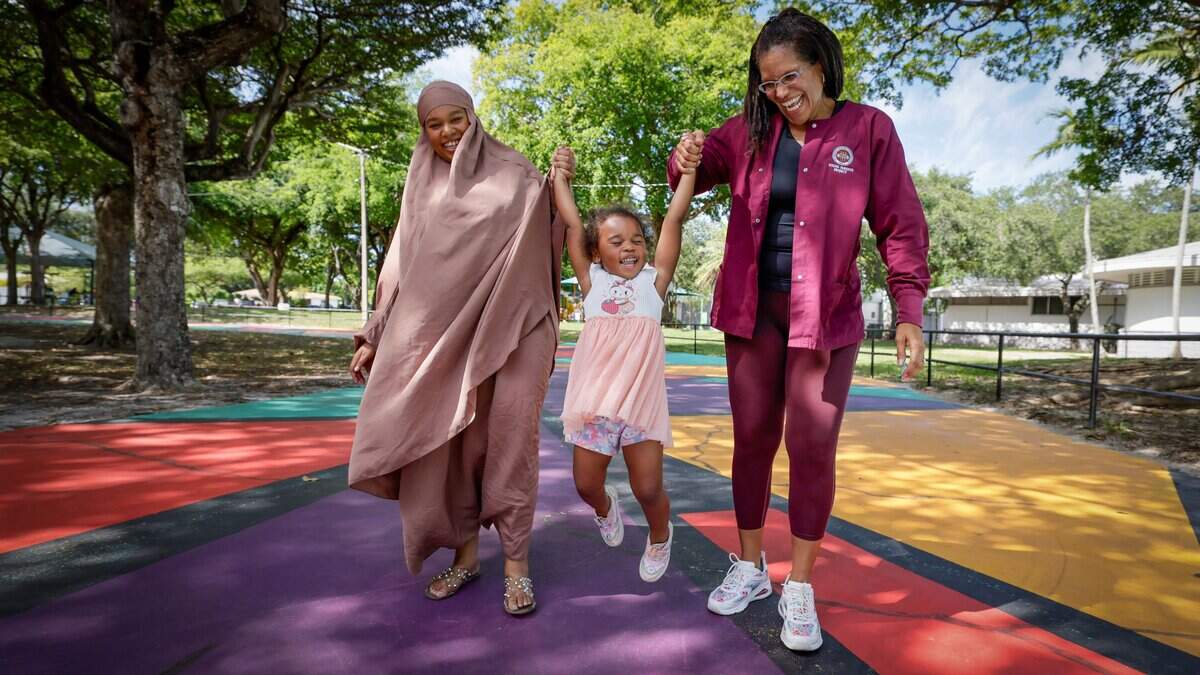
During a recent afternoon at Charles Hadley Park — Naiyla’s favorite — the toddler bounced from the swings to the basketball court before taking off for a game of tag. Grays smiled as she watched her energetic 2-year-old.
“She’s a very busy girl, and with a lot of that energy, I just didn’t know what to do with it,” Grays said. “I didn’t know how to guide her, and they were just giving me tips. They play a vital role with Naiyla in how smart and active she is.”
For Jill Little, the director of YPP, the program has been a steadying force in walking alongside the girls through the uncertainty of pregnancy, childbirth and raising a child.
The team helps mothers prepare for birth by taking them on hospital tours to ease fears about delivery and providing a pregnancy journal called “Baby Basics” that guides them month by month through pregnancy. They help resolve health insurance issues, enroll mothers in school, connect them with trauma-informed therapy and other services, and sit beside them in court to explain what is happening and provide support.
After the babies are born, the support continues.
Staff visit mothers in the hospital, bring small gifts to celebrate their new babies, conduct developmental screenings and connect families with evaluations or services when needed. They screen for postpartum depression, help parents understand their children’s developmental needs and encourage co-parenting and involvement from fathers.
“They have better outcomes when they are with us – better birth outcomes, better graduation rates, better parenting skills and importantly breaking the multigenerational cycle of abuse and neglect,” said Little.
“They are like family. We are invested in their lives. We are their voice, and we’re their support. And we’ve done it respectfully.”
Citrus said it plans to connect the mothers who lose access to YPP with other community providers, including Healthy Families, a home-visiting program that works with pregnant and parenting teens and receives funding through other sources. The agency said those providers can offer supportive services and bill Medicaid for eligible care.
But Mimi Graham, director of the Center for Prevention and Early Intervention Policy at FSU, said programs like Healthy Families are not designed to serve the same population or provide the same level of support as YPP.
“Healthy Families is a wonderful program designed to prevent child maltreatment,” Graham said. “It is staffed with paraprofessionals who are helpful in working with new families to prevent child abuse.”
The young mothers served by YPP, she said, have already experienced significant trauma and complex trauma, often requiring a more intensive level of intervention.
Graham said, in one case, staff helped arrange transportation after a school required a young mother to walk more than a mile to a bus stop while carrying her baby, books and backpack. In another, a nurse helped a pregnant teen maintain prenatal care after she turned 18 and was told she would need to pay out of pocket after losing child welfare eligibility.
“Most regular home visiting programs are not equipped to provide the intensity needed, nor have the knowledge of working with teen parents or experience navigating the systems that these young women have to navigate,” Graham said.
A painful goodbye
Diana, who asked to be identified by her first name because of ongoing immigration concerns, joined the program when her son was just one month old.
Originally from Guatemala, Diana entered foster care at 15 years old after telling a teacher that her stepfather had been sexually abusing her. By the time she joined YPP at 18, she was living on her own in extended foster care, caring for an infant without any support.
“I was just trying to figure out how to help my son,” Diana said. “I didn’t know what’s good for the baby or what he needs.”
Diana said YPP became the safety net she did not have. Staff helped her navigate doctor’s appointments, medications and childcare, connected her with resources and answered questions as she learned how to care for her son. When she faced confusion about her immigration status and whether she could obtain a work visa, staff helped connect her with the resources and legal support she needed to understand her options.
“At that time, it was just them,” Diana said. “I didn’t have anyone else.”
It’s that loss of connection that leaves Kimberly Marshall, a nurse educator and lactation consultant for YPP worried.
Marshall, known simply as “Miss Kim” to the young mothers and children, fears the loss will feel especially painful for people who have already experienced repeated abandonment throughout their lives.
“They have abandonment issues because of the past,” Marshall said. “Even though they know that we didn’t have any control over this, and they know we’re not leaving voluntarily, they still feel like they’ve been abandoned.”
For weeks, she’s been spacing out her final visits because saying goodbye has been difficult for everyone.
“That’s been one of the hardest parts,” she said. “To feel like we’re retraumatizing some of them for old wounds that have already been there.”
Read more Climate change has given this tropical fruit a warm welcome in Florida yards









Post Comment