After the quakes, Venezuela’s socialist regime faces political tremors
From her home in Miami Beach, Nilka Simosa Verde thought the hardest part would be accepting that her missing relatives in Venezuela might be dead. She did not expect that even recovering their bodies could become a nightmare.
Read more Top Trump attorney Daniel Epstein named interim dean at FIU law school
For days, she has been trying to piece together what happened to her family in La Guaira after the earthquakes.
After her brother-in-law located his mother’s body in La Guaira, it disappeared while he was completing the paperwork needed for burial. At the same time, Simosa Verde’s sister-in-law and three children remain missing beneath the rubble of a collapsed building.
Her brother-in-law, Francisco Rodríguez, had taken his mother’s body to process the burial documents, only to return and find it gone. He spent hours searching among rows of corpses without success. For Simosa Verde, the surreal ordeal has become a painful symbol of what many Venezuelans increasingly see as the defining feature of the disaster response: disorder layered upon tragedy.
Stories like hers have become emblematic of a response many describe as disorganized, bureaucratic and painfully slow—fueling anger that analysts say could threaten the fragile stability of Venezuela in the aftermath of the U.S. capture of strongman Nicolás Maduro.
That growing frustration is raising concerns that the country’s deadliest natural disaster in decades may be triggering something beyond a humanitarian crisis: a dangerous erosion of public tolerance for Venezuela’s socialist leadership.
As rescue teams continue pulling bodies from collapsed buildings in La Guaira, Caracas and neighboring states, anger is mounting among Venezuelans who say the government’s response has been too slow, too centralized and, in some areas, obstructive.
For the interim government led by Delcy Rodríguez, the earthquake is becoming the defining test of its legitimacy.
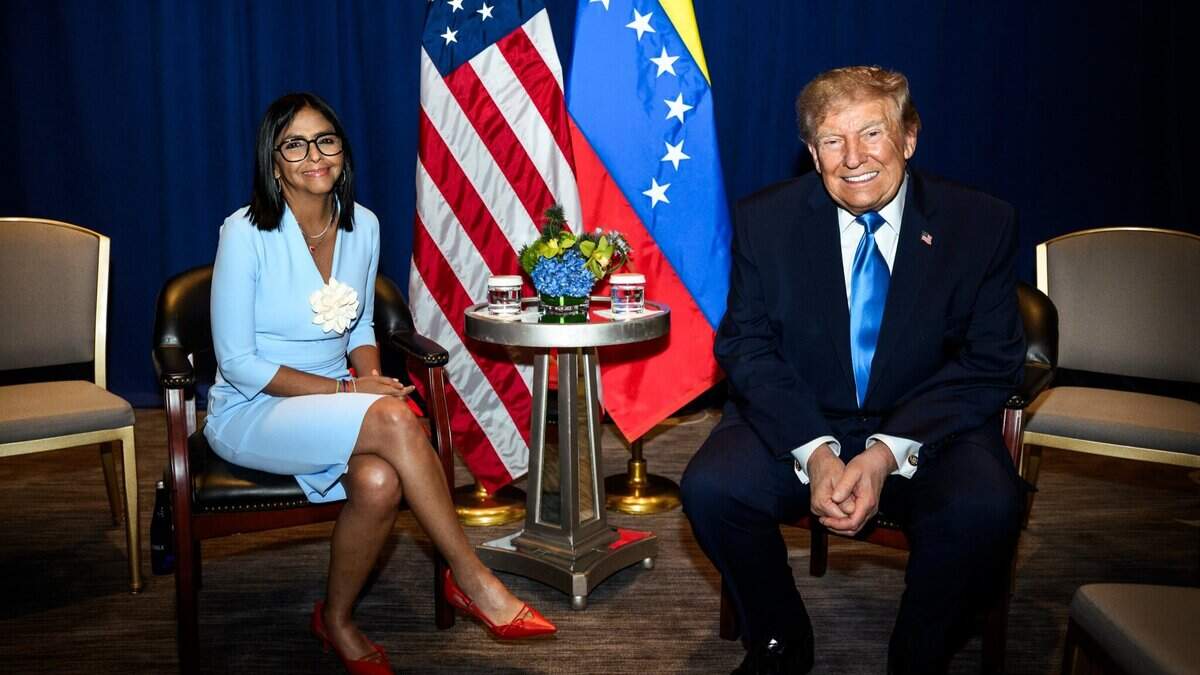
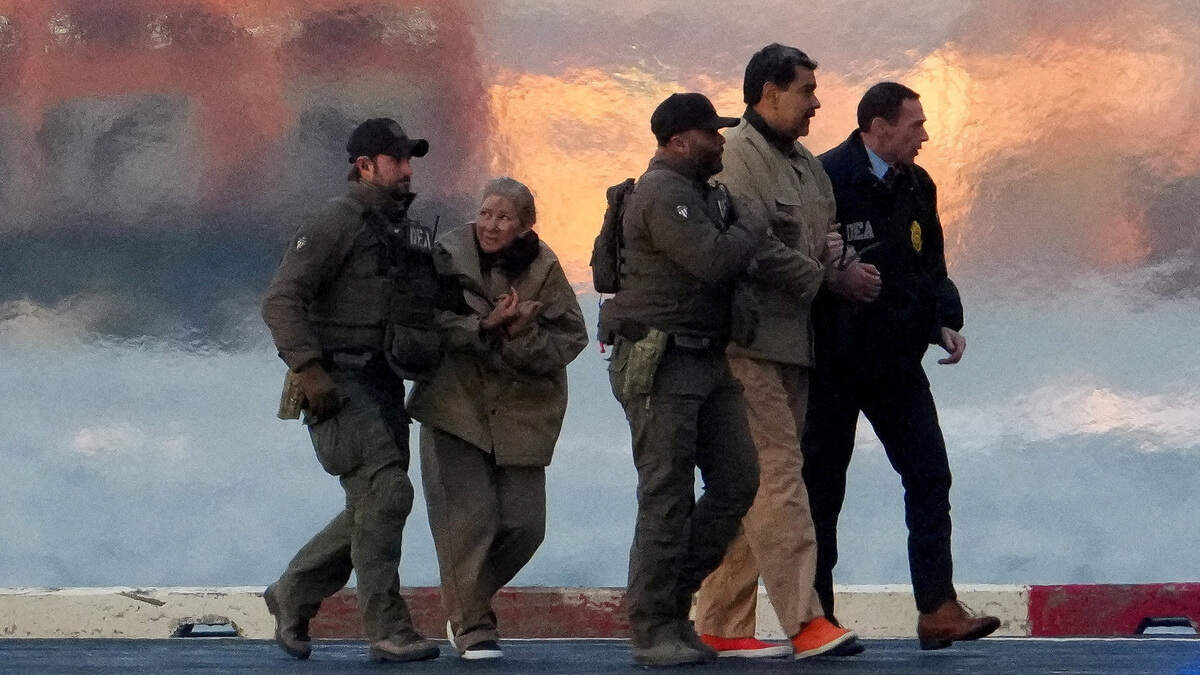
Rodríguez assumed power in January after a U.S. military operation captured Maduro, inheriting a politically fractured country already burdened by economic collapse, institutional decay and deep mistrust of state institutions.
Now, with aftershocks still rattling damaged cities and thousands of people displaced, some analysts warn the government’s handling of the disaster may be accelerating public disillusionment with the Chavista power structure.
“This could become the moment when latent anger turns into something much more visible,” said Rubén Chirinos, president of Venezuelan polling firm Meganalisis, who said informal field soundings across multiple regions suggest public frustration has reached extraordinary levels.
According to Chirinos, resentment is particularly intense toward the armed forces, security services and senior figures of the establishment, including Delcy Rodríguez, Interior Minister Diosdado Cabello and National Assembly President Jorge Rodríguez.
“The country is furious,” Chirinos said. “Everywhere you go, the anger is impossible to miss.”
Old wounds
Natural disasters often expose the strengths—or weaknesses—of state institutions. In Venezuela, many citizens say the earthquakes revealed vulnerabilities they already feared existed.
Residents in heavily affected areas described scenes in which civilians, neighbors and volunteers became the first responders while formal institutions struggled to mobilize.
For many Venezuelans, the anger is rooted not in abstract politics but in intensely personal experiences of chaos, helplessness and institutional failure.
In Miami Beach, Simosa Verde spent Sunday desperately trying to help relatives in La Guaira navigate what she described as an unfolding nightmare.
Her extended family was caught in the collapse of residential buildings in Los Corales, one of the hardest-hit sectors of La Guaira. Simosa Verde said her sister-in-law and three children were inside one of the buildings that collapsed Wednesday night. Days later, she still had no confirmed information about their fate and fears they may be dead.
Her father, sister and brother-in-law survived, but only narrowly.
The family’s ordeal worsened Sunday when her brother-in-law found the body of his mother, Rosa María Díaz de Rodríguez, among a pile of corpses.
After wrapping the body in towels and transporting it to a social security office to obtain the paperwork needed for burial, he briefly stepped away to arrange funeral services.
When he returned, the body had disappeared.
He spent the rest of the day searching among rows of bodies, unable to find her again.
“It is something unheard of, truly unheard of,” Simosa Verde said.
At another collapsed building where her relatives were believed trapped, rescue crews reportedly detected signs of life Saturday and told families they were waiting for heavy machinery.
According to Simosa Verde, that equipment never arrived.
When crews returned Sunday, the signs of life were gone.
“My fear now is that they’ll take the bodies away, and my family will end up buried in a mass grave, and I’ll never see them again,” she said.
Stories like hers are fueling broader outrage over what many Venezuelans see as a slow and poorly coordinated official response.
In interviews with regional media, survivors repeatedly described searching for relatives with little official support.
“People mobilized on their own,” said Roison Figuera, a resident in a disaster-hit area. “There are no rescue brigades, nothing. Many buildings around here collapsed. We still don’t know where our relatives are.”
Such accounts have reinforced a growing perception that civil society, and not the government, carried out the initial response.
For more than two decades, Chavismo built much of its legitimacy around the promise of a state capable of protecting ordinary Venezuelans in times of crisis. Critics say the earthquake response has badly damaged that claim.
“The contrast is striking,” Chirinos said. “You see one Venezuela marked by solidarity, sacrifice and community. Then you see another—bureaucratic, slow and obstructive.”
Anger over aid and control
Among the most politically explosive complaints are allegations that authorities slowed or tightly controlled humanitarian aid during the crucial first hours after the earthquakes.
Residents and activists in several areas reported restrictions on independent donation drives, permit requirements and bottlenecks affecting volunteer convoys heading toward disaster zones.
In La Guaira, some residents said authorities appeared more focused on control and militarization than speed.
“How can you block access or demand special authorization when people are dying under concrete?” one resident said, echoing sentiments widely shared on social media.
Read more Arrest made in Broward McDonald’s shooting that wounded father and daughter
Officials have defended centralized control, arguing it prevents logistical chaos, food contamination and security breakdowns.
Jorge Rodríguez has urged citizens to channel donations through official distribution networks, citing incidents in which improperly handled food shipments posed health risks.
Critics, however, argue those controls fueled public resentment precisely when speed mattered most.
On Venezuelan social media, frustration has increasingly turned political. Posts on X over the weekend accused authorities of mismanaging rescue operations, obstructing aid and failing to move heavy equipment quickly enough into devastated neighborhoods.
“The pain is turning into rage,” wrote one Venezuelan user.
Military under fire
Perhaps no institution faces greater reputational damage than the armed forces.
For years, Venezuela’s military served as the backbone of the government’s political survival. Analysts now say the disaster may be worsening already severe public distrust.
Chirinos said previous polling already showed military disapproval above 70%, and the earthquake may have pushed sentiment to a breaking point.
“The military had a chance to rehabilitate its image,” he said. “Instead, many Venezuelans feel they stood by while civilians did the work.”
Allegations circulating online—including accusations of looting and interference with aid—have further inflamed public sentiment, though many claims remain unverified.
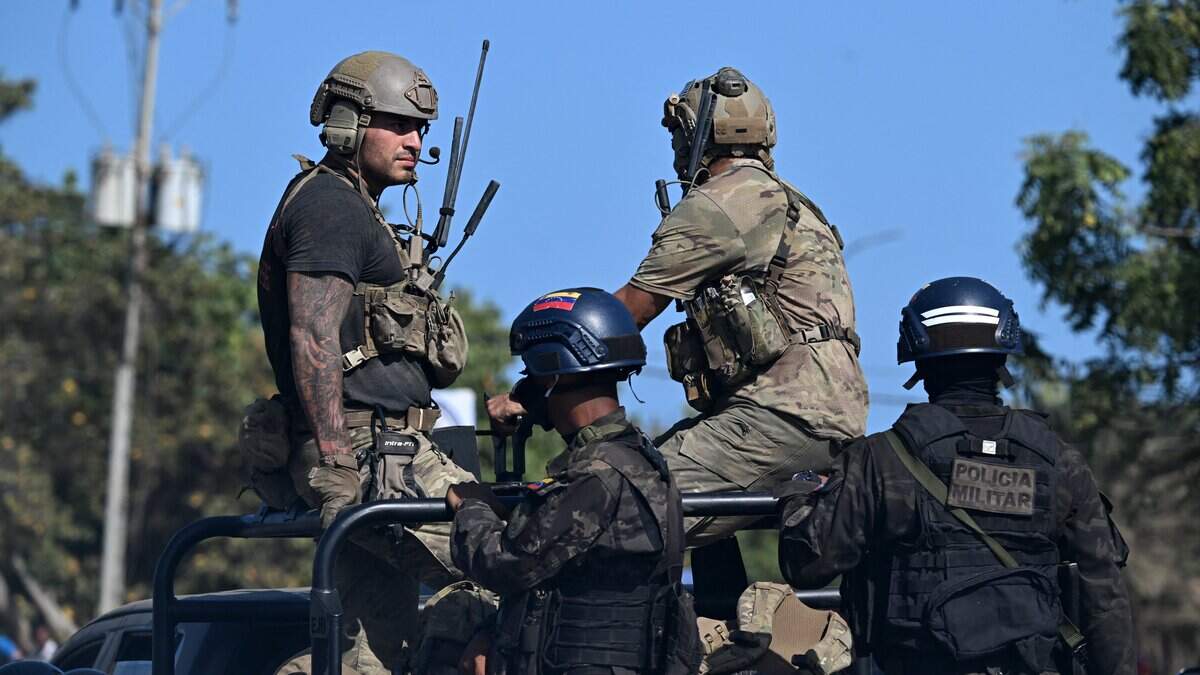
Over the weekend, videos circulated widely showing residents openly confronting military personnel.
In one video posted Sunday night, a man wearing a face mask and headlamp confronts armed troops near a disaster zone.
“This is a country that needs your help,” he says. “A gun? To shoot at us and beat us? We’re not at war—we’re in an emergency.”
He then challenges them:
“When you’re on the Francisco Fajardo highway, you act like tough guys. Show me how tough you are here—with a pick and a shovel.”
The video quickly spread online, resonating with Venezuelans who saw it as capturing a growing frustration: a security apparatus perceived as better equipped for repression than rescue.
In another video circulated Monday by the news site El Diario, residents of a damaged apartment building accused soldiers of entering units without authorization.
The person filming searched a soldier’s backpack while accusing troops of attempting to steal belongings from abandoned apartments.
Though no stolen items were visibly identified in the footage, the accusations reflected growing mistrust.
“You have nothing to take here—what shamelessness,” the man tells the soldier.
As troops leave, another voice can be heard shouting: “Respect other people’s tragedy, respect!”
Such allegations remain difficult to independently verify, and Venezuelan authorities have not publicly addressed many of the accusations circulating online.
Still, the viral footage has reinforced a perception already taking hold among many survivors: that state institutions have struggled not only to respond effectively, but also to earn public trust.
Disasters do not automatically trigger political upheaval. But when catastrophe collides with longstanding distrust, they can rapidly intensify preexisting grievances.
In Venezuela, where confidence in institutions had already eroded after years of economic collapse and political repression, the earthquake may be accelerating that process.
“The emergency is exposing everything people already believed was broken,” Chirinos said.
Crisis of trust
The regime is also facing growing skepticism over casualty reporting.
Official figures place the death toll above 1,400, with thousands injured and more than 12,000 displaced. But many Venezuelans believe the real toll is far higher.
Online missing-person registries contain tens of thousands of names submitted by families searching for loved ones. That does not mean all listed individuals are dead or missing in the strict sense—many entries likely reflect communications breakdowns—but the gap between official figures and public perception continues to widen.
Venezuelans have seen this before.
During COVID-19, many accused authorities of understating fatalities and infection rates. The earthquake is reviving those suspicions.
“The government’s numbers do not reflect what people believe they are seeing,” Chirinos said.
Whether those perceptions are accurate may matter less than the political damage caused by the belief that authorities are minimizing the scale of the tragedy.
Defining test
For Delcy Rodríguez, the earthquake has become the most severe crisis of her short presidency.
Before the disaster, her interim administration had been trying to balance cooperation with Washington, institutional stabilization and preventing a political vacuum after Maduro’s removal.
The earthquake changed that equation.
Her administration is now under simultaneous pressure to accelerate aid delivery, maintain public order, prevent social unrest and preserve political legitimacy.
For now, large-scale unrest remains unlikely. Most Venezuelans remain focused on immediate survival—finding medicine, shelter, water and missing relatives.
But analysts warn that may not last.
“The emergency is the only thing containing the anger,” Chirinos said. “People are focused on helping each other right now. But once the immediate crisis stabilizes, that anger will have somewhere to go.”
Read more Broward wildfire grows, and smoke is visible from the Sawgrass Expressway
This story was originally published June 29, 2026 at 3:15 PM.





Post Comment