Krome Ave. is becoming a hotspot. But will the party kill Redland’s rural charm?
Aldo Espinosa’s efforts to revitalize a quiet part of South Dade may have been a little too successful.
Read more Man accused of raping FMU student called her over a dozen times while in jail: cops
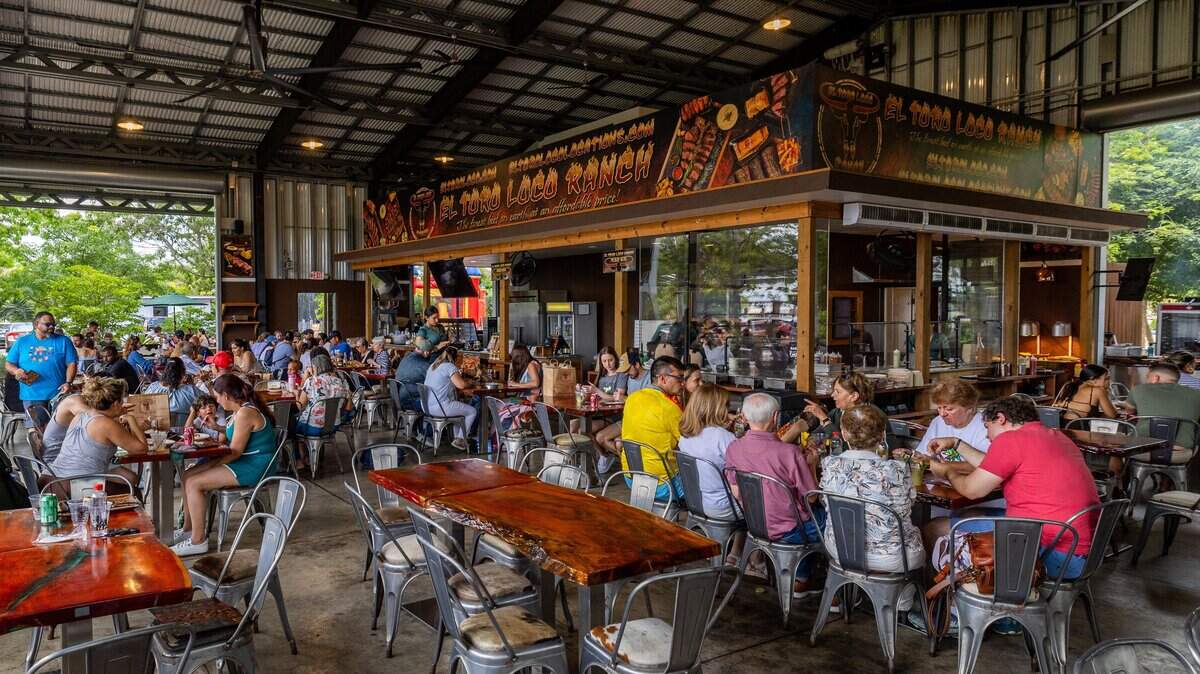
The owner of the El Toro Loco steakhouse empire, who escaped city life for the rural peace of the Redland, joined other business owners to support a county ordinance that established an agritourism district on Krome Avenue in 2024. The new law allowed farm owners to open businesses on their land providing them with additional revenue streams and visitors a reason to head south. Espinosa opened El Toro Loco Ranch shortly after the ordinance was passed, and business has been booming ever since.
In the two years after the Miami-Dade County Commission established the Miami Redland Agritourism District, ranch-style businesses where families can eat barbecue, drink, feed farm animals and go on pony rides have exploded in popularity. During peak season, Espinosa said, about 1,000 people come to El Toro Loco Ranch each day of the week it’s open, Friday to Sunday.
Redland, a unique stretch of agricultural land in southwest Miami-Dade in between the county’s southern suburbs and the Everglades, is undergoing an economic renaissance. Nowhere is that more visible than Krome Avenue, a road once known more for its nearby prisons than its family-friendly farm attractions.
But the agritourism isn’t the only thing booming in this once-quiet part of Miami-Dade. During peak season, spring and fall, Espinosa hears loud music and commotion at night from other businesses, presumably taking advantage of the same ordinance he did.
“The agritourism kind of backfired, to be honest with you,” he said, chuckling.
And while the area’s pro-tourism rebrand opened up much-needed income for ranch and farm owners, some fear the agritourism district will attract real estate development to one of the few places in Miami-Dade where there’s more greenery than concrete.
“It’s really amazing when people come to the Redland and they see the wide open vistas and the acres and acres of farmland. It’s really transformational for people. They can’t believe this is Miami,” said Joel White, who runs Knaus Berry Farm, a beloved business specializing in seasonal cinnamon rolls that reopened on Krome Avenue in December. “It’s really a special place, and I would hope it could keep its character and charm for a long time.”
The Redland rebrand
Established in 2024, the Miami Redland Agritourism District allows agricultural businesses in the area to convert 5% of their parcel to venues for dining, fruit picking, family friendly activities, petting zoos, ATV riding, and other activities.
“Based on what the businesses are telling us, it’s the best thing that could have possibly happened for them,” Miami-Dade District 9 Commissioner Kionne McGhee, who sponsored the ordinance, said. “They’re seeing more interaction with their agricultural business combined with tourism. They’re getting more traffic within their facilities, within their venues.”
The rebrand was an attempt to slow the turnover of land from farmers to speculators and developers, McGhee said.
“The core of the legislation is to protect farmland from development,” he said. “The legislation encourages the land to remain agricultural, so there’s no way you can engage in agritourism with any land that’s not agricultural in nature.”
Before the ordinance, Espinosa, the El Toro Loco owner, said Krome was riddled with illegitimate, illegal businesses. Just selling fruit doesn’t turn enough of a profit, so landowners would rent land to people who opened up food and drink establishments without licenses, he said.
“Imagine spending $5 million on a five-acre ranch in Krome and only being able to sell fruits. You will never be able to pay the taxes, you will never be able to pay for the land or the employees,” Espinosa said. “So that’s why it switched completely to agritourism. It makes sense.”
Experiences in the countryside
During peak season, El Toro Loco Ranch customers are willing to wait in line for up to four hours to eat at the ranch, Espinosa said. In the meantime, parents can easily entertain their children at the ranch’s petting zoo where chickens and goats approach anyone who walks by.
Visitors now see Krome Avenue as more of a destination and not just a place to drive through on the way to the Keys, said Nelson Guzman, the co-owner of By Brothers, a sprawling family-friendly attraction with a fruit stand, water park, exotic animal zoo and even camel rides. He opened the park with his brother Victor in 2014, back when Krome was just a congested one-lane road. The park flourished when the highway was extended to two lanes, he said.
The agritourism ordinance was another boon to By Brothers. He added that many customers come to the park just to buy fruit, vegetables and honey directly from By Brothers, which owns 120 acres of farmland and their own beehives.
“A lot more people came to look for local produce and have more experiences in the countryside of Miami that was neglected by tourists,” Guzman said in Spanish. “That helps a lot to bring up revenues for farmers because we now have the opportunity to sell direct to consumers instead of business to business.”
By Brothers regular Yaima Martinez brings her children to the amusement park often once school’s out. The amenities appeal to the kids, especially the water park, where they get to cool down and play.
Read more Inside Miami’s hellish week: Wildfires, flying soot, dark clouds, extreme heat
“It’s always full here,” Martinez said in Spanish.
Maribel and Royd Lemus have operated their nursery, Royd’s at Gateway Farms and Nursery, since 1997. During the pandemic, they knew people were itching to be outdoors, so the pair decided to expand. Past the saloon doors, visitors will find a mechanical bull, a dog park and an array of blossoming flowers and towering greenery available for purchase before catching a glimpse of stretching farmland.
“Farming is very seasonal,” Maribel said. “It’s not like a steady income, and then it’s affected heavily by weather. If you have a bad year, then that will slow down everything.”
With three food trucks on either side of the ranch, Royd’s offers what the pair likes to call home-style cooking. One truck is often the site of a long line of visitors eager to try Royd’s weekend special, oxtail. They usually sell out by 1:30 p.m.
“We get a lot of traffic, which in turn generates more income, more plant sales, more exposure,” Royd said.
Royd believes Redland has the potential to be the Napa Valley of South Florida agriculture. But farmers can’t get blindsided by a promising revenue stream. If they get too engrossed with bringing in locals and tourists, Royd warns the land will be the first thing affected.
“We like them to respect the area first and foremost,” Royd said. “[Tourists] mention how beautiful the area is. The Redland is sometimes taken for granted.”
‘I hate what they’re doing’
Further south, in Homestead, iconic fruit stand Robert is Here was once surrounded by vast rural greenery, like Redland. Nowadays, the land surrounding the 67-year-old fruit stand is paved over as cookie-cutter townhomes swallow the area.
Robert Moehling, the owner, fought the development for years to no avail, and he’s worried it’s going to just continue.
“I hate what they’re doing,” Moehling said. “Where are you going to have agriculture? Agriculture is not concrete and asphalt.”
Josh Sproat, the policy director at Hold the Line Coalition, works with the organization to protect the county’s urban development boundary, which was established to guard agricultural areas, the wetlands and the Florida Everglades from urban sprawl. Sproat sees agritourism as a threat to farmland because it could fundamentally change the land’s use.
“Now the pressure isn’t just coming from the expanded urban boundary,” Sproat said. “You have acreage that might be classified as agriculture, but isn’t growing things as much as they are engaged in commercial activities.”
Sam Accursio, a second-generation farmer who was born in Homestead in 1963, has owned 26 acres of land in Redland since the ‘90s and rents a portion of it to Knaus Berry Farms. His family-owned farm, established in 1948, was one of 75 local vegetable growers in the ‘80s, he said. Now there’s just three, he said.
“Now we have rush hour traffic. It’s just exploded with development that is just killing our way of life,” Accursio said. “Basically, the politicians have forgotten about South Dade. They have put thousands and thousands of people here, and we have no roads. That’s our biggest problem right now.”
Accursio said the majority of his fellow residents were skeptical of the agritourism district when it was proposed. He’s supportive of the agritourism-designated businesses that follow the rules, but there are still “bad actors” who blast music until 2 a.m., stop when the cops show up and restart at 3 a.m., he said. The agritourism ordinance set noise regulations between 9 a.m. and 11 p.m.
Accursio is afraid that the takeover by developers is inevitable.
“The politicians, you know what they tell me? ‘Sam, you need to welcome people to your community,’” Accursio said. “We can’t welcome any more, unfortunately. I always want to share a piece of the pie that I’ve had my whole life, but now I don’t even know what you call this. It’s not a pie anymore, it’s a paella. It is just spread out in a bowl.”
Espinosa foresees more development as well: shopping centers and residential communities replacing agricultural land, thanks to developers that are well-connected to local politicians.
“As a business, I’m not worried. In a personal way, I am because if you continue to grow, I am going to move to a more peaceful area, which was always my dream,” he said. “But when it comes to business, when it comes to making money on customers, the more people, the better.”
Read more Inside Miami’s hellish week: Wildfires, flying soot, dark clouds, extreme heat







Post Comment