Inside Miami’s hellish week: Wildfires, flying soot, dark clouds, extreme heat
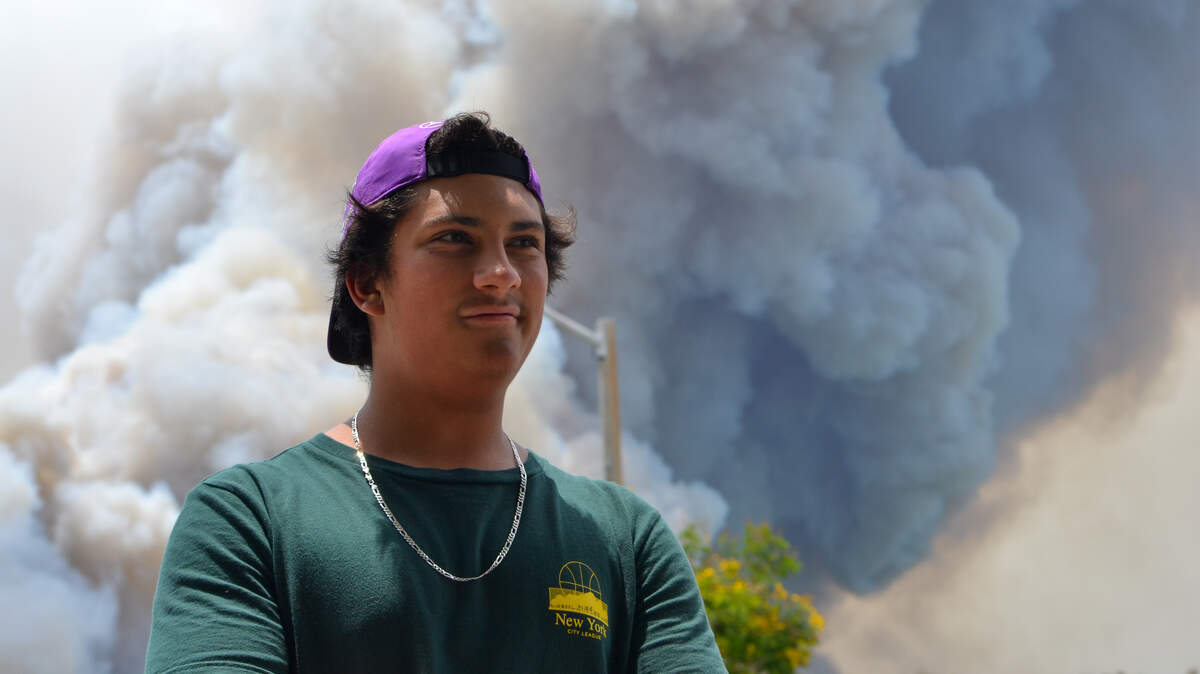
Adam Arenas’ Doral neighborhood was calm and quiet just a few days go. All it took was one flash of lightning to change that.
Read more Inside Miami’s hellish week: Wildfires, flying soot, dark clouds, extreme heat
Suddenly, Miami seemed to be on fire.
One brush fire from the summer storm then split into two, and the raging flames sent plumes of black smoke upward, darkening the skies for miles and fouling the air.
It’s been a hellish week across South Florida. Fire. Extreme heat. Sudden downpours. Flying soot. The constant buzz of choppers.
“Before, it looked like a big, slow-moving cloud,” 14-year-old Adam told the Miami Herald, sweating Thursday from the feels-like 100 degrees as South Florida was under a heat advisory by the National Weather Service. “But now it just looks like a giant wall of fast-moving smoke.”
On Sunday, the original fire started in grassy flats near Krome Avenue during a thunderstorm before splitting into the Quarry 2 Fire and the Wells Fire. By Thursday afternoon, Quarry 2 had burned more than 17,000 acres while Wells had scorched 600, according to the Florida Forest Service fire map.
READ MORE: 200 people leave their homes as growing fires menace West Miami-Dade
Hundreds of Miami-Dade Fire Rescue firefighters, Florida Forest Service crews, National Guardsmen and other public safety agencies are still working to put out the flames. The Quarry 2 Fire is at 75% containment, and Wells is at 25%.
“It doesn’t take much to spark these wildfires that you are seeing,” AccuWeather senior meteorologist Chad Merrill said. “All you need is low humidity, very dry soil. … and warm temperatures and these brush fires can get going.”
A severe drought
As the fires start and rage, weather patterns are keeping Florida mostly dry.
“This is a regional and statewide drought,” Merrill said.
During El Niño summers, it’s common for Texas and parts of the Gulf Coast to get more rain while Florida often ends up drier than average. El Niño is characterized by warmer ocean waters and fewer storms in the tropics.
One of Florida’s driest Junes on record, in 1987, also occurred during an El Niño summer, Merill said.
There has also been a lot of wind shear and dry air over the Gulf and the Caribbean. Those conditions make it difficult for tropical systems and moisture to develop and move into Florida. There’s also Saharan dust blowing off the coast of Africa which can “act as a kind of a drying agent,” Merrill said.
“It’s going to take multiple rainstorms to get out of the ground,” Merill said.
A four- to six-day period of consistent rainfall may “chip away” at the drought, but the soil can quickly dry out and the “brush fire risk can return pretty quickly if you go back into an extended dry period,” Merrill said.
For those living in the areas near the fires the loud mechanical roar of fire-rescue helicopters has become a constant. Miami-Dade Fire Rescue has deployed more than 40 units, including fire engines, water tender trucks, air rescue, and other specialized wildfires suppression resources to contain and extinguish the fires.
“We have multiple units from multiple agencies, local, state, federal, that are helping support that operations,” said Jesse Spearo, assistant director of Miami-Dade County Emergency Management, Thursday at a Florida Division of Emergency Management roundtable.
Read more Inside a new luxury Miami airport terminal: suites, caviar, privacy — for a price
Residents say that Wednesday was notably the worst day of the five that the fires have been burning. Neighboring residents noted the wind carrying soot flew directly toward them.
Added risks during hurricane season
An area that has been hit by a fire can bring flash flooding “even more readily,” Merrill said.
During a drought, the ground becomes very dry. If a wildfire has burned through an area, it also leaves behind ash, loose soil and other debris.
“Sometimes the ground is just so dry that if it rains two inches per hour it’s going to run off,” Merrill said. “It’s like hitting cement, and the water just flows down to a lower elevation in that particular location.”
As that fast-moving water flows downhill, it picks up ash, dirt and burned vegetation, carrying them into nearby roads and neighborhoods. That means people could see mudslide-esque conditions in addition to flash flooding.
Merrill advises people to take “normal precautions you would for the hurricane season” and to “make sure you have an escape route.”
Doral resident Jefry Sulbaran, 57, said the fires have gotten so bad, he packed bags in case of an evacuation order.
Sulbaran, who has lived in the area for 10 years, said when he opened the door to his two-story home Wednesday night, the air outside was thick with what looked like fog. It was smoke.
He placed a large, oscillating fan in front of his air-conditioning unit in hopes of warding off fumes from entering his house.
“Yesterday was a panic,” he said as a whirring helicopter flew overhead.
Other neighbors are similarly distraught, even making a WhatsApp group chat for emergency updates from officials.
While Doral residents haven’t been urged to leave their homes, the fires have prompted road shutdowns and the voluntary evacuation of a trailer park community. More than 200 left their homes near Krome Avenue.
“The evacuation,” said Miami-Dade Sheriff’s Office Assistant Sheriff Fernand Charles, “was for the sanctity of life.”
Read more If hurricane season is the reason, why build Alligator Alcatraz in July? | Opinion
Miami Herald staff writer Churchill Ndonwie contributed to this report.











Post Comment