State board delays UF president vote over governance concerns
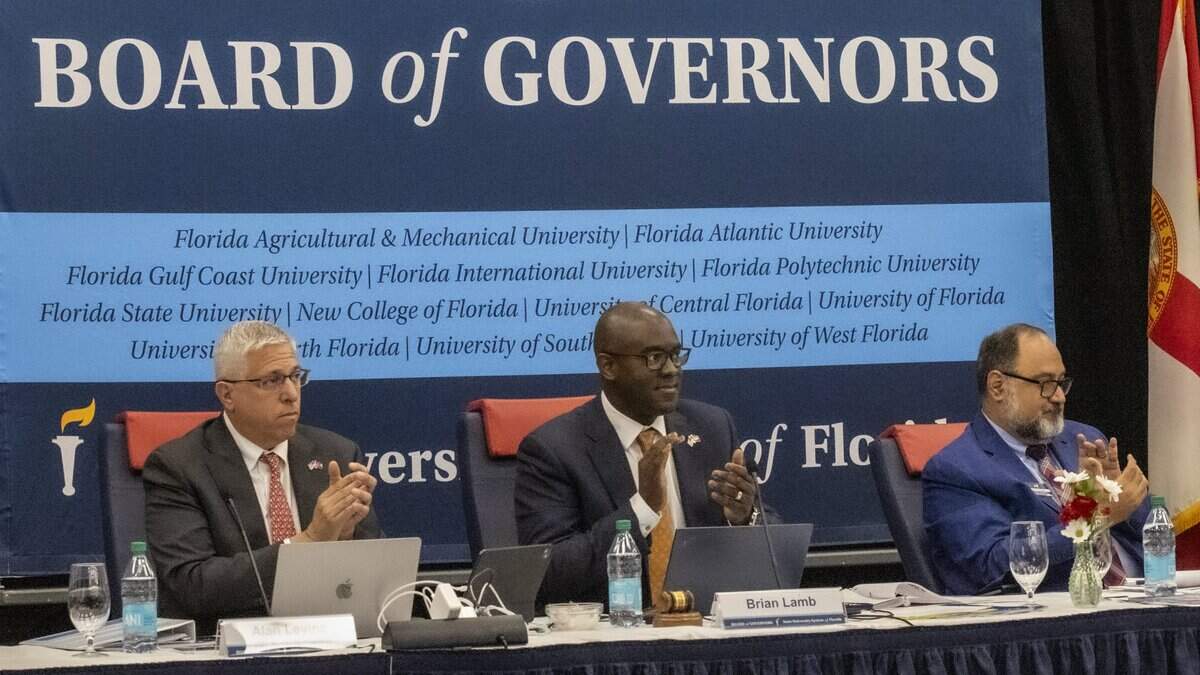
Florida Board of Governors Chair Alan Levine has indefinitely delayed the confirmation vote for University of Florida President-elect Stuart Bell, using the process as leverage to force changes to the university’s governance structure that has concentrated authority into the hands of UF Board of Trustees Chair Mori Hosseini.
Read more Planning a holiday road trip? Gas prices have dropped in Florida. Check your area
The decision is likely to extend a contentious presidential search that has been consumed by political fights over diversity, equity and inclusion and, in less than a month, attracted scrutiny from high-ranking Republican officials including U.S. Secretary of Education Linda McMahon and Sen. Rick Scott, Florida’s former governor.
It also tees up a boardroom showdown between Levine, a former Scott administration official, and Hosseini, a GOP megadonor who has, for nearly a decade, wielded immense sway over the direction of Florida’s flagship university.
In a letter Thursday to State University System Chancellor Ray Rodrigues, Levine said he would refuse to place Bell’s nomination — or any other item from universities he deems out of compliance with Board of Governors regulations — on the board’s agenda until governance concerns are addressed.
Bell’s unanimous nomination by UF trustees had been widely expected to advance to a Board of Governors confirmation vote next week. But when the board released its meeting agenda Wednesday, Bell’s nomination was absent. Levine’s letter indicates the board will instead discuss university governance issues.
While Levine emphasized that his concerns are unrelated to Bell’s qualifications, the letter makes clear that the nomination has become a pressure point in a broader effort to curb Hosseini’s authority and reassert the Board of Governors’ interpretation of how Florida universities should be governed.
Levine’s action also delayed consideration of Florida Gulf Coast University President Aysegul Timur’s reappointment and warned other universities that governance concerns could affect future board business.
At issue is whether powers that Levine argues belong to university presidents and full boards of trustees have been improperly delegated to Hosseini. Levine’s letter challenges a governance model that critics have long argued gives the UF board chairman extraordinary influence over personnel, financial and strategic decisions at the university.
In the letter, Levine raised concerns over language in Interim President Donald Landry’s employment agreement that grants Hosseini authority over hiring and compensation decisions affecting a wide range of university personnel, from the provost to lower-level administrative and academic employees.
Levine said that arrangement appeared inconsistent with Board of Governors regulations which establish that trustees must act collectively and limit the authority that can be delegated to individual board members.
“The president reports to the full board of trustees, which must act as a body,” Levine wrote. “There is no provision in our regulations which permits boards to delegate authority to a single board member.”
Levine said Hosseini agreed to remove the language from future presidential contracts, including Bell’s. But after Board of Governors staff conducted a broader review, Levine wrote, additional concerns emerged involving UF governance policies that allegedly transfer authority from the president and full board to the board chair.
“The fact the offending language will likely be removed from the president’s contract is rendered meaningless if the university’s governance standards, which are a policy of the board of trustees, remain out of compliance,” Levine wrote.
Levine directed Rodrigues to work with UF to review the policies and bring them into compliance before Bell’s nomination can move forward. He also directed Board of Governors Inspector General Kimberly Hancher to review what he described as credible allegations involving university real-estate and financial transactions.
The move marks the most direct challenge yet to Hosseini’s authority at UF.
Since becoming chair in 2016, Hosseini has emerged as one of the most influential figures in Florida higher education. A prominent developer, major Republican donor and close ally of many of the state’s most powerful elected officials, he has played a central role in shaping UF’s growth strategy, lobbying for state funding and recruiting university presidents.
Read more Fire that has burned 16,000 acres in West Miami-Dade more than halfway contained
Supporters credit him with helping elevate UF’s national profile, secure billions of dollars in public investment and drive the university’s ascent in rankings. But critics have long argued that Hosseini’s influence extends far beyond the traditional role of a board chair.
Faculty members, administrators and former university officials have for years described him as deeply involved in personnel decisions, strategic planning and operational matters typically reserved for university executives. A Chronicle of Higher Education investigation earlier this year portrayed Hosseini as a dominant force within the institution, reporting that some insiders viewed him as a de facto chief executive rather than a governing trustee.
Levine’s allegations echo many of those longstanding criticisms. The central question raised by his letter is whether UF’s governance structure has crossed the line between oversight and management by concentrating authority in a single trustee.
Many of the powers Levine now questions were granted to Hosseini roughly two years ago in response to the spending scandal surrounding former President Ben Sasse.
After reports revealed that Sasse had dramatically expanded spending from the president’s office, hired former political aides into highly paid positions and directed millions of dollars to outside consultants, UF trustees moved to tighten oversight of presidential decision-making.
In late 2024, the board approved new policies requiring Hosseini’s approval for high-level administrative hires and major consulting contracts. Trustees said the changes were intended to prevent a repeat of the spending practices that had drawn scrutiny from lawmakers and Gov. Ron DeSantis’ administration.
What UF trustees viewed as a necessary safeguard against another Sasse-style spending controversy, Levine views as an improper transfer of authority from the president and full board of trustees to a single board member.
Levine’s missive comes amid an icy relationship with Hosseini, which has soured since the collapse of former University of Michigan President Santa Ono’s candidacy for the UF presidency.
Hosseini strongly backed Ono and personally advocated for his confirmation. But the nomination unraveled after conservative activists and political leaders attacked Ono’s past support for diversity initiatives and other positions they viewed as insufficiently aligned with Florida’s higher-education agenda.
In a stunning vote last June, the Board of Governors rejected Ono’s appointment, dealing Hosseini one of the most significant political setbacks of his tenure. Levine grilled Ono for nearly an hour about his DEI record and what he viewed as a less-than-swift response to antisemitism and campus encampments that sprung up under his watch at Michigan.
The Bell selection was widely viewed as an effort to move beyond that controversy. Instead, Levine’s intervention has opened an entirely new battle — one focused not on the next president but on who holds power at the university itself.
Bell, a veteran higher-education administrator and former president of the University of Alabama, was unanimously selected by UF trustees after Ono’s rejection. Under Florida law, his appointment cannot take effect without approval from the Board of Governors.
Levine insisted that Bell should ultimately receive consideration.
“Dr. Bell deserves the opportunity to have his nomination considered on the merits,” he wrote.
For now, however, Bell’s confirmation remains frozen. It remains unclear when the Board of Governors will consider his appointment. The board’s next scheduled meeting is in September.
Read more Paint brush as food utensil and a live rodent among Miami restaurant filth
Interim President Landry’s contract lapses Aug. 1.
This story was originally published June 18, 2026 at 11:31 AM.









Post Comment