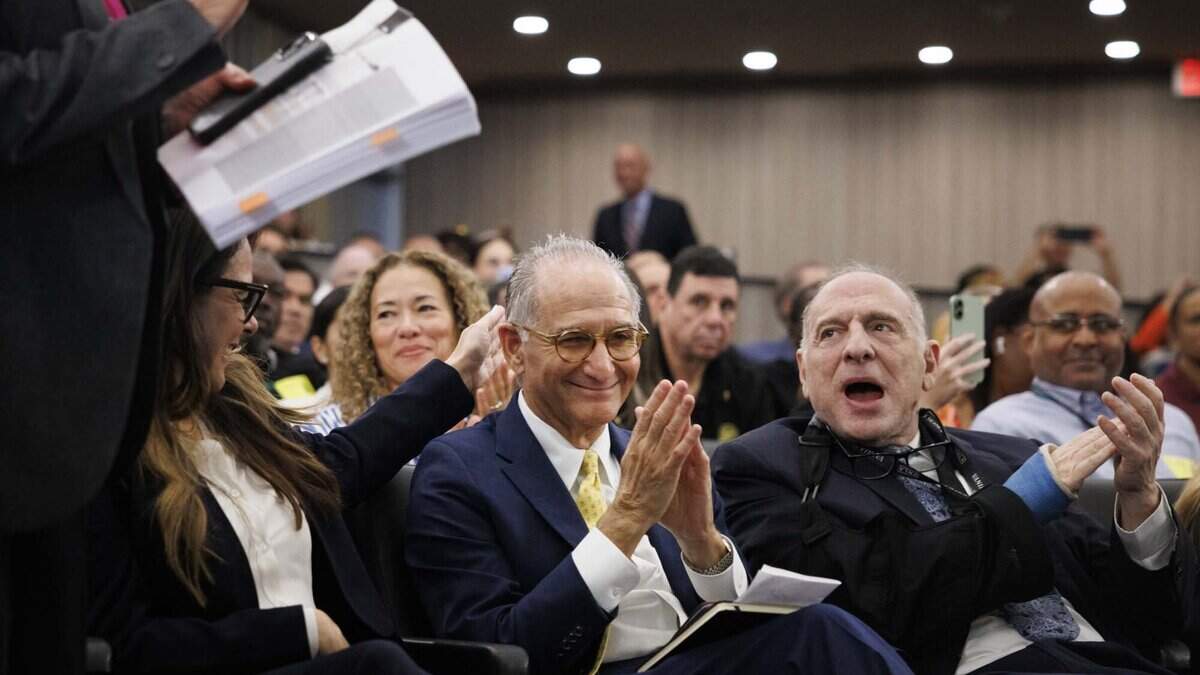
Judge wins fight to open a Miami mental-health center as an alternative to jail
A long-stalled mental health center for criminal offenders on Tuesday won approval to open from the Miami-Dade County Commission, which opted to put off decisions on how to pay for the facility once one-time revenue sources are exhausted.
Read more Public schools must excuse students for religious instruction, Florida AG says
Championed by Steve Leifman, a retired judge, the Miami Center for Mental Health and Recovery is now on track to open in 2027 in a renovated state building at 2200 NW Seventh Ave. in Miami. The annual budget for the facility is expected to hit $25 million after five years, with a projected funding gap of $12 million to be absorbed by Miami-Dade’s already strained general budget if Leifman and other supporters of the center can’t find other dollars to make up the gap. That deficit would have been larger, but the administration of Mayor Daniella Levine Cava reduced the planned security budget for the seven-story building from about $3 million a year to $1 million.
Approval of the operating agreements needed to open the county-funded building means Leifman finally has the green light to try and reshape how Miami-Dade handles chronic criminal offenders who also have mental illnesses. Leifman has been leading the charge for a facility that judges could use as an alternative to Miami-Dade’s jails for people whose mental illnesses seem to be the main driver behind their lawbreaking.
“Locking up sick people is a disservice to taxpayers,” Dulce Martinez, a mental-health advocate, told commissioners in the public comment portion of Tuesday’s meeting.
The 75-bed center will provide treatment, counseling and other services designed to rehabilitate minor offenders whose mental problems are contributing to them repeatedly ending up in police custody. Leifman said the center will be the first of its kind in the country, putting Miami-Dade on the forefront of alternative approaches to using mental-health treatment to reduce arrests — particularly among a city’s homeless population.
“Somebody had to be first,” Leifman said after the vote. “As long as it took, we still have to be first.”
Read more Miami-Dade commission votes to seize PortMiami’s fuel yard in court fight
The 75-bed center won’t occupy the entire building but could expand in later years if funding allows. Another 45 beds will go to New Direction, a drug-treatment operation that already has a contract with Miami-Dade. WestCare, a nonprofit, will run the new mental-health center.
Voters authorized construction dollars for the $50 million building upgrade more than 20 years ago, and Leifman faced opposition on the commission this year for the agreements and funding needed to open. The sponsor of the stalled legislation to open the center was Commissioner Raquel Regalado, but the was sponsored by one of Leifman’s top critics, Chair Anthony Rodriguez. Rodriguez said he could support Leifman’s plans with added accountability measures in his legislation, including financial and performance reports and oversight measures.
“We can expand access to treatment while still protecting taxpayers,” he said.
Rodriguez and other critics on the commission had questioned the finances of the center and Leifman’s predictions that opening it would quickly mean a stream of new grant dollars to sustain it. The five-year financial forecast released by the Levine Cava administration shows the center running a $10 million deficit in its fourth year and a $12 million deficit in year five — shortfalls Miami-Dade would cover if money can’t be found from other local governments or from a mix of federal, state and private grants.
“Yes, we will have very difficult decisions to make in three years,” Commissioner Danielle Cohen Higgins said ahead of the vote. “We will cross that road when we get there.”
Read more Public schools must excuse students for religious instruction, Florida AG says











Post Comment