‘Zero unsafe structures’: Aventura officials dispute state building-safety report
Aventura officials are disputing a state report that said mandated building inspections uncovered more than a dozen unsafe residential structures last year in the northeast Miami-Dade city.
Read more With work permits expired, Haitians await federal judge’s order for formal end of TPS
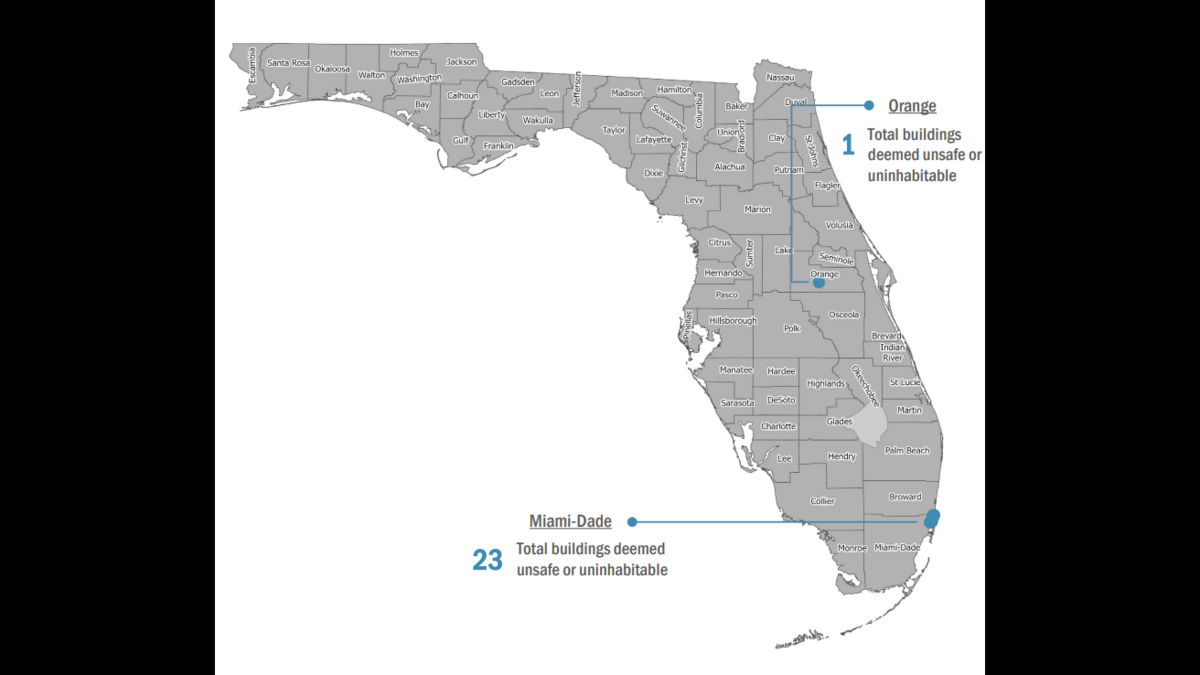
The , released by the research arm of the Florida Legislature, found that 23 “unsafe or uninhabitable” buildings were discovered in Miami-Dade County during milestone inspections required as part of the state’s response to the deadly collapse of the Champlain Towers South in Surfside.
Aventura was home to 19 of those buildings, according to the report, which relied on data submitted by local building officials to the Florida Department of Business and Professional Regulation.
But Aventura is challenging the claim, saying that the buildings categorized as unsafe in the report were actually going through the normal recertification process and already had routine open permits to do work.
“Aventura has zero unsafe structures,” said Evan Ross, a spokesman for the city.
Ross said the city had 20 open permits related to work in 19 buildings, but “none of them rise to the level of creating an unsafe structure situation.” He said there might have been a “miscommunication” regarding the interpretation of the data received by the Office of Program Policy Analysis and Government Accountability, which authored the report.
“They are simply buildings going through the legally required recertification process, and they have open permits to do the work necessary to recertify,” Ross said. “But there’s never been any consideration of evacuating them because they are perfectly safe for people to live in.”
An email sent Monday by Aventura’s building official as the report began to circulate also states that the buildings deemed unsafe were “reported by mistake in the wrong category.”
Ross said city officials have provided additional information to analysts at the legislative think tank and requested they amend the report.
But Katie Betta, a spokesperson for the Florida Senate, said the Legislature has not asked for a revised report and there are no plans to issue a revision.
Betta said the report includes “very thorough” insight based on the data that was available.
“From our standpoint, based on the information we have from OPPAGA, the report is not wrong. The report cites … the data that they used. It explains the data that they didn’t have. And it presents all of that information to the Legislature,” she said. “And if further steps need to be taken, that would be up to an individual senator.”
Read more Two Miami-Dade driving schools issued fraudulent certificates, police say
According to the report, analysts requested information from Aventura building officials about whether any of the buildings had been vacated, but did not get any response.
City officials said they weren’t sure where the breakdown of information happened, or why the information requested by the state was not provided before the report was published.
Ross, the Aventura spokesperson, said the city would not take any risk if a building was unsafe.
“We will not hesitate to make sure that it’s no longer occupied. But we don’t have that situation with any building right now,” he said.
The report — which says seven of Miami-Dade’s local building officials did not report information to the state — suggests the other four buildings “that were deemed unsafe or uninhabitable” in Miami-Dade County last year were located in North Miami.
Attempts to reach a city spokesperson late Tuesday were unsuccessful.
The inspections at the center of the report were required by Florida lawmakers in 2022 following the Surfside tragedy that resulted in 98 deaths. Condominium and cooperative buildings with three or more floors were obligated to perform ‘milestone’ inspections to verify their structural safety as they age.
Building owners must conduct these milestone inspections when a building reaches 25 to 30 years of age and every 10 years thereafter.
A licensed engineer or architect must assess the building during a ‘phase one inspection.’ If significant deterioration is found, a ‘phase two inspection’ is required to confirm that the building is structurally safe for its intended use. Local building enforcement agencies collect the inspection reports and submit them to DBPR, which shares the data with organizations such as OPPAGA for research analysis.
In their report, OPPAGA found that in 2025, 98% of the buildings that needed a second-phase milestone inspection for structural safety were in coastal jurisdictions. Miami-Dade and Broward counties reported 308 and 155 second-phase inspections, respectively.
The Florida milestone law also requires local building officials to provide a list of buildings that are deemed unsafe and uninhabitable. In 2024, the number of buildings reported to DBPR was 30 and spread across the state.
Read more Traffic Alert: Southbound I-95 lanes closed in Fort Lauderdale multi-car crash










Post Comment