Why a South Carolina oysterman is planting 4,000 wooden stakes in the mud
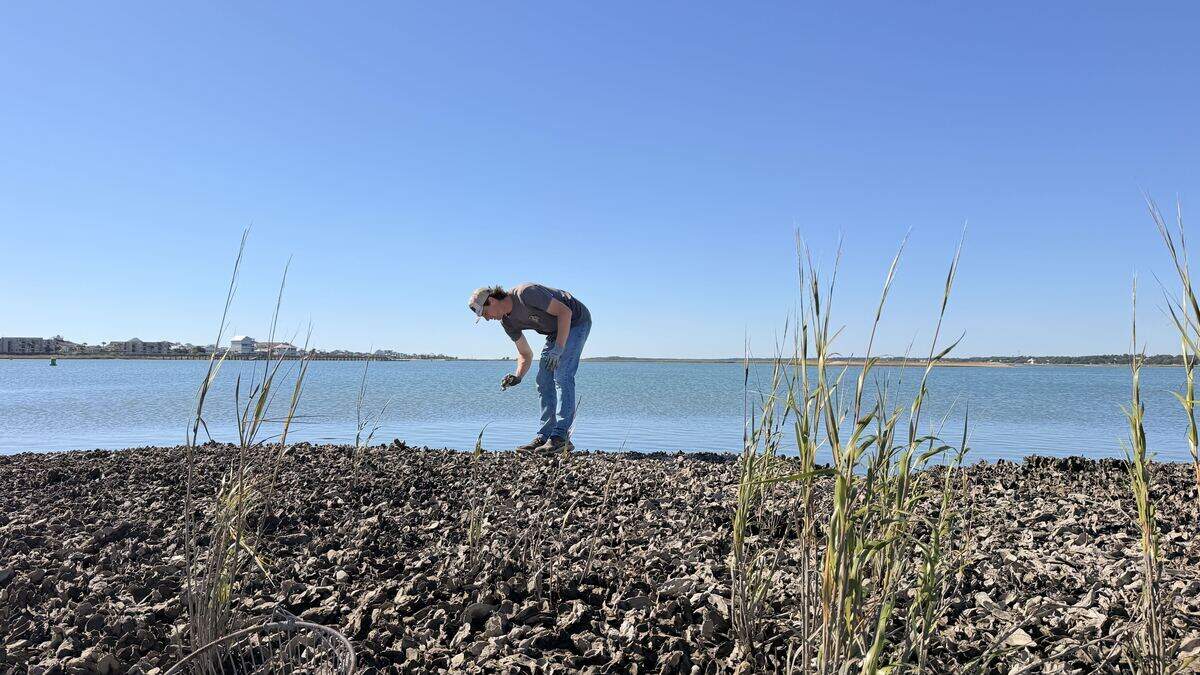
The metal exterior of Hunter Smith’s jon boat screeches against the sharp shells of Murrells Inlet’s oysters as he pulls into the marsh for another day of harvesting.
Read more Ken Griffin wants to join Coral Gables’ exclusive country club. The price? $2M
Smith, 37, moved to Murrells Inlet in South Carolina as a child and first learned the practice of oyster picking when he was an early teen. Four years ago he became one of the few local commercial oystermen, taking over for local legend Franklin “Snakeman” Smalls.
Smith sells oysters directly to Seven Seas Seafood Market.
“If you want Murrells Inlet oysters, they’re pretty much going to come from Seven Seas from me,” he said.
He knows his way between the winding creeks of the roughly 13.5-acre lease he works from almost every day of South Carolina’s shellfish harvesting season, with December and January being the busiest months.
Oysters are a staple to the state’s coast, and Murrells Inlet is designated as the seafood capital of South Carolina. But the work to sustain the local oyster population is a delicate balance of time management, conservation and working knowledge of the oyster flats.
Additional environmental and development pressures have limited where harvesting can take place along the coast and require strategic management and restoration practices.
Shellfish harvesting opened for the season in South Carolina on Oct. 1, and it will close May 15, 2027, barring any temporary or seasonal closures of shellfish beds from high levels of bacteria or limited resources.
What does oyster harvesting entail?
Smith aims to pick about 20 bushels per tide, and each bushel is equal to 8 gallons. Some days he brings along a striker, or an extra hand to help pick. Some days he spends the time alone listening to the squawking birds and gentle wake washing over the shell beds.
He typically heads out an hour before the lowest tide where more shells are exposed and there is a better selection. Most often he won’t know where the picking’s good until he gets there.
Scouring mounds of oysters, he looks for clusters that need trimmed and selects the ones that reach at least three inches, signaling their maturity. His welding hammer knocks off the dead shell, tossing what’s left into a growing pile in his wire basket.
It’s tedious and strenuous work, spending hours every day hunched over with little time for rest in between since time is dictated by the tide.
Across the season, he’ll sell about 600 bushels of oysters, delivering them within 18 to 24 hours to Seven Seas Seafood Market where the public can buy them.
Commercial harvesters required to replant oysters
Before the season starts, Smith is required by state law to annually reseed what will be equivalent to at least 50 bushels of oysters per acre of bottom in his permitted lease. His lease requires about 120 bushels of reseeding, but he does far more than that, acknowledging the importance of conserving the habitat.
Not only does it replenish oyster beds, but it promotes water quality and prevents erosion along the mud banks throughout the marsh, he said.
“If I do all the hard work while my back’s still good… in 15 or 20 years, when I’m getting good and old, it’ll be easier to pick,” Smith said.
Right before water temperatures in Murrells Inlet reach 70 degrees, which is when oyster larvae typically begin swimming in search of places to settle, he plants wooden stakes about 16 inches deep in the pluff mud as a hard structure for them to cling to.
Read more He waited 12 years for an asylum hearing. Then he left Miami for Venezuela
South Carolina’s oysters are considered substrate-limited, meaning they need hard surfaces to cling to. According to SCDNR there is an abundance of oyster larvae, but without proper places to settle and grow, they die.
Three wooden stakes will eventually hold one bushel, meaning Smith would need to put out about 350 to 400 stakes. He has planted over 4,000 stakes this year.
He’s placed them strategically along the currents where oyster larvae are more likely to reach. After about four years, the stakes are covered in mature oysters.
Pressures on SC oyster reefs
Along the state’s coast, oysters grow intertidally in salt water estuaries where they are exposed during low tide. Murrells Inlet is one of the few resources for oyster harvesting for the northern part of the state, with more availability toward Georgetown and McClellanville.
Because there is a higher demand for oysters in populated areas like the Grand Strand and Charleston, there is more pressure on the reefs, especially in recreational areas.
Since Smith has his own culture permit for his lease, he is the only one able to harvest from his beds. That hasn’t stopped others from taking it before, he said. Entire oyster beds were stolen from his property before, and harvesters can be fined for taking from a commercially permitted area.
The South Carolina Department of Environmental Services monitors shellfish areas for fecal coliform bacteria and will close beds if oysters are deemed unsafe to eat, which would prevent even Smith from picking from his beds if water surrounding his lease had high bacteria levels.
“The only good thing I’ve got working for me, though, is that I’ve got tons of water flowing all the way around on both sides,” he said.
Most areas that are closed are in back channels and areas with less water flow, he said.
SCDNR Molluscan Shellfish Manager Andy Hollis said water quality has one of the biggest impacts on harvesting along the state’s coast. Areas with failed septic systems or runoff from increasing development are more likely to have risk of elevated bacteria levels.
Development can also impact accessibility to harvesting areas, Hollis said. Eventually pressures from sea level rise and marsh migration will likely impact oyster populations, he said.
“We want to make sure that any development is done in a smart way to allow for marsh migration,” Hollis said.
Smith’s long-term knowledge earned him the work he takes on each season, but it’s his passion that keeps him going. He said when the time comes for someone to carry on his duties, it won’t be just anyone.
“The aspect of picking the oysters isn’t hard, it’s just the keeping up with it,” he said. “I’ll have to find somebody who likes it as much as I do.”
This story was originally published November 13, 2026 at 5:39 PM with the headline “Why a South Carolina oysterman is planting 4,000 wooden stakes in the mud.”
Read more Miami may gut LGBTQ board, repeal affirmative action programs as FL law changes











Post Comment