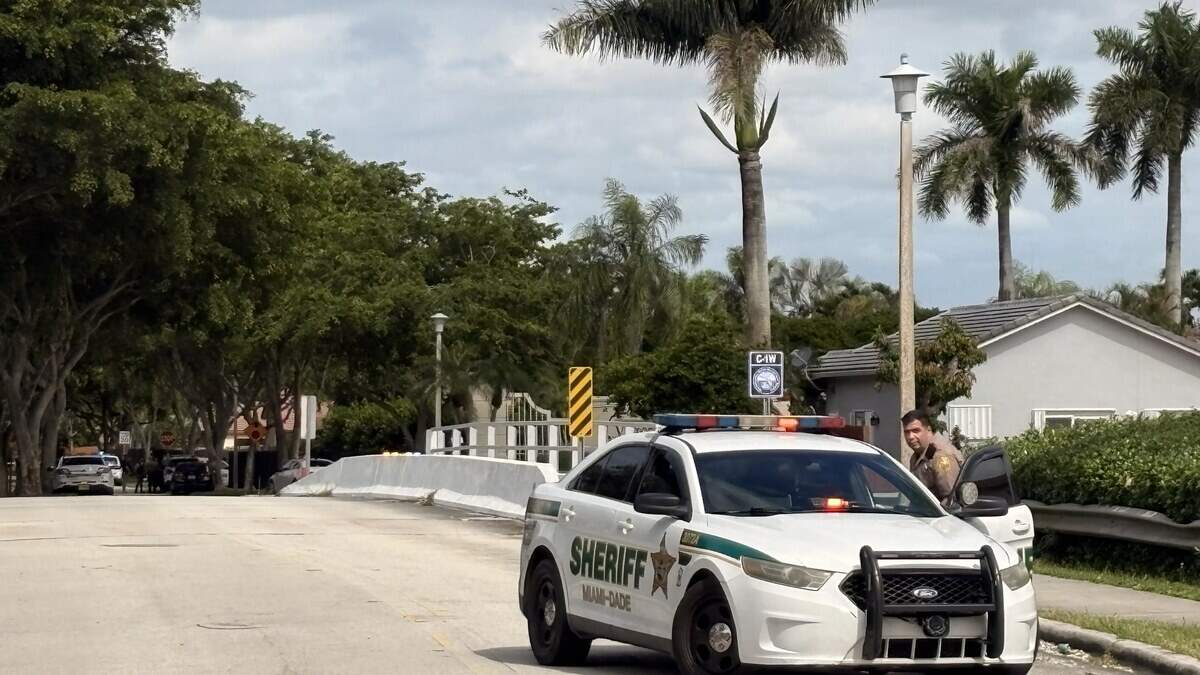
Where does your police agency stand? Is it stricter on pursuits than FHP?
From South Florida to North Florida, law-enforcement agencies place tight boundaries around a risky bit of police work: high-speed pursuits on the public roadways.
Read more Ants in sugar. Flies in food. South Florida restaurant inspection issues
The Miami Herald surveyed pursuit policies from a dozen of the largest agencies in the state. None was as lenient as the Florida Highway Patrol when it comes to pursuits, wrong-way driving and PIT maneuvers, or Precision Immobilization Technique.
The PIT is a controversial spin-and-stall maneuver where the chasing officer aligns his front bumper with the rear quarter panel of a fleeing vehicle and turns sharply into it, breaking the rear-tire traction and forcing the car into an abrupt spin.
Agencies in Miami-Dade County, the most populous and congested of Florida’s 67 counties, , were more restrictive in their chase policies than agencies elsewhere, the Herald found.
READ MORE: A sleepover and a spin in mom’s car: 15-year-old latest to die in FHP chase
Where does your agency stand?
The Herald ranked the policies from tightest to loosest. Only one could not be evaluated because it was too heavily redacted.
Miami-Dade Sheriff’s Office: Deputies can only pursue suspects involved in felonies with “the use or threat of physical force or violence to a person. All other pursuits are prohibited.” They cannot drive the wrong way on highways or ramps. PIT maneuvers are not allowed.
Miami Police Department: “All pursuits, other than violent felony offenders, are prohibited.” Intentional contact with cars is also prohibited unless deadly force is justified. Wrong-way driving on highways is prohibited..
Orlando Police Department: Officers can only pursue suspects for a short list of serious crimes: murder, armed robbery, armed sexual battery, kidnapping, armed burglary of an occupied structure, and certain attacks on officers.
In rare circumstances, when approved by supervisors, a chase outside those criteria is possible. PIT maneuvers can be used by officers with the proper certification, and they are advised that the “desirable” speed would be under 50 miles an hour. But the policy says, in bold and underlined type, that officers cannot ram vehicles from behind, unless deadly force is justified. Wrong-way driving is not allowed.
Pinellas County Sheriff’s Office: A forcible felony isn’t enough to warrant a chase; the suspect must also pose an “imminent and/or continuous threat.” In some “exceptional and rare” cases, a suspect’s “extremely dangerous driving” can warrant a chase.
Read more Miami Hispanic voters split over GOP, Trump — immigration, economy the big issues
The agency doesn’t allow chases over property crimes, stolen cars, or non-violent crimes. PIT maneuvers are allowed, but if the speed is above 50 miles and hour, it is considered deadly force. Deputies are told not to conduct a PIT maneuver on SUVs, vans or pickups. In all capital letters, deputes are warned not to drive the wrong way to chase someone.
Jacksonville Sheriff’s Office: Chases are only allowed for specific forcible felonies, or “extremely dangerous actions.” The policy specifically says that “reckless driving and/or… multiple traffic infractions do not constitute an imminent threat” warranting a chase. PITs are not allowed above 55 miles an hour or on SUVs, motorcycles or open-top vehicles, unless deadly force is justified. Ramming is allowed, if a PIT is not feasible. Wrong-way driving is banned.
Palm Beach County: Chasing of violent felons is allowed, or in other “extraordinary circumstances.” Intentional ramming or other contact (PIT is not specifically named in the policy) is allowed only as a “last resort” and only when deadly force is justified. Wrong-way driving is allowed on one-way streets if the deputy is “reasonably certain such action can be safely undertaken.”
Broward Sheriff’s Office: Pursuits are limited to forcible felonies, a security breach at the port or airport, or to prevent death or serious injury. Some crimes are specifically excluded: auto theft, burglaries, suspicious vehicles, traffic and drug offenses. When a police helicopter takes over, the ground chase is called off, unless the deputy is conducting a PIT maneuver, or the suspect is armed. PITs are allowed, with no maximum speed. Chasing the wrong way against traffic is not allowed.
Tampa Police Department: Officers are allowed to pursue suspects for any forcible felony, and for car burglaries. Pursuits must end if the suspect’s car has active GPS or remote tracking, unless the occupants are armed or capture is “especially necessary.” PIT maneuvers are allowed for trained officers. Wrong-way driving is restricted but not banned. The policy is not entirely visible because it was redacted by the agency.
Orange County Sheriff’s Office: Pursuits are allowed for specific violent felonies, but if a supervisor approves, a deputy can also chase suspected burglars or robbers. PIT maneuvers are allowed, and deputies are advised that it is desirable to conduct them at 50 miles an hour or slower. Wrong-way driving is not addressed.
Lee County Sheriff’s Office: Deputies may pursue suspects for a “violent forcible felony involving the use or threat of serious physical harm.” Deputies also can chase people engaged in “lawless activities” including street racing and street takeovers, rioting and traffic infractions. PIT maneuvers are allowed, with no speed limits. But ramming is considered deadly force. Wrong-way driving is not allowed.
Polk County Sheriff’s Office: Deputies “may initiate a vehicle pursuit to apprehend active felons and dangerous misdemeanors. If a supervisor authorizes a pursuit, the supervisor is also authorizing the PIT maneuver,” which “should be employed as soon as possible.” Above 45 mph is “not recommended,” but exigent circumstances can justify it. Ramming requires a supervisor and is a “last resort.” Wrong-way driving is not allowed.
Hillsborough County Sheriff’s Office: The agency refused to reveal its full pursuit policy to the Miami Herald, citing it as “criminal intelligence information” it does not have to release. One un-redacted portion reads, “Pursuing law enforcement personnel shall retain the duty to drive with due regard for the safety of all persons and shall be responsible for the consequences of any reckless disregard for the safety of others.”
Pursuits are allowed for anyone who flees a traffic stop. PIT is the preferred method to stop the chase, with no limit on speed. It is not considered deadly force by FHP, and there is no minimum offense to justify it. Ramming is allowed if a PIT fails. Wrong-way driving is expressly allowed.
Read more Perez Hilton’s alarming livestream was in August. The 911 call was just released
This story was originally published October 30, 2026 at 5:15 AM.












Post Comment