Virginia Key is getting targeted for redevelopment. Now, plans for a mooring field
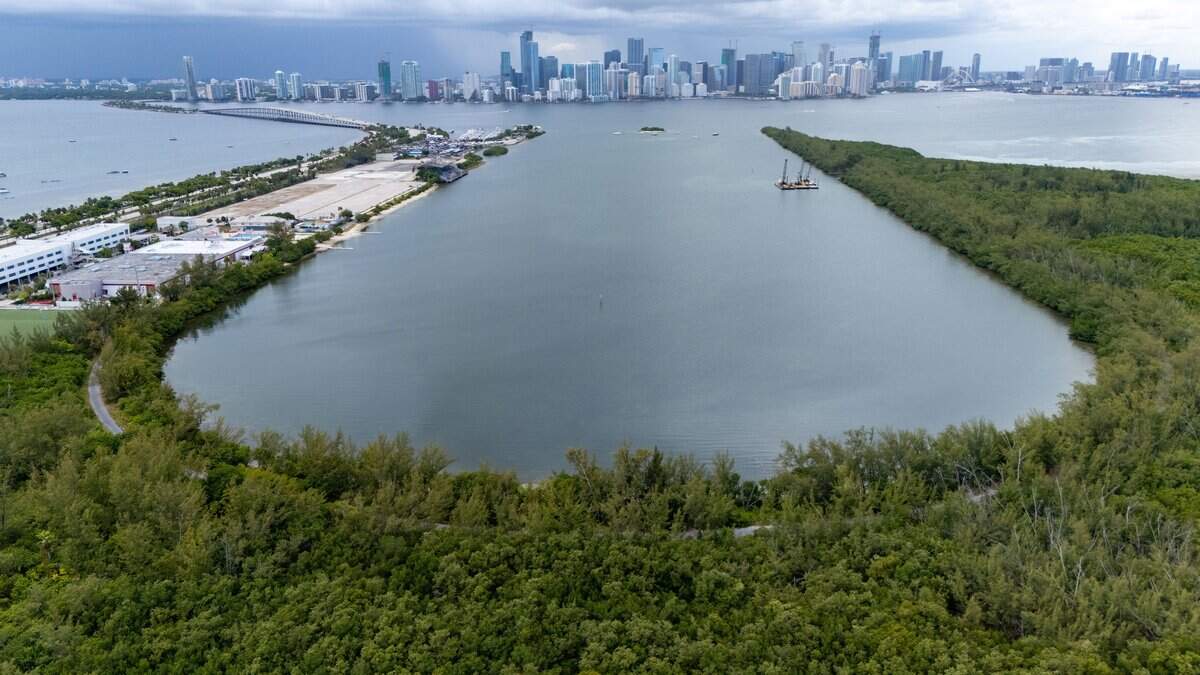
On a recent weekday morning, the waters behind Miami’s historic Marine Stadium were calm and clear — with few boats to be seen.
Read more 2 students injured in Miami Northwestern Senior High stabbing, officials say
If the city of Miami gets its way, the 45-acre basin could one day be filled with 195 concrete anchors, which would function as parking spaces for up to 75 boats, instead. The city is currently seeking permits for a proposed mooring field, five years after the City Commission directed the city manager to finalize plans for the project.
The mooring field, which the city estimates will cost approximately $450,000 for design and permitting and $2 million for construction, is one of several projects that could bring a flurry of activity to Virginia Key in the coming years. Miami voters recently approved an operator to manage events at Miami Marine Stadium and invest up to $10 million into its restoration. In November, voters will decide whether to award a long-term lease to a company that would redevelop the 27-acre property on the west side of the island that includes both the Rickenbacker Marina and Marine Stadium Marina. And the county is set to consider a $100 million redevelopment of the former Seaquarium site.
Anxiety over those developments — plus the mooring field on top of it — has some residents and regular visitors nervous about how they will work together. They worry no one at the city or county is thinking about the collective impact to the relatively small barrier island of Virginia Key.
While the mooring field would be good news for pleasure boaters or liveaboards trying to navigate the shortage of slips and moorings in the county, it’s upsetting some of the other boaters who use the basin: the human-powered paddlers.
At dawn and dusk, crew rowers and dragon boaters slice through the calm, safe waters of the Marine Stadium basin, like they have for decades. Some of them worry that, among other concerns, packing the basin with bigger boats will leave no room for them.
That includes Leah Kinnaird, who’s part of a team of breast cancer survivors called Save Our Sisters that meets out in the water in a long, narrow vessel known as a dragon boat.
“It would basically put us out of business,” Kinnaird told the Virginia Key Advisory Board, a city-assembled group that meets to discuss items relevant to Virginia Key, during a meeting last week.
Kinnaird and other paddlers are pushing the city to pause the project until more community members have had time to weigh in. On Monday, Friends of Biscayne Bay began circulating a petition outlining the nonprofit environmental group’s concerns about the city damaging seagrass in the basin, pushing out the rowers and piling too much development all at once on the key.
Last week, the Virginia Key Advisory Board heard from residents who were concerned about the mooring project in particular — the first time it’s been mentioned in years, said Peter Ehrlich, chair of the board. He told the Miami Herald he didn’t even realize it was this far along until Kinnaird brought it to the board’s attention a few weeks ago.
“It is now August of 2026 and no City officials have shared info or briefings,” he said in an email.
Critics like Kinnaird are also concerned that this is just one more project jammed into Virginia Key, without any consideration of how all of the developments overlap.
“All these things intersect with each other, and they’re being developed in isolation. Where are all these people going to park? What’s going to happen to traffic on the Rickenbacker?” she said.
In a statement to the Herald, the city said the current plans do include room for rowers. A spokesperson said that the “outer-perimeter mooring field design is intended to preserve space for rowing lanes on both the north and south sides of the basin.”
As for the increased activity between various redevelopment proposals on the island, the spokesperson said the city is “evaluating the overall activity and access needs for Virginia Key,” including the mooring field, the Marine Stadium redevelopment and the potential Rickenbacker Marina redevelopment.
The city also said “plans and drawings are being developed” in coordination with the Miami Police Department and Miami Parking Authority to address increased vehicle activity, parking and traffic flow.
From 75 to 195
The mooring field was initially supposed to be a solution embraced by at least some of the paddlers.
Ten or so years ago, the basin was full of illegally anchored boats, roaring jet skis and abandoned vessels, some of which leaked oil and sewage into the water. Paddlers say they were harassed by drunk boaters and followed by speeding jet skiers. Some young rowers spent their weekends roaming the mangroves with black garbage bags, picking up all the trash boaters flung into the sea.
Paddlers asked the city for help, and Miami proposed a modest mooring field to help reign in the improperly anchored boats, along with a dedicated lane for paddlers and some “no wake” and “slow speed” signs.
In 2021, the Miami City Commission directed the city manager “to take any and all necessary steps” to finalize plans for a mooring field in the basin with space for 75 vessels. Even that was a bump from what paddlers had initially proposed as a compromise — just 50 mooring balls.
Read more Nightlife mogul lists $12M Miami Beach home. See luxury listings, contracts, sales
Then, the paddlers and Virginia Key Advisory Board say, things went quiet. They said they aren’t aware of the city holding any community meetings or reaching out to either group since then, despite the fact that the city is currently pursuing state environmental permits for the project. Reached by the Herald, the city spokesperson said they were working to confirm the history of public meetings for the project.
According to the city’s permit application, Miami is planning on adding 195 anchors, which would blanket the entire basin, along with a floating dock for dinghies and a harbormaster office and space to pump out boat sewage. The project has yet to be approved by the state Department of Environmental Protection.
In a mooring field, anchors are placed on the bay’s floor, and ropes are attached from those anchors to floating mooring balls on the water’s surface; that’s what boats attach to. So 195 anchors does not automatically translate to 195 mooring balls, or 195 boats.
The city says the intention is to host a maximum of 75 boats at a time.
“The additional anchors are intended to provide flexibility in the placement and relocation of the 75 active moorings, including during maintenance, events held by various clubs and organizations utilizing the Miami Rowing Club, and future events that may occur in connection with a renovated Miami Marine Stadium,” the city said in a statement.
That’s consistent with what the city told the Miami Rowing Club, which has leased space next to the Marine Stadium for decades.
At the Virginia Key Advisory Board meeting last week, Miami Rowing Club board President Facundo Barrera said the city assured them that the 195 anchors did not translate to 195 boats.
“The city has promised us there won’t be 195 yachts, nor 195 mooring balls,” he said. “Anchors don’t interfere with our rowing. What interferes with our rowing is the number of mooring balls and yachts.”
An empty basin
However, some paddlers say any number of boats is too many. And now they have a taste of what life is like with zero boats in the basin.
In the last few months, authorities have stepped up their enforcement of illegally anchored boats or speeding jet skis. Now, paddlers say, the basin is clear. Sometimes they spot manatees and dolphins, or rays or sharks.
Bringing back the boats via a mooring field is “a solution in search of a problem that no longer exists,” said Roger Bernstein, a lawyer and a rower in the basin for the last 30 years.
Bernstein said he doesn’t trust the city to limit the field to just 75 boats. Especially future administrations.
“If a mooring field is necessary, or is inevitable, it has to be smaller, and it has to be designed differently,” he said.
Friends of Biscayne Bay also questions why state environmental agencies would allow 195 chunks of concrete to be placed on sensitive bay bottom, where patches of ecologically important seagrass grow. They believe the Florida Department of Environmental Protection, which is currently reviewing the city’s permit, needs to do a new survey of all that seagrass down there, rather than relying on one that was done in 2023.
“They need to do a new site assessment because there’s no way all of these mooring balls are avoiding all the seagrass growing there,” said Laura Reynolds, head of Friends of Biscayne Bay. “They should be avoiding the places that are thick with seagrass; they’re not doing this.”
Advocates wonder why, if authorities can keep the basin clear of boats for now, they can’t keep doing it.
One big reason? Boaters need that space too, said Spencer Crowley, chair of the Florida Inland Navigation District. The taxpayer-funded waterway development agency is paying for part of the mooring field, and it supports creating new, regulated spaces for safe boating — for row boats and motorboats alike.
“The managed mooring field does that,” he said. “There’s some people who want no activity in the basin, and that just isn’t realistic or tenable or justified in my opinion and the opinion of my board.”
Crowley said boaters stopping by on their way from the north pause in Miami to provision for longer trips to the Keys or the Bahamas, which can be a boon to the local economy. Creating a dedicated space for responsible boaters, along with a staff assigned to make sure they follow the rules, would be a win-win for the area, he said.
“As much as we favor boating and anchorage, we also favor outdoor recreation, especially for kids, and we want to make sure people can do it in a safe way,” he said.
Read more Former Miami-Dade firefighter found guilty of sexually abusing children — again








Post Comment