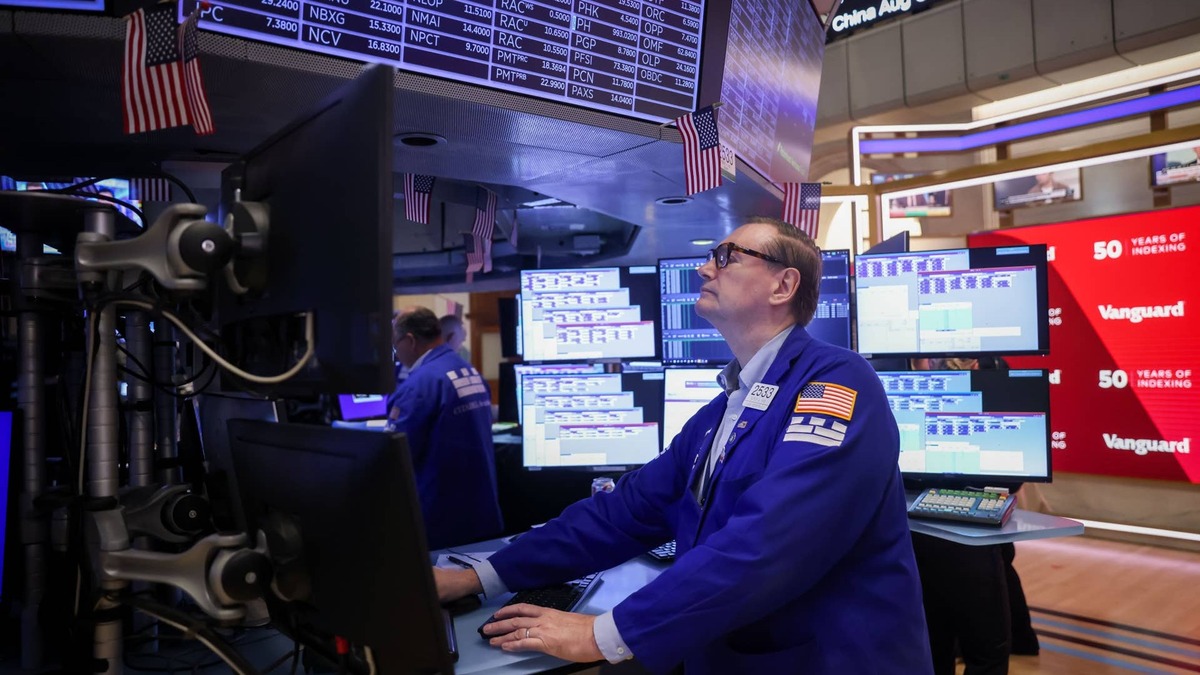
Vanguard’s $122 billion fund has warning most holders miss
The Vanguard FTSE Emerging Markets ETF (VWO) is held in target-date funds, robo-advisor portfolios, and retirement accounts across the country, with roughly $122 billion across roughly 6,300 emerging-market stocks as of June 30, 2026.
Read more Miss America in West Palm: Red carpet night lets the glamour shine
For most holders, the VWO is a set-it-and-forget-it allocation to developing economies across Asia, Latin America, and Africa.
A clause buried in the fund’s reframes what those holders own, and few appear to have noticed.
The disclosure warns that VWO can legally shift from a diversified fund to a nondiversified one through ordinary market movement or an index rebalance.
No shareholder vote is required, and Vanguard’s portfolio managers do not need to take any deliberate action for that transition to occur.
What VWO’s prospectus clause means for shareholders
VWO tracks the FTSE Emerging Markets All Cap China A Inclusion Index using a sampling approach to approximate its benchmark, the .
The fund charges an annual expense ratio of 0.06%, making it one of the lowest-cost vehicles in the emerging-market category for passive investors.
Stefan Sommerville, Investment Specialist at Orbis, wrote in a June 2026 strategy commentary that the gap between what passive investors think they own and what they actually hold has widened beyond recognition.
A passive investor buying EM exposure today is making a concentrated wager on the AI investment cycle, dressed up as a diversified allocation to the developing world,
Active fund managers who cap individual positions accept some benchmark drift as the cost of controlling concentration.
VWO faces no such tradeoff because, as a passive index tracker, it holds each position at its index weight without an internal cap on any single name.
TSMC holds more than three times VWO’s diversification threshold
Taiwan Semiconductor Manufacturing (TSMC) represents about 16.3% of the fund’s total assets as of June 30, 2026, well above the 5% single-issuer cap the 1940 Act imposes on 75% of a diversified fund’s assets, .
The filing frames nondiversification as a hypothetical risk, but the current weight suggests that scenario has already materialized.
More Vanguard:
- Vanguard’s new 401(k) numbers have good news for Millennials
- Vanguard doubles down on U.S. stocks with 4 new ETFs
- Vanguard sends urgent warning on major 401(k) growing problem
Tencent Holdings, the second-largest position, adds 2.9%, while Alibaba Group Holding contributes another 1.9%.
Those three names alone account for more than 20% of the fund, spread across more than 20 developing nations.
The concentration grew as TSMC’s stock price surged alongside rising global demand for advanced semiconductors throughout the past several years.
Read more Sinema has ‘not been credible’ in ‘homewrecker’ case, judge says
That rally pushed the chipmaker’s market capitalization higher relative to other emerging-market companies, widening its portfolio weight within VWO without any deliberate rebalancing.
Bloomberg / Getty Images
Vanguard’s S&P 500 ETF has the identical nondiversification clause
The nondiversification disclosure extends directly into the core holdings of most American retirement portfolios.
Vanguard’s S&P 500 ETF, known as VOO, crossed $1 trillion in net assets in June 2026, becoming the first ETF to reach that milestone, and it has functionally identical prospectus language.
states that the fund can shift to nondiversified status through index tracking alone, mirroring the exact disclosure in VWO’s filing.
The top 10 stocks in the S&P 500 now represent 40.8% of the index’s total capitalization, JPMorgan Asset Management Global Market Strategist Meera Pandit and Head of Portfolio Insights Corey Hill wrote in a May 2026 analysis, well above the 26.6% peak reached during the late-1990s technology bubble.
That elevated concentration, they added, amplifies the downside impact on portfolios when leading stocks decline.
The same cap-weighted mechanic that drives S&P 500 concentration is what pushes TSMC’s weight up in VWO, a structural feature of index tracking, not a fund-specific choice.
VWO’s 2022 loss shows how concentration passes through to holders
Geographic concentration and single-issuer concentration are variants of the same structural problem, a cap-weighted index passing through whatever weight the market assigns, with holders absorbing the result.
VWO’s 2022 drawdown offers the clearest recent example.
The fund lost approximately 18% for the calendar year due to China-related exposure, as delisting anxiety under the Holding Foreign Companies Accountable Act, sanctions pressure, and regulatory crackdowns drove a sharp repricing of its largest geographic allocation.
Public Company Accounting Oversight Board (PCAOB) secured complete inspection access to Chinese audit work papers in December 2022 for the first time in its history, and inspections have continued every year since.
The concentration gap VWO holders now face
The gap between VWO’s marketing as a broad emerging-market vehicle and TSMC’s current weight underscores a tension Touchstone Investments’ Tim Paulin flagged in a recent WealthManagement.com essay.
Diversification rules were designed to shield investors from exactly the single-company exposure that a passive index tracker can now deliver by default, Paulin noted.
Because the prospectus mechanics require no direct notice to holders if the fund formally crosses into nondiversified territory, the burden of tracking sits with the shareholder.
VWO’s quarterly N-PORT filing on the SEC’s EDGAR database lists every portfolio holding and its weight as of each fiscal quarter-end. The next filing will show whether TSMC’s share has expanded further and how much of the top-10 weight now sits in three names.
Related: Vanguard’s VOO faces something it never has before
The Arena Media Brands, LLC THESTREET is a registered trademark of TheStreet, Inc.
Read more 2010 Mercedes-Benz G55 AMG For Sale With 93,100 Miles
This story was originally published September 5, 2026 at 2:47 PM.










Post Comment