U.S. seizes $2.8 million worth of fuel headed to Cuba firm, mostly at Broward port
Federal agents have seized dozens of fuel shipments valued at more than $2.8 million that authorities say were headed to Cuba in violation of U.S. export laws, Homeland Security Investigations agents in Miami announced Wednesday.
Read more Team from Miami’s Rusty Pelican opens a waterfront restaurant in Fort Lauderdale
Investigators with HSI Miami, working with U.S. Customs and Border Protection and the Commerce Department’s Bureau of Industry and Security, told reporters that the biodiesel fuel was destined for Enetec S.A., a firm under U.S. sanctions that officials say the Cuban government used to receive fuel illegally exported from the United States.
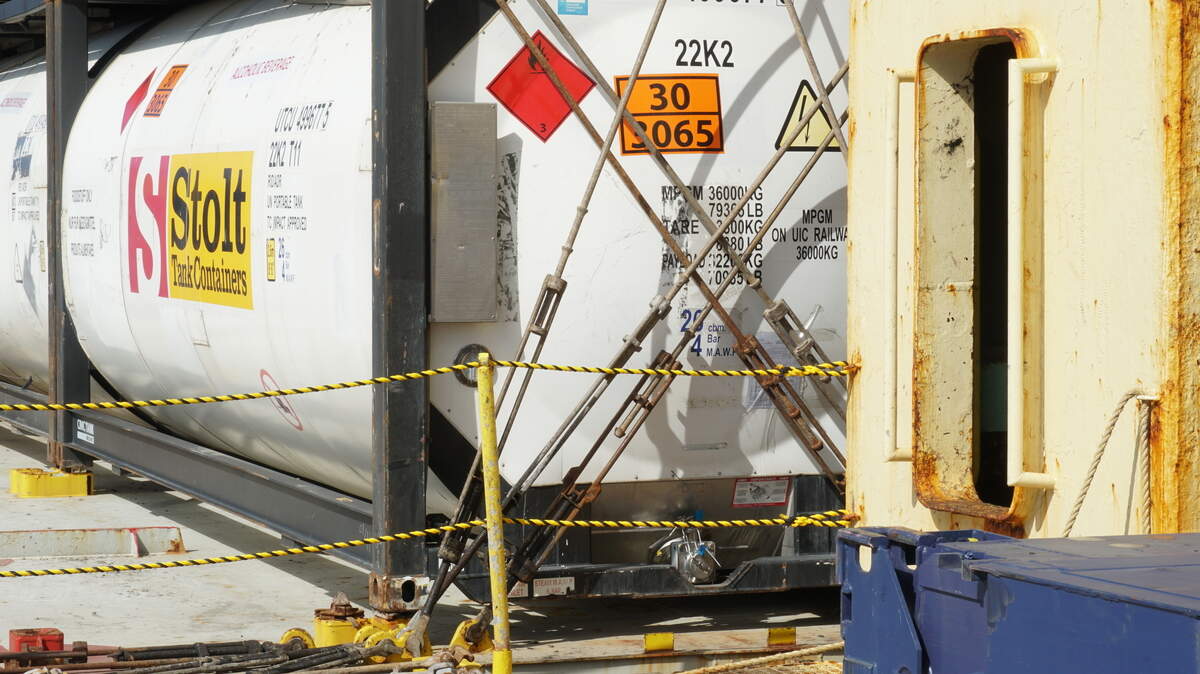
According to the agencies, Customs identified the shipments in early September through intelligence and trade data analysis. The fuel was leaving from Port Everglades and the Port of Houston. Customs seized 71 shipments containing about 496,000 gallons of biodiesel at Port Everglades. Another 19 shipments, containing about 119,000 gallons, were stopped at the Port of Houston.
Photos of the seized shipments provided to the media show the fuel was transported in special containers known as ISO-tanks. Biodiesel is a renewable fuel made from sources like vegetable oils that is primarily used in transportation.
Homeland Security Investigations requested the seizures over suspected violations of federal laws, including exportation contrary to law, the International Emergency Economic Powers Act and the Export Administration Regulations, an agency statement said.
“This seizure underscores HSI Miami’s commitment to stopping fuel and other goods from the United States from being illegally exported to Cuba through sanctioned entities or deceptive commercial networks,” said HSI Miami Special Agent in Charge Jose R. Figueroa. He added that the agency will continue to “identify, disrupt and investigate efforts to evade U.S. sanctions.”
Figueroa said Enetec appears in the documents as the fuel’s ultimate consignee. He said several companies were behind what he called “a deliberate effort to undermine U.S. sanctions.” He did not reveal the identity of the company or individuals that bought the fuel on behalf of Enetec, but he said they are under investigation.
Enetec was sanctioned in July under a presidential executive order authorizing sanctions to Cuban entities posing a direct threat to national security or involved in repression. At the time, it was included in a Treasury Department blacklist.
It is unclear, however, who in Cuba were the shipments’ actual buyers, because Enetec is an importing agency whose role is to manage customs entry, storage and delivery to end users.
Citing current regulations, a person linked to one of the companies whose shipments were seized questioned the allegations. The person asked not to be identified because they are not authorized to speak on behalf of the company. The person said the fuel was ultimately going to private businesses in Cuba, not the government.
The designation of Enetec under the May executive order and its inclusion on the Treasury blacklist — called Specially Designated Nationals and Blocked Persons List) — is “irrelevant in the context of licensed exports,” the person said. “The fuel is always going to a licensed private entity or other licensed end user in Cuba. Enetec is never the end user and never takes ownership of the product.”
In a document reviewed by the Miami Herald, the company, which the person asked not to be identified, had received written assurance from the Treasury’s Office of Foreign Assets Control that the transactions were authorized.
Read more Miami billionaire Ken Griffin adds $25 million to a South Florida hospital gift
According to the text of the May executive order, its authority “does not apply to activities authorized by, and shall not affect the validity of, any license” issued under the Cuban Assets Control Regulations.
“In other words, if a U.S. company is lawfully exporting fuel to Cuba pursuant to a Commerce Department export license or export license exception, the transactions required to effectuate those exports are licensed.”
All the company’s transactions “are fully licensed,” the person added. “Therefore, from a legal standpoint, they may continue to use Enetec or any other Cuban state importing agency to effectuate the licensed exports.”
The Herald reached out to the Treasury Department and the Department of Commerce for clarification.
Figueroa said the shipments to Enetec were “connected” to the interdiction of two container ships that were caught trying to smuggle fuel into Cuba, but he did not provide more details. In early September, the U.S. Coast Guard intercepted the container ship Grace in the Caribbean, which had fuel hidden in its ballast tanks and was bound for Cuba, the agency said. The Coast Guard said several containers aboard the Grace were also believed to hold illicit fuel likely loaded in Panama, according to vessel tracking data.
Jeremy Shein, Special Agent in charge of the Bureau of Industry and Security in Miami, said the agency “is aggressively enforcing our export control laws, including with respect to Cuba, and this will continue.”
The Trump administration cut off oil supplies to the Cuban government earlier this year to extract political concessions from Havana. But in February, it authorized sales of U.S. fuel to Cuba’s private sector, though it blocked a deal that would have allowed fuel to reach the island on oil tankers. Diesel and gasoline sales to the private sector have skyrocketed this summer, making the United States Cuba’s main fuel provider.
U.S. sanctions prohibit Cuban private entities from selling the imported fuel to the government or state-run companies, but that is likely happening to some degree, according to experts and reporting by Cuban independent news outlet 14ymedio.
“Cuba’s energy crisis makes legal access to fuel essential. Transparency and accountability are also essential,” said Cuban-American businessman Hugo Cancio, whose company, Katapulk, ships fuel to the private sector in Cuba.
“Both governments must ensure that, before authorizing shipments, there is due verification of the companies participating in this trade, their owners, and the recipients of the fuel,” he said. “Violations identified by the investigation must be penalized, while simultaneously preserving the legitimate trade that benefits Cuban families and private businesses. Rigorous oversight should make legal trade safer and more reliable.”
Read more Vouchers are set to get more than half of Miami-Dade’s state per pupil funds
This story was originally published October 7, 2026 at 1:32 PM.










Post Comment