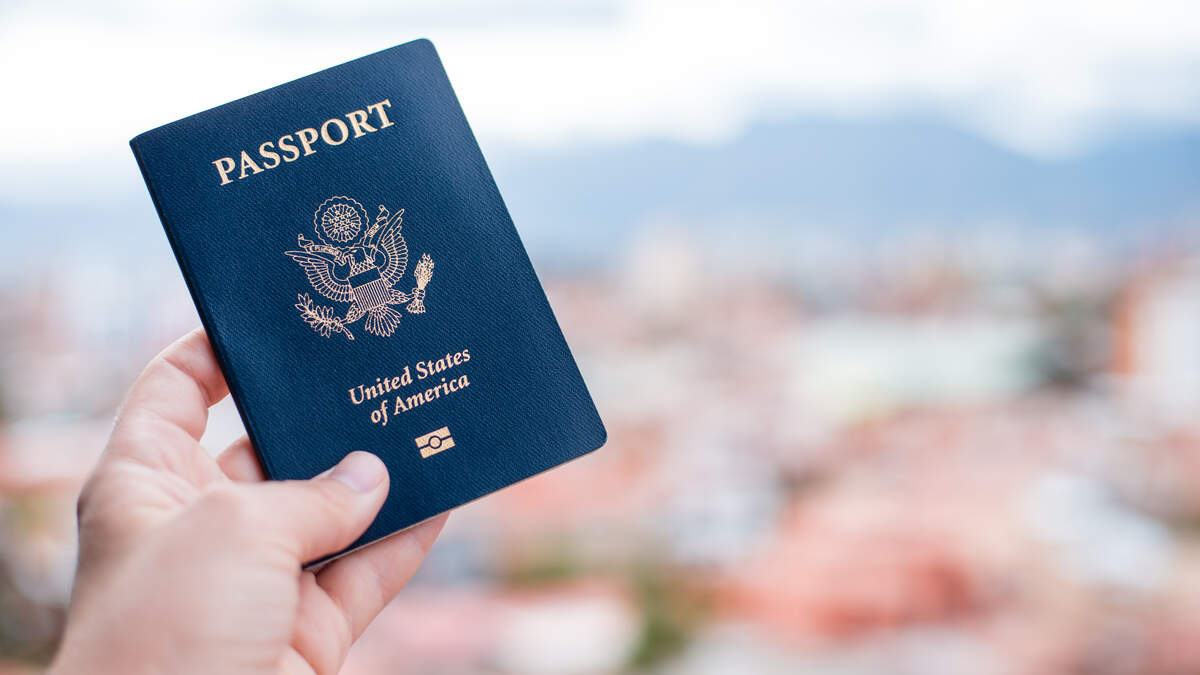
Trump administration files new cases to strip U.S. citizenship from South Floridians
As part of its mass deportation agenda, the Trump administration is sharply expanding a campaign to revoke the citizenship of naturalized Americans, filing dozens of federal lawsuits in recent weeks — including five in South Florida.
Read more Trump administration files new cases to strip U.S. citizenship from South Floridians
The Justice Department announced this week that it has filed 40 civil denaturalization lawsuits nationwide as of August. The cases target people the department accuses of concealing criminal activity, faking their identities or lying to the government to get their citizenship.
A Miami businessman convicted of tax evasion, a Hialeah woman convicted of money laundering conspiracy and a West Palm Beach resident convicted in a tax fraud scheme could lose their citizenship as part of the efforts. So could a former North Miami mayor born in Haiti, a Cuban American convicted of Medicare fraud and a former U.S. ambassador imprisoned for spying for Cuba for decades.
Attorney General Todd Blanche described the latest announcement as “the largest denaturalization effort in modern history,” although the department did not define that comparison or provide historical figures to substantiate it.
The efforts are rooted in a memo a top Justice official sent to the Civil Litigation section mandating a focusing on denaturalization cases as part of its top priorities. It identified cases it said involve national security threats, serious criminal conduct, fraud and other circumstances that could make citizenship legally invalid.
Historically, the U.S. has rarely pursued denaturalization cases. Between 1990 and 2017, the Justice Department pursued approximately 305 denaturalization cases nationwide, averaging about 11 annually, according to figures previously reported by the Miami Herald.
Earlier this year, the New York Times reported that the Justice Department was assigning an additional 384 denaturalization cases to U.S. attorneys’ offices across the country, signaling plans for a considerably larger enforcement effort.
Those assignments do not necessarily represent lawsuits filed in court. Cases referred for review may never result in litigation, and complaints that are filed do not necessarily lead to citizenship revocation.
But the administration has made clear that it intends to pursue more.
“We’ve only scratched the surface — many more complaints are coming,” Assistant Attorney General Brett A. Shumate, who works in the Justice Department’s Civil Division, said in July.
Research cited in recent reporting by Syracuse University’s Transactional Records Access Clearinghouse also points to a substantial increase in civil denaturalization filings during 2026, although differing published figures and reporting periods complicate direct comparisons.
South Florida cases
The new lawsuits filed in the Southern District of Florida illustrate the range of cases prosecutors are pursuing.
Ralph Nabavi, 69, an Iran-born Miami resident who became a U.S. citizen in 2014, admitted in an earlier criminal case that he began transferring money from his business to personal accounts to avoid federal income taxes before becoming a citizen, according the Justice Department.
The government charged him in 2019 with tax evasion involving at least $12.5 million in underreported income and $3.5 million in unpaid federal taxes. Prosecutors say he lied during his naturalization process.
The federal government also wants to revoke the citizenship of Yusmary Shirley Duran Mejia, 47, a Colombia-born resident of Hialeah who entered the United States in 2007 and became a citizen in 2018. She was convicted in 2020 on charges of conspiracy to commit money laundering. The Justice Department says she acknowledged during the criminal proceedings that her involvement in the illegal enterprise began before she was naturalized.
In West Palm Beach, the government is pursuing Arnouse Merlien, 48, a Haiti-born woman who became a citizen in 2016. She was subsequently convicted of participating in a conspiracy to submit fraudulent income tax refund claims to the Internal Revenue Service.
According to the Justice Department, Merlien participated in the scheme in the years preceding her naturalization. Prosecutors claim she concealed the activity and provided false testimony during the citizenship process.
Two other lawsuits filed in Miami federal court involve Syed Mashood Ul Haque, 66, originally from Pakistan, and Jose Villarreal Ortiz, 49, a native of Mexico.
Prosecutors accuse Ul Haque of using different identities to evade an earlier deportation order and subsequently obtain immigration benefits. Villarreal Ortiz obtained permanent residence by falsely identifying his aunt, a naturalized American citizen, as his mother and later concealed that deception when applying for citizenship, prosecutors say.
The Justice Department’s latest announcement describes the 40 complaints as the largest volume filed during a single period under the Trump administration. The Herald could not independently verify the claim that the campaign is the largest in modern history. And although the department says the complaints were filed between Aug. 21 and Oct. 2, one case included in its list is dated Aug. 10.
A growing campaign
The October denaturalization push follows months of increasing denaturalization activity in South Florida.
In April, a Herald review of court records and public statements found that federal prosecutors in South Florida had pursued at least four cases seeking to revoke citizenship since the beginning of the year. By July, the number had risen to at least six.
Read more Fired-up Todd Monken, Browns roll into game vs. struggling Jets
Among those targeted was Yosmaikel Rodriguez Perez, a 45-year-old Cuban American from Miami-Dade County who became a U.S. citizen in 2018.
The Justice Department filed a four-count civil denaturalization complaint against Rodriguez Perez after his conviction in a Medicare fraud conspiracy involving approximately $886,000 in fraudulent claims. Another high-profile case involves Philippe Bien-Aime, the former mayor of North Miami, whom federal authorities accuse of using false identities and fraudulent documents to obtain citizenship.
READ MORE: Feds say former North Miami mayor lived a 30-year lie, move to strip him of citizenship
The government also wants to strip the citizenship of Victor Manuel Rocha, a former U.S. ambassador who was sentenced to 15 years in prison after admitting that he had secretly worked for Cuban intelligence.
READ MORE: U.S. moves to strip citizenship from former ambassador who spied for Cuba
The latest nationwide announcement includes cases involving people originally from Mexico, Cuba, Venezuela, Colombia, Haiti, China and numerous other countries. Other cases involve allegations range from fraudulent marriages and concealed deportation orders to sexual offenses, tax evasion and espionage.
Jinchao Wei, a Chinese-born former U.S. Navy sailor convicted of espionage-related offenses involving military information provided to China, is one target. Another case involves Ping Li, a Chinese-born naturalized citizen whose case was filed in the Middle District of Florida after he was convicted of acting as an unregistered agent for Beijing.
Citizenship protections remain
The denaturalization cases have sparked fear in Miami-Dade County, where over half of all residents are foreign-born. But despite the increase in lawsuits, immigration law experts caution that denaturalization remains a difficult legal process and that the overwhelming majority of naturalized Americans are unlikely to ever face it.
“The average citizen is not going to be targeted by this and is not under serious threat,” David Bier, director of immigration studies at the libertarian Cato Institute, told the Herald earlier this year.
“There’s a high bar for the government to take away someone’s citizenship, it’s procedurally complicated, it’s time-consuming for the government,” Bier said.
In civil denaturalization cases, the government generally must prove its case in federal court with clear, unequivocal and convincing evidence, a demanding standard that reflects the importance of citizenship and the consequences of revoking it.
The law permits the government to seek denaturalization when citizenship was illegally obtained or secured through concealment of a material fact or willful misrepresentation.
A criminal conviction after naturalization does not, by itself, automatically invalidate citizenship. Prosecutors must establish a legally sufficient connection between the circumstances of naturalization and the grounds for revocation.
The government can also pursue criminal charges for knowingly procuring citizenship unlawfully.
That distinction emerged in a separate Miami case involving Tania Rosa Rodriguez, a Cuban American woman convicted by a federal jury of fraudulently obtaining citizenship after failing to disclose her participation in a Medicare fraud conspiracy.
Rodriguez had previously pleaded guilty to healthcare fraud, received a 2½-year prison sentence and was ordered to repay $1.45 million. Her subsequent conviction for unlawful procurement of citizenship exposed her to additional prison time and potential denaturalization.
Her case differs from the 40 civil lawsuits announced by the Justice Department because it involved a criminal prosecution rather than a civil complaint seeking a judicial order revoking citizenship.
Bier said the government’s expanded campaign could still generate anxiety among naturalized Americans, and that federal authorities could scrutinize the immigration histories of individuals who attract political attention.
“If someone was in the public eye, they might want to deconstruct every single application looking for a discrepancy.”
Read more Broncos OC Davis Webb disappointed to lose play-calling role
This story was originally published October 9, 2026 at 5:46 PM.











Post Comment