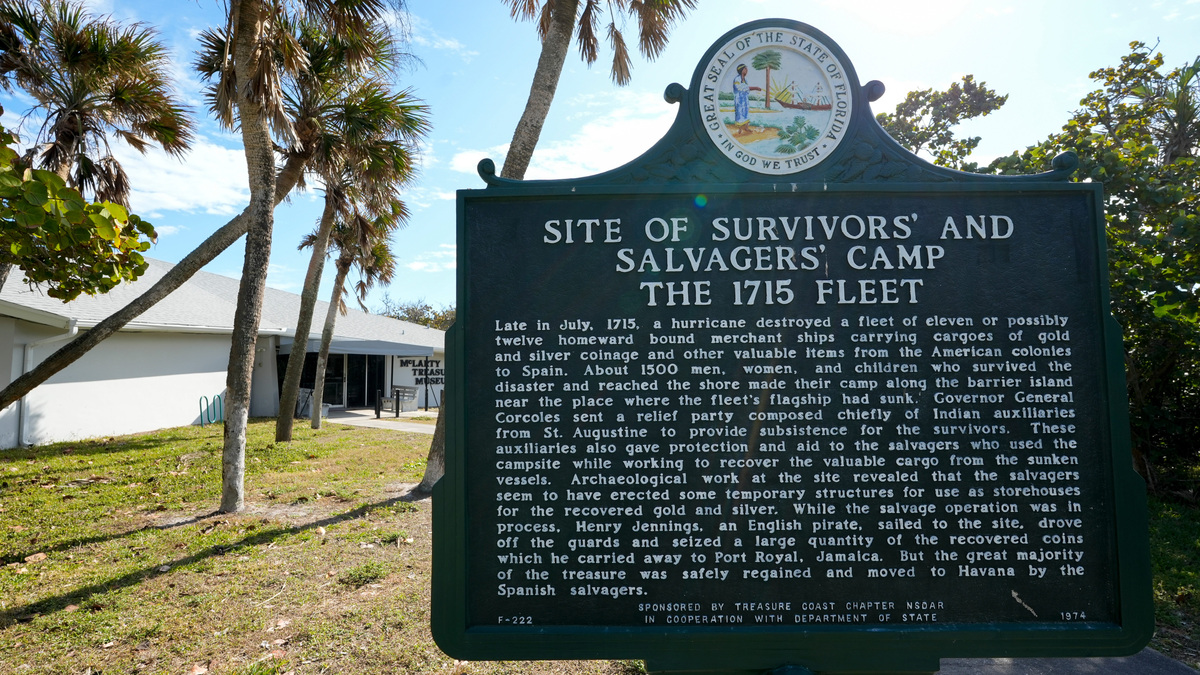
Tiny oceanfront Florida treasure museum displays gold, silver, jewelry
Executive Editor Adam Neal has been fascinated with the lore of gold, silver and other treasure found – and still hidden beneath the water – off the coast of Indian River, St. Lucie and Martin counties.
Read more Escambia County voters need to renew one-cent tax. Here’s why | Opinion
A dozen ships left Cuba in July 1715, full of riches and bound for Spain, only to encounter a major hurricane that decimated the fleet just off Florida’s central east coast. Up to 1,000 crew members died and at least $400 million worth of jewelry, gold, silver and other valuables sank to the bottom of the Atlantic Ocean – some within 100 yards of the shore.
For decades, Florida has contracted professional underwater salvagers to seek out and uncover the centuries-old wrecks and treasure. They have found millions in treasure. It’s how the region got the Treasure Coast moniker.
But amateurs, including beach walkers swinging metal detectors, also have found treasure washed up on the shore.
Some of these finds and stories are on display at the McLarty Treasure Museum, 13180 N. State Road A1A, Vero Beach. Neal loves to bring out-of-town guests here to showcase this truly unique part of the area he has called home for the last 22 years.
Q: Why is this your local go-to spot to take visitors? What makes it special?
A: Situated just south of the Sebastian Inlet State Park sits an unassuming building nestled between mangroves and barely visible from the narrow stretch of State Road A1A. The McLarty Treasure Museum is near the spot of the historic Survivors & Salvagers Camp, where hundreds of people worked to recover the Spanish treasure following the fleet’s disaster.
For a mere $2 per person entry fee, what’s found inside are priceless artifacts and the history of the famed Spanish galleon shipwrecks, including recovery efforts and major discoveries centuries later.
Q: What will out-of-town visitors discover here about the Treasure Coast?
A: Along with exhibits, a video details the disaster and recovery efforts that took place on the shores just beyond the building, including what was found and how much remains undiscovered.
Read more EXCLUSIVE: He became a father at 17. Now his daughters call him ‘Super Dad’
Millions of dollars worth of gold and silver coins and bars are still waiting to be found. The famed Queen’s Jewels – a priceless dowry meant for Queen Isabella Farnese, wife of King Philip V – also have yet to be discovered.
Q: What can you do there?
A: Beyond coins and jewelry, you will find pottery, cannons, tools, anchors, weapons and other relics from the ships. The McLarty Treasure Museum is more than just exhibits, though.
Some of my guests’ best memories are from official and unofficial stories volunteers tell. Be sure to chat up the workers there, as they may tell you a whopper of a story that may or may not be verifiable.
Q: What is the “can’t miss” activity or thing to do?
A: Make sure you go out back to the pirate ship-shaped observation deck that overlooks the Atlantic Ocean.
On any given day, you could see a lucky beachgoer stumble upon 300-year-old treasure washed ashore. Or, you can try your luck beachcombing or metal detecting there. If you find something, make sure you know the legalities on what you can keep.
Adam L. Neal is the executive editor and news director of TCPalm.com and Treasure Coast Newspapers, including the Indian River Press Journal, St. Lucie News Tribune and Stuart News. Connect with him on social media via @TCPalmAdamNeal.
This article originally appeared on Treasure Coast Newspapers: Tiny oceanfront Florida treasure museum displays gold, silver, jewelry
Read more Best Florida restaurants for burgers? Treasure Coast poll winner
Reporting by Adam L. Neal, Treasure Coast Newspapers / Treasure Coast Newspapers
USA TODAY Network via Reuters Connect
Copyright Reuters or USA Today Network via Reuters Connect
This story was originally published September 20, 2026 at 5:01 AM.







Post Comment