They escaped Nicaragua’s political crackdown, now they’re in immigration limbo
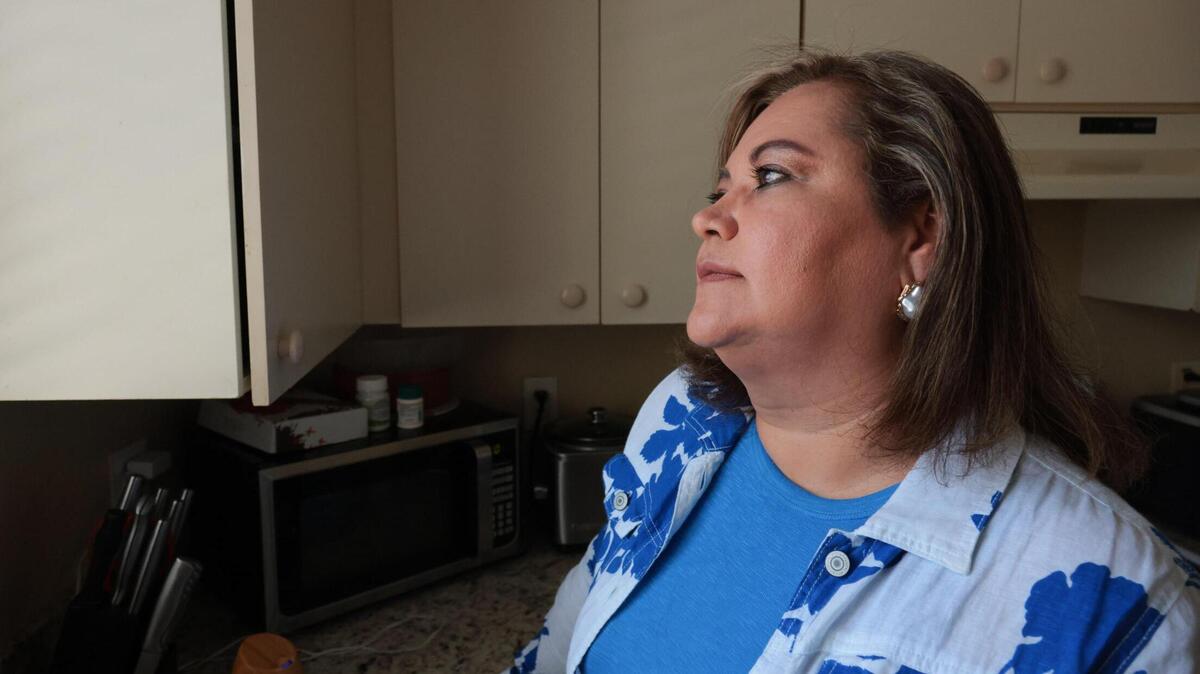
Geraldine Jarquín hopped onto a Zoom meeting on June 8, 2021, the night her life changed forever.
Read more A Netflix ‘Bloodline’ house in the Keys is about to sell. Here’s what to know
A local politician and member of a conservative political party that opposes Nicaraguan President Daniel Ortega’s government, Jarquín said she faced years of persecution and threats of violence so severe she’d wear sneakers at all times just in case she had to make a run for it. A year earlier, her son was arrested for protesting.
During that Zoom call with a group of advisors to discuss a candidate’s upcoming election, she said she heard commotion happening off camera. Police arrived at the home of one of the men in the meeting, she said. Her heart sank.
“For those of us watching that meeting, we knew we were next,” she said.
That night – which Jarquín calls “la noche de los cuchillos,” the night of knives – pushed her to flee Nicaragua and apply for political asylum in the United States. Ortega’s government arrested opposition leaders and party members in droves that night.
A month later, Jarquín flew to the U.S. on a tourist visa and applied for asylum. She is among the tens of thousands of Nicaraguans who have fled the country amid intense crackdowns on political opposition.
But when Jarquín visited the Nicaraguan consulate in Miami to renew her passport, she couldn’t. Her passport was invalidated and her birth certificate destroyed, she said.
She had become stateless.
For Jarquín and other Nicaraguans in the United States, statelessness creates a problem with no easy solution: What happens if their asylum claims are denied and the U.S. orders them deported to a country that no longer recognizes them as citizens?
The risks facing Nicaraguans targeted by Ortega’s government have taken on new urgency in Florida. This month, U.S. Immigration and Customs Enforcement arrested Nicaraguan journalist Luis Galeano while he was working as a Lyft driver. Galeano, who has lived in the United States since 2018 and has a pending asylum application, now faces deportation proceedings. He was stripped of his Nicaraguan citizenship by Ortega’s government in 2023.
Like many immigrants in the United States today, the fate of these Nicaraguans lies in the hands of the judicial system, which has sparred with the Trump administration over its hardline policies since his second term began.
On New Year’s Eve, thousands of Nicaraguans breathed a sigh of relief when a federal judge in California ordered the Trump administration to restore deportation protections for more than 60,000 Nicaraguans, Hondurans and Nepalis. But in February, an appeals court revoked that ruling.
“Stateless people are in a more unique position than even undocumented immigrants because they don’t have the option to leave,” said Samantha Sitterly, an immigration attorney and the legal services director for United Stateless, a national nonprofit that advocates for stateless individuals. “There’s no place for them to go back to.”
A place of no return
After violently repressing protests in 2018 that left more than 300 people dead, the Nicaraguan government intensified its crackdown on dissent. The Ortega regime retaliated against its opponents, even after they’ve fled, by stripping them of their citizenship.
Harold Rocha, the president of the advocacy group Nicaraguan American Legal Defense and Education Fund, described two types of statelessness that potentially affect thousands of Nicaraguans.
Hundreds of Nicaraguans have been declared stateless by Ortega’s government. But there are others experiencing “de facto statelessness,” which means the Nicaraguan government forbids them from reentering the country or from obtaining official documents, Rocha said.
The number in the second category is unclear.
Without official documents like birth certificates or valid passports, many exiled Nicaraguans struggle to get through the asylum process, Rocha said. And those who may want to self-deport from the U.S., like one family Rocha knows of, would face similar immigration issues in other countries because they lack proper documentation.
Felix Maradiaga learned about his citizenship status from inside a Nicaraguan prison.
Maradiaga, a former presidential candidate who was arrested in June 2021, was one of 222 political prisoners the Ortega regime put on a plane to Washington D.C. and officially stripped of their Nicaraguan citizenship in 2023. Prisoners included activists, priests and journalists.
Maradiaga was beaten, held in solitary confinement for 84 days and imprisoned for about two years, he said. During his imprisonment, his interrogators repeatedly told him he was no longer Nicaraguan.
“They said things like, ‘You’re not a Nicaraguan. You’re a foreign agent,’” he recalled. “You’re working with the U.S, therefore you’re going to be treated as a traitor. You do not deserve to have Nicaraguan passport.’”
Today, Maradiaga is a University of Virginia professor. He sought political asylum in the U.S. for years, and was finally interviewed last October. The agent who interviewed him said his asylum status was approved, but Maradiaga has been waiting to receive formal notification for a year.
“I feel fortunate, but that’s not the situation of most Nicaraguans,” he said.
Though Maradiaga had been offered other types of legal status and even citizenship in other countries, he chose to go through the asylum process both out of solidarity for his fellow former political prisoners and because it best reflects the reality of his situation.
“I didn’t come voluntarily to the U.S. I was put onto a plane in handcuffs, and I was told by the regime, ‘Either you go back to prison and to torture or you get out of here,’” Maradiaga said. “I was forced into exile against my will.”
Read more Miami’s plans for Cuba’s ‘day after’ revisit thorny questions about money, reconciliation
Juan Sebastian Chamorro, another former Nicaraguan presidential candidate who lost his Nicaraguan citizenship, said his imprisonment was the culmination of over eight months of harassment, including constant police surveillance and house arrest. Authorities abducted him from his home and imprisoned him in 2021.
Criticizing the Nicaraguan government is “impossible right now,” he said, as news organizations, television, social media posts and even priests’ sermons during Catholic Mass are heavily repressed.
“If you publish something on your social media under your name criticizing the government, you’re in jail the day after,” Chamorro said. “It’s even worse than Cuba. It’s more similar to North Korea.”
Chamorro received a green card through a U.S.-born child. He said many of his fellow compatriots in the U.S. are experiencing intense anxiety over the risk of deportation if their asylum cases are denied.
“Nicaraguans face a high risk of disappearance, incarceration, torture, or even death if they are deported from whatever country they are living in,” Chamorro said.
Increased uncertainty, widespread fear
The plight of Nicaraguan immigrants – especially those who are stateless and seeking political asylum – has only gotten more complicated because of an increasingly uncertain U.S. immigration system.
“There is a generalized fear,” said Jarquín. “Not only among Nicaraguans, but I think the fear is generalized throughout the Latino community.”
Complicating the issue further is that the U.S. has no legal definition for who qualifies as a stateless person and no standard process for how to deal with them, said Sitterly, of nonprofit United Stateless. Ironically, she said, U.S. immigration law does acknowledge the issue of statelessness because its definition of a refugee includes people who have “no nationality.”
“Every level of the immigration system is confused by statelessness, maybe even ignorant completely to what it is or who might be stateless or how it affects people,” Sitterly said.
Sitterly said her organization was aware of a handful of stateless people who were living in the U.S. for many years despite final orders of removal because ICE couldn’t figure out a way to deport them. But under the second Trump administration, they were deported, she said.
For some Nicaraguans, a denied asylum claim could mean a strange fate: deportation to a third country.
Maureen Porras, a Nicaraguan-American immigration lawyer and vice mayor of Doral, has dealt with clients in past years facing statelessness, including Palestinians and individuals from some African countries. Porras was among other immigration attorneys and organizations who received the 222 former Nicaraguan political prisoners after their arrival, helping them learn their legal options and fill out paperwork for work permits.
Nicaragua won’t accept stateless asylum seekers who are ordered to be deported, Porras said, so the most likely option is for those individuals to be deported to a third country, which poses its own risks. Cubans living in South Florida have been deported to African countries where they have no connections and don’t speak the language. One Cuban man from Miami was deported and is now imprisoned in Eswatini.
“They do have to be aware of all of those risks that come with getting their asylum application denied and being placed in removal proceedings,” Porras said.
Another former political prisoner, Lenin Salablanca, experienced the unpredictable asylum system firsthand. An immigration judge denied his asylum request last year. Salablanca, who was involved in the wave of protests in 2018, said he had been beaten, isolated and denied water during nearly 10 months in Nicaraguan prisons.
He thought he had a good case. He appealed the decision.
“There is no compassion here, no understanding of exile—only a cold vision that sees numbers instead of people,” Salablanca wrote in a Whatsapp message. “It’s that simple and that stark: those seeking refuge today have it harder than before, and those who were already fighting through their process live with even more uncertainty.”
This uncertainty weighs on Jarquín heavily. The stress has taken such a toll on her health, she was hospitalized last year. Her heart can’t take it.
As she spoke with the Herald in her Miami home, Jarquín was matter-of-fact as she recounted the last few years of her life. But tears pricked her eyes when she recalled how she felt when she fled Nicaragua.
“I came to this country without my heart,” she said. “When I left Nicaragua, I felt that I only had my body and my heart was left in my country.”
Though she believes she has a strong political asylum case, Jarquín can only pray and wait.
Read more Six-car crash in Doral injures six, two critically, fire rescue says







Post Comment